Insurance carriers are under pressure and operating on the edge. With margins often hovering between 1% and 2%, even small inefficiencies can erase profitability. One of the biggest and most overlooked drivers of margin compression sits inside the payments function.
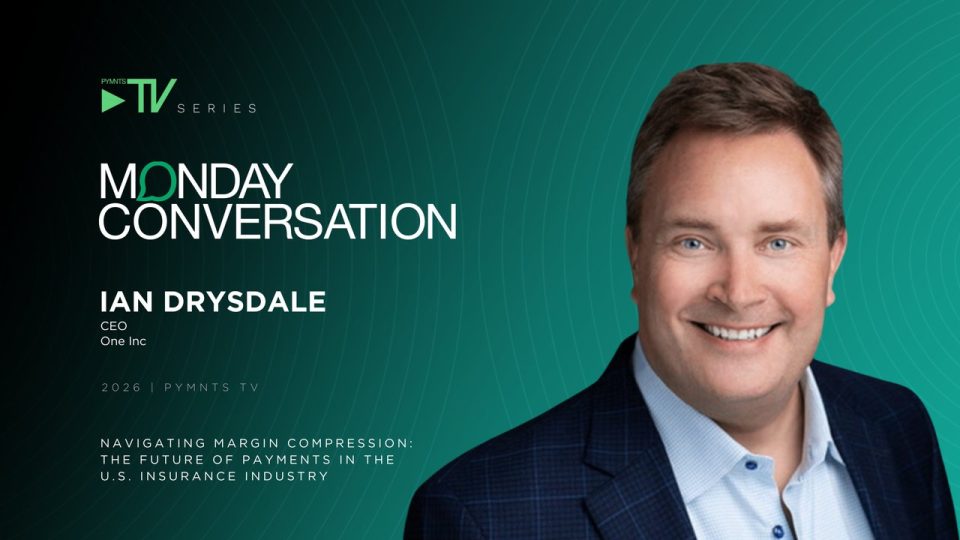
According to One Inc CEO Ian Drysdale, payments modernization is no longer a technology upgrade. It is a financial strategy.
In a conversation with PYMNTS CEO Karen Webster, Drysdale framed the issue clearly. Insurers are not losing margin only in underwriting. They are also losing it through outdated, check-based payment systems embedded in claims operations.
The Hidden Cost Center Dragging Down Margins
Legacy payment workflows were built for a different era, one with lower claims volume, less fraud and fewer expectations around speed. Today, they are creating operational drag at exactly the wrong time.
Paper checks remain embedded across claims, commissions, refunds and subrogation payments. Each check carries cost, not just the $4 to $20 issuance expense cited by financial institutions, but also the downstream burden of tracking, reissuing, reconciling and managing exceptions.
Those costs compound quickly.
Payments often involve multiple stakeholders including policyholders, contractors, medical providers and lenders. Each requires validation. The result is friction-heavy processes that can stretch payout timelines to four to eight weeks.
That delay is not just an operational issue. It directly impacts customer satisfaction, increases claims severity and ultimately erodes margins.
At the same time, fraud risk is escalating. Checks can be intercepted, altered or misdirected, exposing insurers to losses that are both preventable and growing.
Why Payments Modernization Is a Margin Strategy
The shift to digital payments changes the economics fundamentally.
Modern payout platforms validate recipients up front, reducing fraud exposure while enabling near-instant disbursements once claims are approved. More importantly, they remove the manual processes and administrative overhead tied to paper.
Drysdale said the impact is measurable.
He points to savings that can reach tens of millions of dollars annually for large carriers. In some cases, digital methods such as virtual cards can eliminate payout costs entirely for insurers, while vendors accept small fees in exchange for faster access to funds.
This is not incremental improvement. It is structural margin expansion.
“It’s a margin recovery strategy,” Drysdale said, noting that digitizing payments alone can add one to two percentage points back to the bottom line. That is a meaningful shift in an industry where that margin defines viability.
From Operational Fix to Strategic Priority
What is changing now, Drysdale said, is how insurers think about payments.
We’d love to be your preferred source for news.
Please add us to your preferred sources list so our news, data and interviews show up in your feed. Thanks!
Historically treated as a back-office function, payments are being reevaluated as a core lever of financial performance and competitive differentiation. Faster payouts improve customer experience. Lower costs improve profitability. Reduced fraud improves resilience.
Adoption curves reflect that shift. Carriers that begin with low digital penetration often move quickly to a majority of payments processed electronically once modern infrastructure is in place.
Artificial intelligence is also beginning to play a role, not as a sweeping transformation, but as a targeted tool for improving reporting, reconciliation and operational visibility. Adoption remains cautious, given regulatory and privacy concerns.
Modernization Under Pressure
The urgency is being driven by external forces insurers cannot control.
Catastrophe losses are increasing in frequency and severity, putting pressure on claims volumes and costs. At the same time, policyholders expect payouts to move as quickly as any other digital transaction.
Legacy systems were not built for either reality.
That mismatch is forcing a broader rethink. If insurers cannot fully control losses or pricing, they must control costs. Payments are one of the few areas where immediate gains are achievable.
The Bottom Line
Payments modernization is no longer optional, and it is no longer just about efficiency.
It is about margin expansion.
Insurers that modernize can reduce cost, accelerate claims, limit fraud and improve customer outcomes, while reclaiming critical basis points of profitability.
Those that do not risk watching their margins erode further under the weight of systems built for a different time.
As Drysdale put it, the industry’s future will hinge on a single capability: resilience.


 Add as Preferred Source