The House Financial Services Committee has voted to send the Financial Choice Act to the full House of Representatives for a floor vote. The majority-backed initiative represents a rollback of the Obama-era financial regulations known collectively as Dodd-Frank.
The vote to move the bill along was taken purely on party lines — all 34 “yes” votes were Republicans, all 26 “no” votes came from Democrats.
The legislation is designed to ease some of the regulatory requirements that banks must meet — particularly when it comes to annual stress-testing. It would also eliminate the Volcker rule, which restricts how banks invest taxpayer-insured deposits and force failing firms to go through bankruptcy.
We’d love to be your preferred source for news.
Please add us to your preferred sources list so our news, data and interviews show up in your feed. Thanks!
The legislation also restructures the Consumer Financial Protection Bureau.
The legislation by the panel’s chairman (R., Texas) would relieve banks of some regulatory requirements as long as they meet certain capital requirements; subject banks to stress tests biennially instead of every year; and repeal an agency created after the financial crisis.
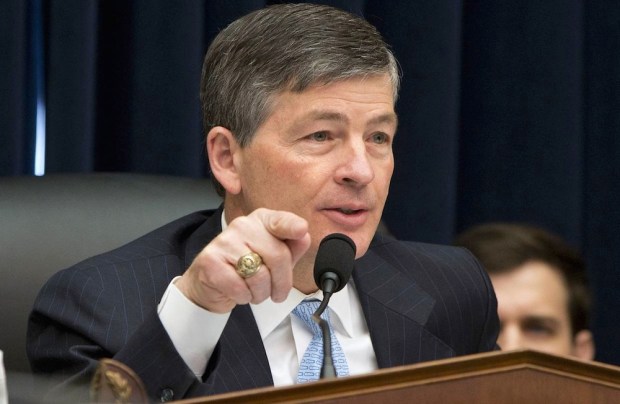
“Our plan replaces Dodd-Frank’s growth-strangling regulations on small banks and credit unions with reforms that expand access to capital, so small businesses on Main Street can grow and create jobs,” noted Rep. Jeb Hensarling — the bill’s author and the chairman of the Financial Services Committee.
Democrats fought unsuccessfully to stop its passage.
Rep. Maxine Waters (D., Calif.) said that the bill “is a deeply misguided measure that would bring harm to consumers, investors and our whole economy.”
The bill is expected to make it through the House on a vote — though its fate in the Senate is less clear. Republicans are divided on some issues contained within the Bill — like a repeal of the Durbin amendment, which puts a cap on debit card transaction fees.
“We certainly understand that there is a depth of feeling on both sides of the aisle and on both sides of this particular issue,” Mr. Hensarling said of the fee-limit issue during committee debate on Tuesday.


 Add as Preferred Source