The biggest one came from Block, which has joined with Anthropic and OpenAI to launch the Agentic AI Foundation (AAIF), an open source initiative housed under the Linux Foundation and designed to shape how autonomous AI systems are built and deployed. In a statement published by Block, the company argues that agentic AI is reaching a critical inflection point, where early architectural choices will determine whether the technology evolves as an open, interoperable ecosystem or fragments into proprietary silos.
The foundation is intended to serve as a neutral governance and standards body, similar in spirit to the role played by Linux or the World Wide Web Consortium, with the goal of ensuring that agentic AI infrastructure remains accessible, collaborative and competitive across the industry.
“We’re at a critical juncture,” Block writes, warning that without open development, agentic AI risks concentrating power among a few providers and slowing enterprise adoption.
As part of the launch, Block is contributing its open-source agentic framework, goose, alongside Anthropic’s Model Context Protocol and OpenAI’s AGENTS.md, establishing a shared technical foundation for interoperability between agents, data sources and developer tools. The foundation already includes a broad coalition of technology and payments companies, cloud providers and software platforms, underscoring how alliances around agentic AI are increasingly forming at the infrastructure layer rather than around individual products. Block frames the effort as both a technical and strategic move, positioning open governance as a prerequisite for innovation at scale.
“The next decade of AI development will be defined by choices we make today,” the company writes, adding that the foundation is meant to ensure that “the best ideas win, regardless of where they come from.”
Advertisement: Scroll to Continue
Where’s Meta?
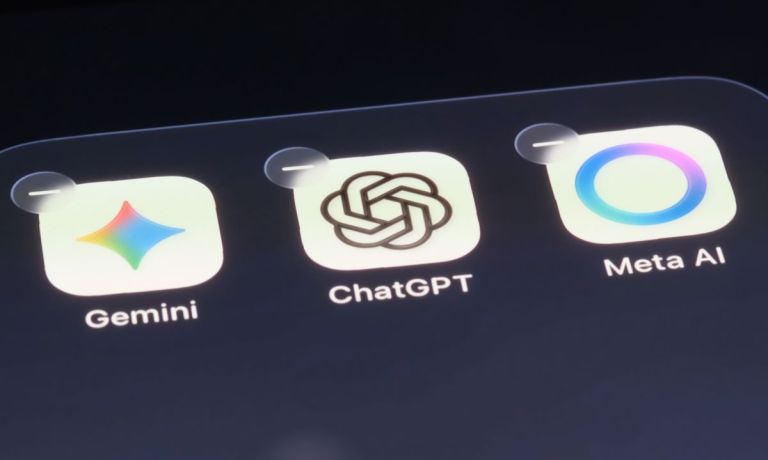
Almost every major agentic player from Google to AWS to Microsoft are in with the AAIF. One is not. Meta has not signed on to the organization and published reports last week indicate they won’t be anytime soon, which is odd because it has based its Llama LLM model on open source architecture.
According to a report published by CIO, most of the major technology platforms — including OpenAI, Google, Microsoft, AWS and IBM — have aligned behind the Linux Foundation’s newly formed Agentic AI Foundation, which aims to create shared standards and open infrastructure for AI agents. Meta’s absence is deliberate. The article reports that Meta is shifting away from its prior open-weights posture and toward a proprietary strategy centered on a new revenue-generating model code-named Avocado. Analysts cited in the piece argue that Meta was never fully committed to open source in the traditional sense, instead retaining control over training data and governance as competitive levers. As one analyst put it, Meta’s approach reflected openness in distribution, not in control.
The article frames Meta’s move as a structural divergence rather than a short-term tactic, with meaningful implications for alliances in agentic AI. While the rest of the industry is coalescing around interoperable standards to accelerate enterprise adoption, Meta is opting for vertical integration and tighter ownership of the stack. That choice may enable clearer monetization and performance control, but it comes at the cost of isolation from the standards-driven ecosystem taking shape.
“The move toward a closed model tells us Meta no longer sees its AI as fuel for the ecosystem,” one analyst quoted in the article said. “It sees it as product — something to sell, protect, and scale.” The result, the article suggests, is a growing fault line in agentic AI between companies betting on shared infrastructure and those prioritizing platform control, a divide that will increasingly shape partnerships, compatibility and long-term influence.
Competition Continues
The Meta move and other developments last week show that competition won’t be affected by the AAIF. OpenAI released Chat GPT 5.2 last week and Google has introduced a significantly expanded version of its Gemini Deep Research agent, signaling how competition in agentic AI is increasingly unfolding through capabilities, timing and integration rather than standalone model releases.
According to TechCrunch, the new agent is built on Google’s Gemini 3 Pro foundation model and is designed to do more than generate research summaries. It allows developers to embed deep research capabilities directly into their own applications through a new Interactions API, giving them greater control over how agents reason, retrieve information and act. Google says customers are already using the agent for tasks such as due diligence and drug safety analysis, and plans to integrate it across core products including Google Search, Google Finance, NotebookLM and the Gemini app. The move reflects Google’s view that in an agent-driven future, “humans don’t Google anything anymore — their AI agents do.”
The article also highlights how alliances and rivalry in agentic AI are accelerating through rapid, closely timed releases. Google emphasized the reliability of Gemini 3 Pro, describing it as its “most factual” model and positioning reduced hallucinations as essential for long-running autonomous tasks. To support those claims, the company introduced an open source benchmark, DeepSearchQA, while reporting strong performance against existing tests. But those results were quickly overtaken by events. On the same day Google made its announcement, OpenAI released GPT-5.2, immediately reframing the competitive narrative.
The near-simultaneous launches underscore how agentic AI leaders are racing not just on model quality, but on ecosystems, benchmarks and developer access, shaping partnerships and expectations in real time as each player seeks to define the emerging standards for autonomous research agents.