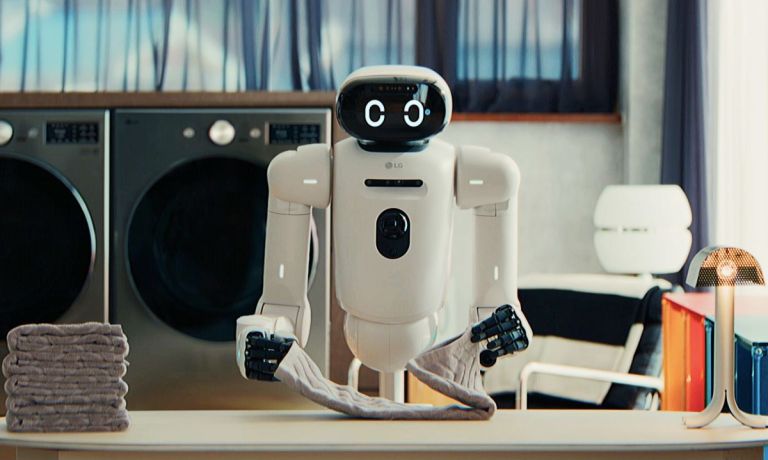
At the show, LG Electronics used the stage to introduce CLOiD, an AI-powered home robot designed as a multifunction domestic assistant. LG says CLOiD can empty dishwashers, fold laundry and handle light cooking tasks as part of its “zero labor home” vision, integrating with the company’s connected appliances and AI platform.
Meanwhile, Samsung Electronics presented its domestic robotics vision as part of a broader AI ecosystem that ties robots into smartphones, TVs and home products. Samsung is also expanding its Bespoke AI home appliance lineup with smarter laundry systems, robot vacuums with liquid detection and improved mobility, and climate systems that adjust dynamically based on usage patterns.
Beyond these household assistants, CES 2026 has seen a flurry of robotics activity. SwitchBotunveiled the Onero H1 humanoid robot, capable of navigating homes, grasping objects and performing chores like filling coffee machines, organizing clothes and potentially more — though real-world performance remains untested outside demos.
Robot vacuums also took the stage: Anker Innovation’s Eufy S2 was introduced with powerful suction, 3D mapping and even aromatherapy diffusion built into its cleaning routine, blending practical cleaning tasks with lifestyle features.
These announcements reflect a broader trend across the show: robotics and AI moving from novelty into real applications, from home assistance to cleaning and care tasks, and are part of a wider focus at CES on making AI applicable to everyday life rather than just screens and software.
Advertisement: Scroll to Continue
Chores Still Resist Automation
Researchers continue to argue that household work exposes fundamental weaknesses in today’s robots. Unlike factories, homes are unstructured environments filled with irregular objects, soft materials and constant variation. Tasks such as folding clothes or loading dishwashers require continuous tactile feedback and subtle adjustments that humans perform instinctively.
Humanoid robots still struggle with basic manipulation because they lack the dexterity and sensory awareness of human hands, a limitation that becomes clear even when vision systems work well. Robots can often identify objects but fail to reliably grasp, orient and adjust to them, especially when handling deformable materials such as fabric.
Research shows that robotic hands remain far behind human hands in tactile sensing, particularly in the palm, which plays a central role in distributing pressure and providing feedback during everyday manipulation. Most robotic designs emphasize finger articulation while offering limited sensing across the palm, leaving machines effectively blind to many of the physical cues humans rely on instinctively.
MIT researchers are trying to fill the gap by developing gel-like tactile sensors embedded in robotic palms to better replicate human touch. The goal is to give robots richer feedback about pressure and contact, allowing them to adjust grip in real time. While promising, the research remains experimental and highlights how much hardware innovation is still required.
What Comes Next
CES 2026 shows that consumer electronics companies are again investing heavily in domestic robotics, but the likely path forward remains incremental. Early household robots may assist with narrow tasks in controlled settings, complementing existing appliances rather than replacing human labor. Integration with smart home platforms may make these systems more useful, even if their physical abilities remain limited.
For companies such as LG and Samsung, the strategic value may lie as much in ecosystem positioning as in immediate functionality. Robots extend AI platforms into physical space and reinforce the idea that these companies can manage daily routines, not just digital interactions.
Still, the history of household robotics argues for caution. Demonstrations at CES have often outpaced real-world performance, and many past prototypes never translated into durable consumer products. The remaining barriers involve materials, sensors and mechanical design as much as algorithms.
For all PYMNTS AI coverage, subscribe to the daily AI Newsletter.