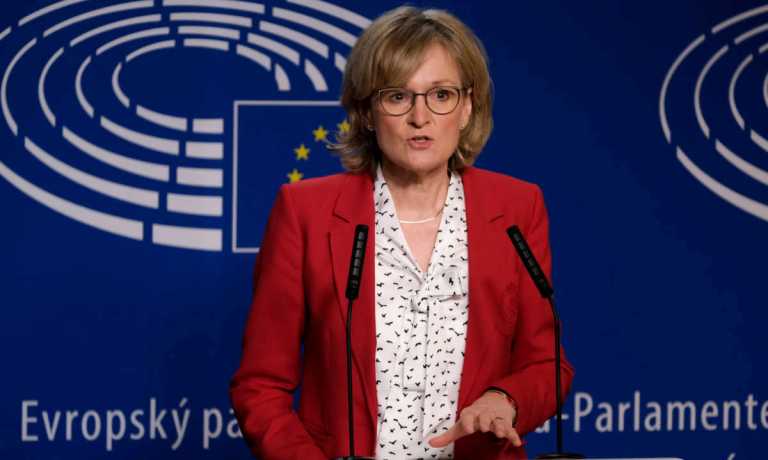
Mairead McGuinness, EU Commissioner for Financial Services, Financial Stability and Capital Markets Union, met with lawmakers during a trip to Washington DC and New York last week to talk about how to regulate the cryptocurrency and digital assets industry.
The Irish commissioner met with Rep. Patrick McHenry (R-North Carolina) and Sen. Kirsten Gillibrand (D-New York) as well as Federal Reserve Chair Jerome Powell and Janet Yellen during a Regulatory Roundtable, she said on Twitter.
This was her first visit to the U.S. as EU Commissioner for Financial Services, she said in a LinkedIn post.
While the European Union recently passed among the most comprehensive frameworks surrounding crypto, the U.S. is still grappling with assigning agency oversight. The Securities and Exchange Commission has been aggressive in monitoring and legislating crypto exchanges, but coins have little supervision.
The U.S. is also still debating whether cryptocurrencies should qualify as securities regulated by the SEC or commodities that fall under the regulation of the Commodity Futures Trading Commission.
Advertisement: Scroll to Continue
See also: Final Draft of EU Crypto Law Caps Stablecoin Transactions
The Markets in Crypto Assets (MiCA) law creates a broad legal framework for digital assets including cryptocurrencies and stablecoins, PYMNTS reported on Oct. 6.
It divides cryptocurrencies into three categories: stablecoins, which are called e-money; asset-referenced tokens, which are stablecoins backed by assets other than fiat, including algorithmic stablecoins like the TerraUSD that collapsed in a $48 billion run in May; and everything else.
Read more: US Regulators Sound Cautious Note on FinTech Innovation
“In the EU we look forward to working with the U.S. on ways to make digital finance safer, greener, and more transparent,” McGuinness said in a separate LinkedIn post from her attendance in Washington for FinTech Week.