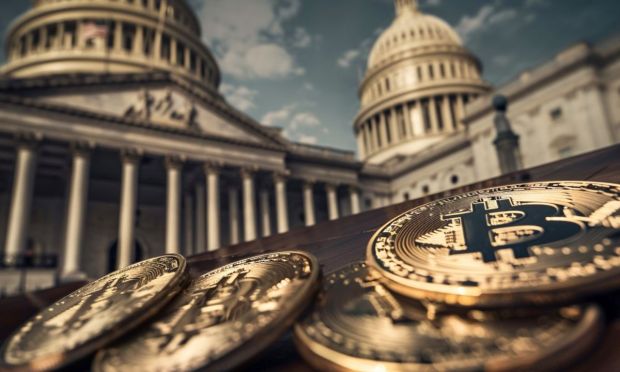
On the campaign trail, President Donald Trump pledged to make America the world’s “crypto capital.”
Now, a change in leadership on Capitol Hill could mean greater scrutiny into the digital assets sector, the Financial Times (FT) reported Sunday (Nov. 8).
As that report points out, Democrats made Trump’s ties to the crypto sector a key issue in last week’s midterm election, where the party won in heavily Republican parts of the country.
Congressman Robert Garcia, D-Calif., who will head the House Oversight Committee starting next year, has said his party will be “focused like a laser” on investigations, including into the Trump family and their profits from cryptocurrencies.
“The president himself has a crypto scheme where he’s making billions of dollars,” Garcia said Wednesday. “This family is billions richer.”
The FT noted that while Democratic senators have in the last two years sent repeated inquiries to companies like Binance and Tether, those missives have been unanswered. Now that the Democrats control both the House and Senate, they have the power to subpoena crypto companies. Ignoring those subpoenas can carry civil or criminal penalties, the report added.
“My advice, if you’ve been on the receiving end of a letter from congressional Democrats and didn’t respond to their liking, get ready to answer them directly,” Ron Hammond, head of policy and advocacy at crypto market maker Wintermute, told the FT.
“Even crypto firms who properly received various licenses from Trump-appointed agencies while also being seen as major donors to Trump or his initiatives should expect scrutiny.”
PYMNTS wrote last week that the outcome of the midterms means that the crypto sector “lost several prominent allies.”
Ohio’s Sherrod Brown, who chaired the Senate Banking Committee during his previous tenure in Congress, defeated Republican Jon Husted in Ohio despite significant spending by the cryptocurrency industry to derail his candidacy.
In the House, Republicans Zach Nunn, Bryan Steil, and Ann Wagner, all associated with crypto-friendly policymaking, also lost their seats.
The industry has not lost all its supporters among Congress. Sen. Kirsten Gillibrand of New York, a prominent Democratic supporter of digital asset legislation, emerges from the midterms with increased political influence. Other lawmakers could still pursue targeted measures revolving around taxation, custody or market infrastructure.
“But the political infrastructure that made expansive legislation possible has become less favorable,” that report said. “Senator Brown’s return, for example, could prove especially consequential if he assumes a leadership role on Senate Agriculture, which has jurisdiction over the Commodity Futures Trading Commission.”