The Consumer Price Index (CPI) was up 0.2% in July according to the Tuesday (Aug. 12) release, decelerating from June’s 0.3% pace; through the past 12 months, the 2.7% increase is steady to the 2.7% rate seen in June. The latest readings were broadly in line with estimates.
The “core” index, which strips out food and energy costs — and thus gives a read across for a variety of segments that are seeing the impacts of tariffs — was 0.3% higher in July vs. June, representing the biggest jump since the beginning of the year. The year-on-year gain was 3.1%, accelerating from June, when the core measure was up 2.9% year on year. And if you go a step further: All items less food, shelter and energy increased 0.4% last month and 2.5% over the past 12 months, the highest since July 2023.
Shelter prices rose 0.2% in July, remaining the main contributor to the overall monthly increase. However, the pace of price growth in this category has slowed, with the year-over-year index up 3.7%, the lowest since 2021.
Mixed Picture on Food
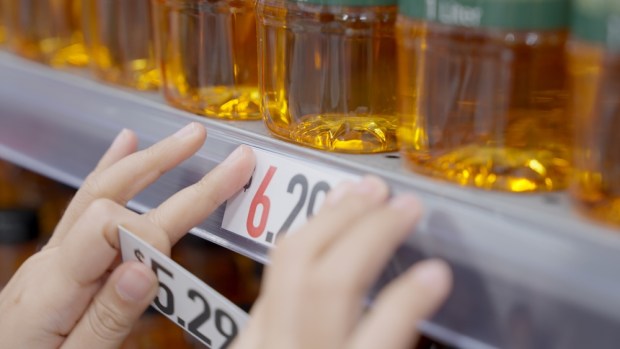
The data show some lumpiness in the costs of stocking the pantry and going out to eat. The BLS data show the food index was unchanged in July after rising 0.3% in each of the previous two months, for a 12-month gain of 2.8%. Food at home fell 0.1% in July. Dairy and related products rose 0.7%, ending a three-month streak of declines, largely due to a 1.9% increase in milk prices.
Meats, poultry, fish and eggs rose 0.2%, halting a three-month decline, as increases in meat, pork, and fish were offset by drops in poultry and eggs. After sharp increases in early 2025, egg prices have now declined for four consecutive months, approaching December 2024 levels. Non-alcoholic beverages fell 1.3%, and cereals and bakery products slipped 0.2%.
As for dining out: The index for food away from home rose 0.3% in July, with full-service meals up 0.5% and limited-service meals up 0.1%. Over the past year, food away from home increased 3.9%.
The Tariff Impact
Tariffs are beginning to bite. Personal care items increased 0.4% and furniture and bedding rose 0.9% in July and are up 3.2% over the past year, the highest since December 2022. Motor vehicle parts prices increased for the third consecutive month, up 0.9% in July and 2.9% year over year, the highest since August 2023. Appliance prices fell 0.9% in July and are now 0.3% below July 2024 levels.
Apparel prices rose 0.1% in July but remain 0.1% below year-ago levels. Sporting goods prices increased 0.4% in July, continuing the upward trend that began in April, though they are still down 1.3% year over year. Prices for recreational reading materials fell 0.3%, while musical instruments and accessories remained unchanged.
The Data Impact
The data itself, we note, is at least somewhat truncated. As detailed here, there’s been a temporary suspension of some of the data collection — covering an entire city in each of Nebraska, New York and Utah (Lincoln, Buffalo and Provo, respectively). The BLS has also said that there had been a suspension of data collection on 15% of samples taken in 72 locations.
The end result is that at least some of commodity and housing data has been affected (though minimally so) at the moment. The BLS indicated that “12-month percent change estimates differed from the published CPI for all urban consumers (CPI-U) estimates by less than 1/100th of a percentage point on average” but added, too, that “the volatility of subnational and sub-aggregate item indexes also is impacted by the collection suspensions. BLS did not measure the impact of collection suspensions on subnational and item indexes.
The July data may have cheered markets — they’re up in early Tuesday action on sentiment over rate cuts. But as reported here also on Tuesday, wage growth is slowing; PYMNTS Intelligence data indicates that more than two-thirds of us are living paycheck to paycheck, with roughly a quarter struggling to pay the bills. The inflation data could have been worse, of course, but there’s no time to breathe a sigh of relief.