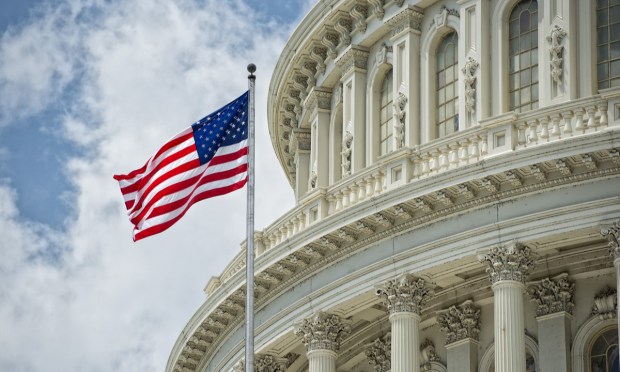
Fraudsters, aided by advanced technologies, pose a pervasive and escalating threat to the financial system, financial services and risk experts told lawmakers on Capitol Hill Thursday (Sept. 18).
A House Financial Services Committee oversight and investigations subcommittee hearing titled “Fraud in Focus: Exposing Financial Threats to American Families” brought together experts to discuss the changing nature of fraud and the limitations banks face with current technologies, and the collaborative strategies needed to combat fraudsters.
Ian Bednowitz, general manager of LifeLock, a division of Gen Digital, Inc., described fraud as “escalating at an exponential pace, putting more people at risk every single day,” as over 75% of cybercrime originates from scams and social engineering.
Paul Benda, executive vice president of risk, fraud and cybersecurity for the American Bankers Association (ABA), underscored the ways in which fraudsters are working in concert to target banks and their customers. “From using breakthrough technologies such as generative artificial intelligence (AI) to old-fashioned theft of checks out of mailboxes, bad actors are relentlessly pursuing numerous ways to scam consumers and small businesses out of their money,” he said during his testimony, as “the criminals have shifted their tactics from brute force attacks and account takeover schemes to focus on imposter scams that build trust with the consumer and convince them to authorize the transfer of funds.” Check fraud is an area of significant concern.
“Banks cannot win on their own,” he said.
Subcommittee Chairman Rep. Dan Meuser (R-Penn.) offered similar sentiment, stating in his opening remarks that “no single actor can stop fraud on their own. To truly protect families, we must foster collaboration across all stakeholders. That includes partners across federal, state, and local government, as well as the financial sector working together, with technology platforms and telecom companies.”
Crypto and P2P Scams
Kate Griffin, director of the National Task Force on Fraud and Scam Prevention at The Aspen Institute Financial Security Program, said that crypto scams are growing, and in her testimony, she cited the FBI’s 2024 data that pegged overall losses tied to various scams at $16.6 billion, a 33% increase over 2023, with investment scams, business email compromise and tech support fraud being the largest financial tolls. She also noted that “Call center, imposter, and AI-generated scams are scaling fast.”
Mobile and banking channels pose particular risk, said Carla Sanchez-Adams, a senior attorney at the National Consumer Law Center, as scammers to exploit “newer payment technologies” amid a rise in P2P fraud. And among her recommendations: Consumers should be protected from liability when they are defrauded into initiating a transfer; they should also be reimbursed by the financial institution that allowed the criminal fraudster to receive the fraudulent payment.
Limitations of Current Technologies and Frameworks
While banks have invested heavily in security, the witnesses told lawmakers there are significant limitations in their ability to combat fraud on their own, often due to technological constraints, regulatory gaps, and the psychological element of scams. Artificial intelligence (AI) is a “dual edged sword,” said Bednowitz, as it is leveraged by fraudsters even as banks are using the technology to bolster their own defenses.
Best Way to Combat Fraud: A ‘Whole-of-Ecosystem’ Approach
The witnesses converged on the need for a comprehensive, collaborative and multi-faceted strategy that extends beyond banks to include government, technology companies, and consumers.
The ABA’s Benda advocated for a “whole of ecosystem approach, meaning each entity that is part of the scam lifecycle has a responsibility to protect the consumer,” as the ABA proposes a national strategy to combat scams. Likewise, Griffin advocated a private/public sector collaboration, and for streamlined data collection and analysis through a single reporting portal.
During the back and forth with witnesses, Rep. French Hill (R-Ark.), noted that combatting fraud is akin to a “whack a mole” endeavor, and called out debit scams, particularly those that are tied to fuel pumps at gas stations. Issuers are faced with absorbing those losses, he said, and he asked what merchants should do to help stem point of sale fraud. Griffin replied that there are a number of emerging technologies that can be deployed to detected skimming efforts, and said that coordination, particularly among law enforcement, would be of significant benefit.