Gig work and digital employment have grown faster than the laws governing them.
That gap is now drawing sustained attention from regulators and courts, as labor antitrust shifts from a niche specialty to a core concern for companies across the digital economy.
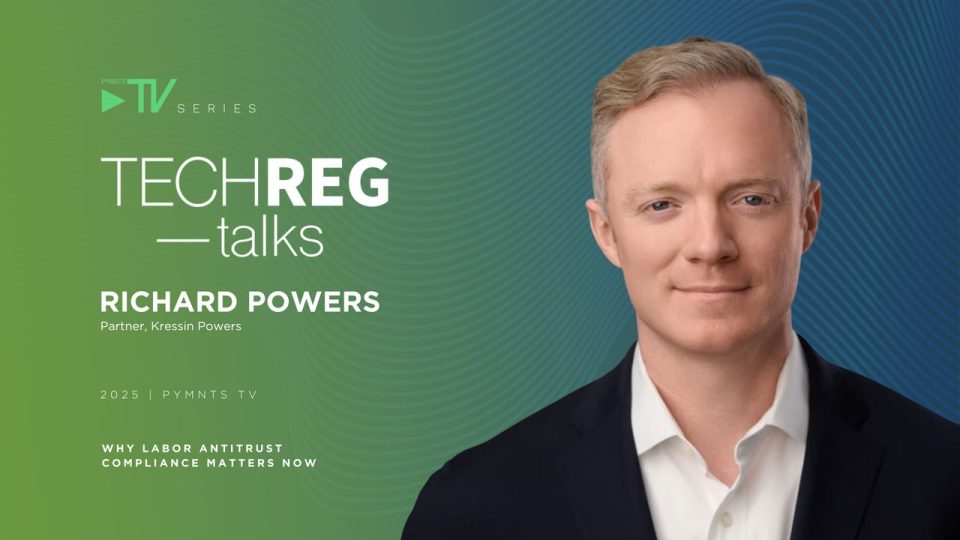
In an interview with Competition Policy International (CPI), a PYMNTS company, Richard Powers, partner at Kressin Powers, described a shift in emphasis.
“The enforcement caught up with conduct that was always illegal,” he said, noting that the underlying legal doctrines are “grounded in decades-old body of case law.”
The change, he added, reflects regulators’ decision over the past decade to prioritize labor market conduct, particularly following joint guidance issued by the Department of Justice and the Federal Trade Commission in 2016.
How Gig Economy Platforms Create Labor Antitrust Risk
The gig economy sits at the center of this scrutiny. Platform-based work arrangements often involve algorithmic pricing, data transparency tools and restrictions on worker mobility — all of which resemble practices long examined under antitrust law. Powers pointed to a growing body of cases testing whether these practices cross into prohibited conduct, particularly when they affect wages or limit worker choice.
He outlined the principal categories of risk that have emerged in recent years: wage fixing, no-poach agreements, information sharing, monopolization concerns and non-compete clauses. These categories, while familiar in traditional antitrust analysis, are now being applied to labor markets more frequently.
“Courts have increasingly treated wage fixing as per se illegal with criminal consequences,” Powers told CPI, adding that companies have become more aware of the exposure.
That awareness has been sharpened by enforcement actions and, in some instances, criminal convictions, even as early cases have produced mixed outcomes.
Why Existing Antitrust Law Still Applies to Gig Platforms
Despite the novelty of gig platforms and algorithmic tools, Powers said the legal foundation remains unchanged. Enforcement relies on established principles governing agreements among competitors, particularly those that restrain trade or suppress wages.
“The fundamental legal framework … has developed as the case law has progressed,” he said, describing a process of refinement rather than reinvention.
Courts, including the Supreme Court, have applied these principles to labor markets without hesitation, as seen in unanimous decisions extending antitrust scrutiny to how companies set worker pay.
One of the most visible areas of enforcement involves wage fixing, where competing firms coordinate compensation levels. Powers said such conduct carries not only civil liability but also potential criminal consequences, placing executives at personal risk.
Companies are increasingly reluctant to test those boundaries, he said.
“You don’t want to roll the dice on the personal liberty of your executives … with the vote of a jury,” he said.
The stakes extend beyond individual cases, as enforcement actions often trigger follow-on litigation from state authorities and private plaintiffs.
Powers framed this escalation as part of a broader reassessment of labor value in digital markets, where compensation decisions increasingly reflect platform-wide wage patterns rather than choices made within a single firm.
Why Information Sharing Is a Hidden Labor Antitrust Risk
Among the risk categories Powers outlined, information sharing is the most underappreciated. Unlike explicit wage-fixing agreements, information exchanges often appear benign, especially when conducted through third-party intermediaries.
The legal risk can still be substantial.
“Every price fixing agreement involves some form of information sharing, but not every information sharing agreement is price fixing,” he said.
We’d love to be your preferred source for news.
Please add us to your preferred sources list so our news, data and interviews show up in your feed. Thanks!
That distinction matters: it separates civil liability from potential criminal enforcement.
The withdrawal of regulatory safe harbors in 2023 added further uncertainty. Companies that once relied on established guidelines must now navigate a landscape where the line between permissible benchmarking and unlawful coordination is harder to define.
No-Poach Agreements: When Informal Understandings Become Antitrust Violations
No-poach agreements present another area of concern, particularly as enforcement expands beyond formal contracts to informal understandings. Powers said unwritten arrangements may attract even greater scrutiny.
“If these are important understandings … why aren’t you putting it in writing?” he said, recalling questions posed during his time at the DOJ.
Informal or not, such arrangements can limit worker mobility and suppress wages, bringing them within the scope of antitrust enforcement.
That focus on worker impact has become a defining feature of recent cases, with regulators framing violations in terms of harm to employees rather than market structure alone.
How AI and Algorithmic Decision-Making Create New Antitrust Exposure
The rise of agentic commerce adds another layer of complexity. As algorithms take on decision-making roles in pricing and hiring, questions arise about how antitrust principles apply to automated systems.
Powers said courts have so far applied established doctrines to new technologies without significant modification. But he identified artificial intelligence as a potential inflection point, particularly when systems operate autonomously.
“When an AI system itself is making decisions on behalf of the company … we’ll see how courts handle those issues,” he said.
In this environment, compliance has taken on renewed importance. Powers said companies should incorporate labor-related risks into their antitrust programs, including specific guidance for HR and data practices.
The challenge is balancing operational efficiency with legal safeguards. Data-driven compensation strategies must be structured to avoid the appearance of coordination.
As enforcement intensifies, the margin for error is narrowing.
“There is such significant risk around litigation … and even the costs of investigations are significant,” Powers said, adding that firms must treat compliance as a foundational element of strategy, not an afterthought.


 Add as Preferred Source