UAE SMBs Rethink Investment To Create Seamless Cross-Channel Shopping Experience

May 4, 2022 - 4 years ago

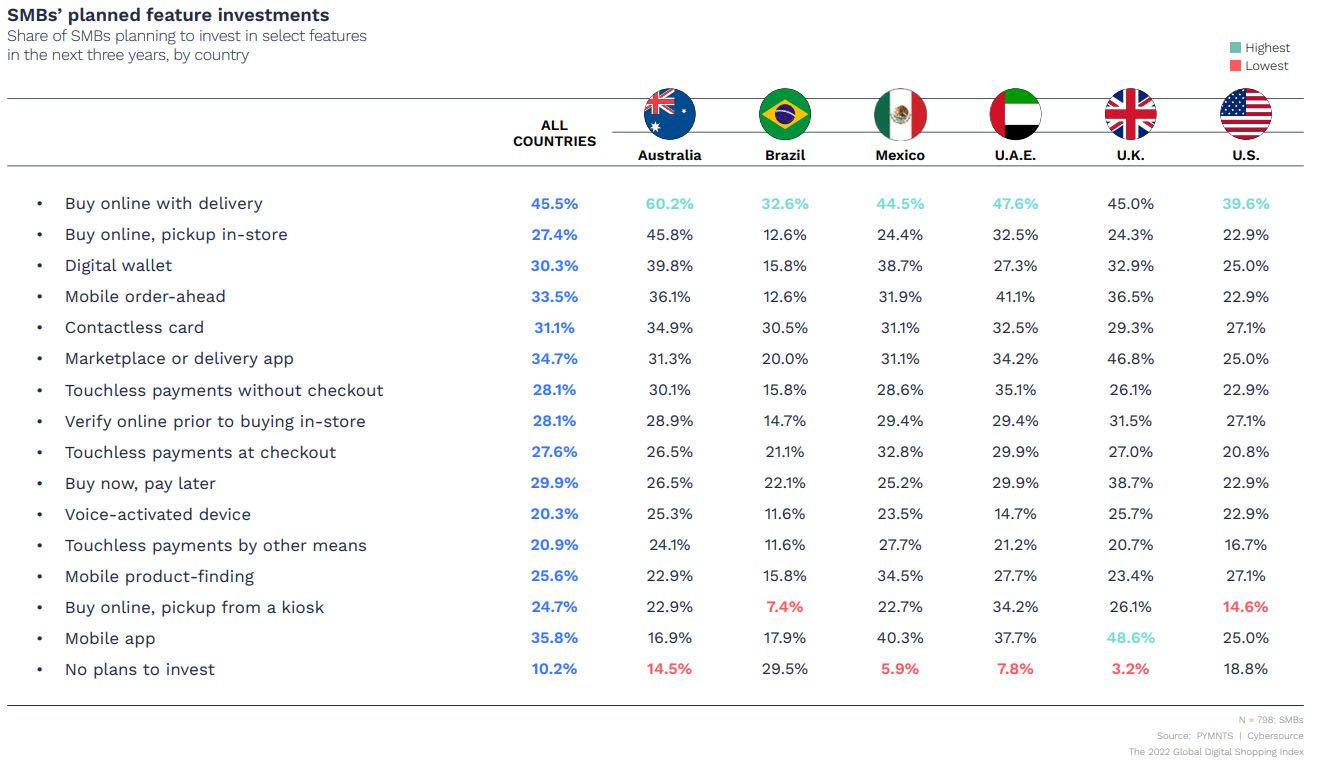
When it comes to investment plans in mobile order-ahead features, touchless payments at the brick-and-mortar point of sale (POS) and in-store kiosk pickup options for eCommerce purchases, small- and medium-sized businesses (SMBs) in the United Arab Emirates (UAE) are top of the list.

    Get the Full Story

    Complete the form to unlock this article and enjoy unlimited free access to all PYMNTS content — no additional logins required.

    yesSubscribe to our daily newsletter, PYMNTS Today.

    By completing this form, you agree to receive marketing communications from PYMNTS and to the sharing of your information with our sponsor, if applicable, in accordance with our Privacy Policy and Terms and Conditions.

    Their shopping index scores were higher than the average of those of six countries in a recent cross-country PYMNTS study based on a survey of 3,100 businesses and 13,114 consumers across six countries — Australia, Brazil, Mexico, the UAE, the United Kingdom and the United States.

    Read the report: 2022 Global Digital Shopping Index – SMB Edition

    The SMB-focused PYMNTS study, published in collaboration with Cybersource, showed that for mobile order-ahead, SMBs in the Middle Eastern country earned a score (41.1%), almost 8 points higher than the six-country average.

    In touchless payments at the brick-and-mortar POS, UAE merchants also ranked highest among the six countries, scoring seven points higher than average when it involved contactless payments without checkout, and earning a little less than three points higher than the average for payments at checkout.

    The highest gap was recorded for in-store kiosk pickup options for online purchases, with UAE merchants scoring 9.5 points higher than the average of 24.7%, with U.K. SMBs placing second at 26.1%.

    Overall, the report showed that SMBs, regardless of location, offer far more of the features necessary to support a seamless cross-channel shopping experience than their larger competitors, a reason why they no longer feel the same need to invest in technology development.

    For example, a mere 20% of these businesses planned on investing in voice-recognition technology in the next three years because the technology is already ubiquitous among the remaining 80%, while only 30% said they had plans to invest in buy now, pay later (BNPL) in the next three years because most of the remaining 70% already offer it.

    Lending Platform Alchemy Launches BNPL Option

    May 4, 2022 - 4 years ago

    BNPL

    Payments portal Alchemy launched a buy now, pay later (BNPL) platform that it said will transform retailers into FinTechs, according to a Wednesday (May 4) company press release.

      Get the Full Story

      Complete the form to unlock this article and enjoy unlimited free access to all PYMNTS content — no additional logins required.

      yesSubscribe to our daily newsletter, PYMNTS Today.

      By completing this form, you agree to receive marketing communications from PYMNTS and to the sharing of your information with our sponsor, if applicable, in accordance with our Privacy Policy and Terms and Conditions.

      Alchemy’s BNPL solution can be integrated with major eCommerce platforms, as well as sales and CRM tools such as HubSpot and Salesforce, according to the release.

      Allied Market Research said BNPL is a $100 billion market that is projected to grow to $4 trillion in the next 10 years, increasing at a compound growth annual rate of 45%. BNPL allows merchants and small businesses to sell their product and services without accepting the full payment at checkout, instead accepting payments in instalments from customers.

      Alchemy’s BNPL solution offers identity verification, payment management, customized merchant and customer portals and communication tools.

      Related: Alchemy Introduces Automated Lending Platform for Medical Financing

      In April, Alchemy launched a payments system for patients looking for care now, pay later services that allow them to break their cosmetic and elective surgeries into smaller payments.

      Doctors can onboard clients, request disbursement from lenders, take down payments and upsell clients with additional products and services on Alchemy’s medical patient portal, while lenders get access to all application information, loan information, underwriting elements and loan management tools through the lender portal.

      Today in Retail: Kohl’s Advisory Firm Says Shareholders Should Retain Full Board; Alibaba Targeting Thrifty Shoppers as Sales Slide

      May 4, 2022 - 4 years ago

      CVS Caremark

      Today in retail, CVS relies on tech and robotics as its store count declines and it focuses on post-COVID efficiencies, while the fashion industry is preparing for the holiday shopping season now. Plus, Murphy USA reports first-quarter growth as fuel prices continue to rise.

        Get the Full Story

        Complete the form to unlock this article and enjoy unlimited free access to all PYMNTS content — no additional logins required.

        yesSubscribe to our daily newsletter, PYMNTS Today.

        By completing this form, you agree to receive marketing communications from PYMNTS and to the sharing of your information with our sponsor, if applicable, in accordance with our Privacy Policy and Terms and Conditions.

        CVS Leans on Tech, Robotics to Drive Post-COVID Efficiencies as Store Count Declines

        With its COVID-19 vaccine and testing franchise on the decline, the nation’s largest pharmacy retailer said Wednesday (May 4) that it was looking for ways to deploy new tech to help streamline connectivity with customers while also helping to boost sales and profitability.

        Although the $125 billion Rhode Island-based healthcare provider now generates about two-thirds of its sales and profits from its healthcare and pharmacy benefit businesses, its chain of 9,900 stores in 49 states is still a growing operation, albeit one that CVS is continuing to shrink.

        For the three months ending March 31, CVS said its Retail/Long Term Care division revenues rose 9% to $25.4 billion, 80% of which came from the pharmacy or “back of store” and just 14%, or $5 billion, generated by traditional “front of store” merchandise sales.

        Kohl’s Advisory Firm Urges Shareholders to Keep Current Board of Directors

        Kohl’s shareholders should vote to retain all 13 of the company’s nominees for director at next week’s annual shareholder meeting May 11, proxy advisory firm Glass Lewis said in a company press release Tuesday (May 3).

        The vote will come as Kohl’s considers whether to sell some or all of the department store’s operations to outside bidders or focus on making changes internally to turn the company around. Glass Lewis noted the transparency of the board’s review of its future strategy as one reason to keep them in place for another term.

        “In our view, and contrary to the dissident’s assertions, the company has been reasonably transparent regarding various key aspects of the sale process, and we see no substantive evidence to suggest the board is not actively soliciting/entertaining any and all credible offers,” Glass Lewis wrote, according to the release.

        Murphy USA Continues Growth as Consumers Pay More at the Pump

        At a time when inflation and rising fuel prices are leading to consumer belt-tightening and investor anxiety, gas-and-go store company Murphy USA has found a way to buck the trend, watching its stock price rise from less than $170 per share in early March to more than $245 per share early Wednesday (May 4).

        Murphy’s total retail gallons increased 7.8% to 1.1 billion gallons in Q1 2022 compared to Q1 2021, while same-store sales volumes increased 3.8%, according to a press release. Merchandise sales were up 18.4% year over year to $175.7 million in the first quarter, with food and beverage comprising 14.6%, up from 11.5% in 2021.

        The company opened six new Murphy Express stores and one QuickChek store in the first quarter of 2022, increasing the store count to 1,686 as of the end of March, the release stated. There are 17 new Murphy Express stores, two new QuickChek stores, and 17 raze-and-rebuild Murphy USA stores under construction.

        Sluggish Sales Prompt Alibaba to Go After Thrifty Shoppers

        Chinese technology firm Alibaba Group is trying to regroup and regain its financial footing by focusing its eCommerce efforts on its Taobao Deals app, which reaches an estimated 930 million people in third-tier cities, the Financial Times reported on Wednesday (May 4).

        Alibaba launched the Taobao Deals app in March 2020 to target bargain hunters, a segment of shoppers that is quickly growing. The company previously focused on wealthier first- and second-tier cities with its main eCommerce platform Taobao and its high-end marketplace Tianmao.

        Third-tier cities generally have a GDP between $18 billion and $67 billion, with each having a population of 150,000 to 3 million people, according to a South China Morning Post report. There are 71 cities in the third-tier classification, whereas first and second tiers combined have under 50. Consumption in the lower-tier cities in China is anticipated to go up to an estimated $6.9 trillion in 2030 from $2.3 trillion in 2017, according to Morgan Stanley, per FT.

        Apparel Industry CFOs Use Tech, Intuition to Complete Holiday Purchases 8 Months Early

        Anticipating the next movement of the customer and building up relationships with the big brands is important for any retailer.

        That’s especially true when your business is selling footwear, apparel, accessories and home products from consumer brands. Joseph Falcão, chief financial officer (CFO) at Orva, told PYMNTS that the company had already bought goods for the next holiday season — the lead times are that long.

        Falcão joined the 70-year-old business turned eCommerce platform on March 30 in the newly created role of CFO. His agenda includes doubling the revenue by creating sound processes, systems, speed and agility by using a better technology stack, including machine learning (ML) and artificial intelligence (AI) that will help spot common trends and patterns and anticipate what the customers want.

        The Data Point: 61% of US Shoppers Gravitate to Basics as Inflation Presses Down

        May 4, 2022 - 4 years ago

        Diligently tracking the movements and metrics of consumers in the connected economy, we’ve identified four important new consumer personas and facts about their buying behaviors.

          Get the Full Story

          Complete the form to unlock this article and enjoy unlimited free access to all PYMNTS content — no additional logins required.

          yesSubscribe to our daily newsletter, PYMNTS Today.

          By completing this form, you agree to receive marketing communications from PYMNTS and to the sharing of your information with our sponsor, if applicable, in accordance with our Privacy Policy and Terms and Conditions.

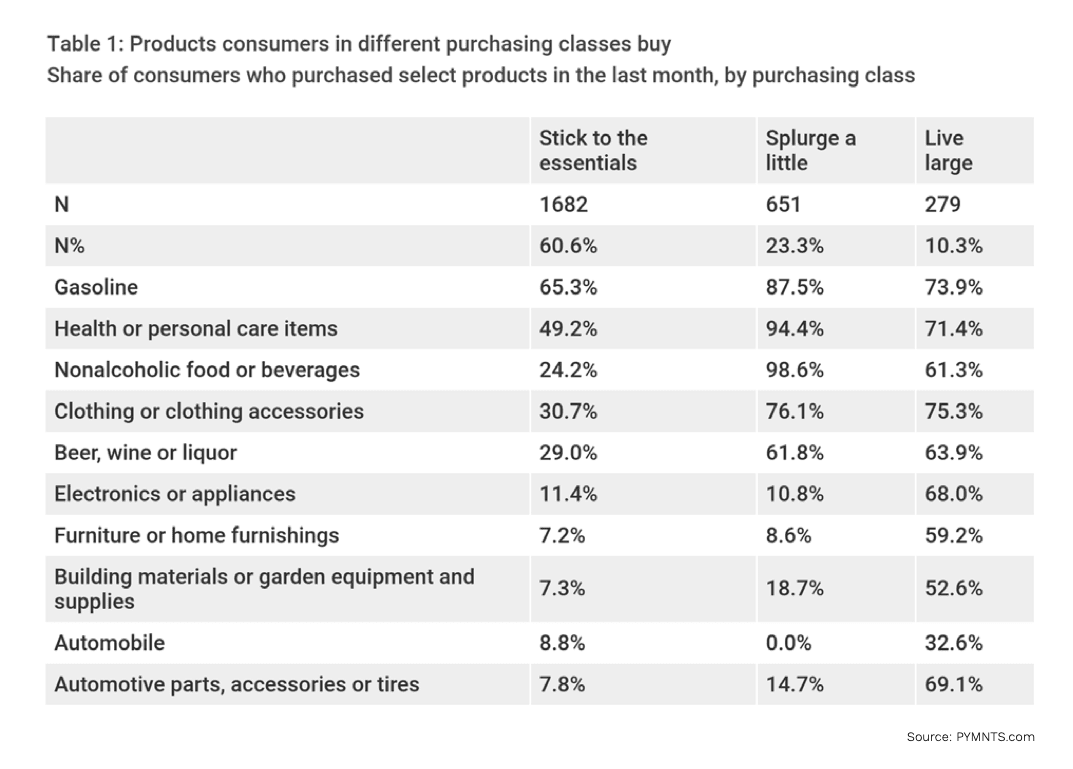
          Based in a census-balanced survey of nearly 2,800 consumers, PYMNTS’ new study ‘The ConnectedEconomy™ Monthly Report: 3 Ways Consumers Are Dealing With Inflation – April 2022’ introduces us to the “live large” persona who like higher-ticket electronics and décor; the “splurge a little” consumer who enjoys a few fun purchases; the “stick to the essentials” persona focused on fueling up and health and food items; and the “don’t need much” consumers live up to their moniker, buying infrequently and only as need dictates.

          These data make the case for a connected consumer feeling inflation and uncertainty.

          Table 1

          • 61% of U.S. consumers are now shopping mostly for basics and essentials such as gas, health products, food and beverages.

          With “stick to essentials” clearly at work here, the study states, “Gasoline is the single most common purchase “stick to the essentials” consumers make, with 65% of this group, or 101 million consumers, having purchased gas in the last month. Just 48% of them bought health or personal care items during that time, and 24% bought non-alcoholic food and beverages.”

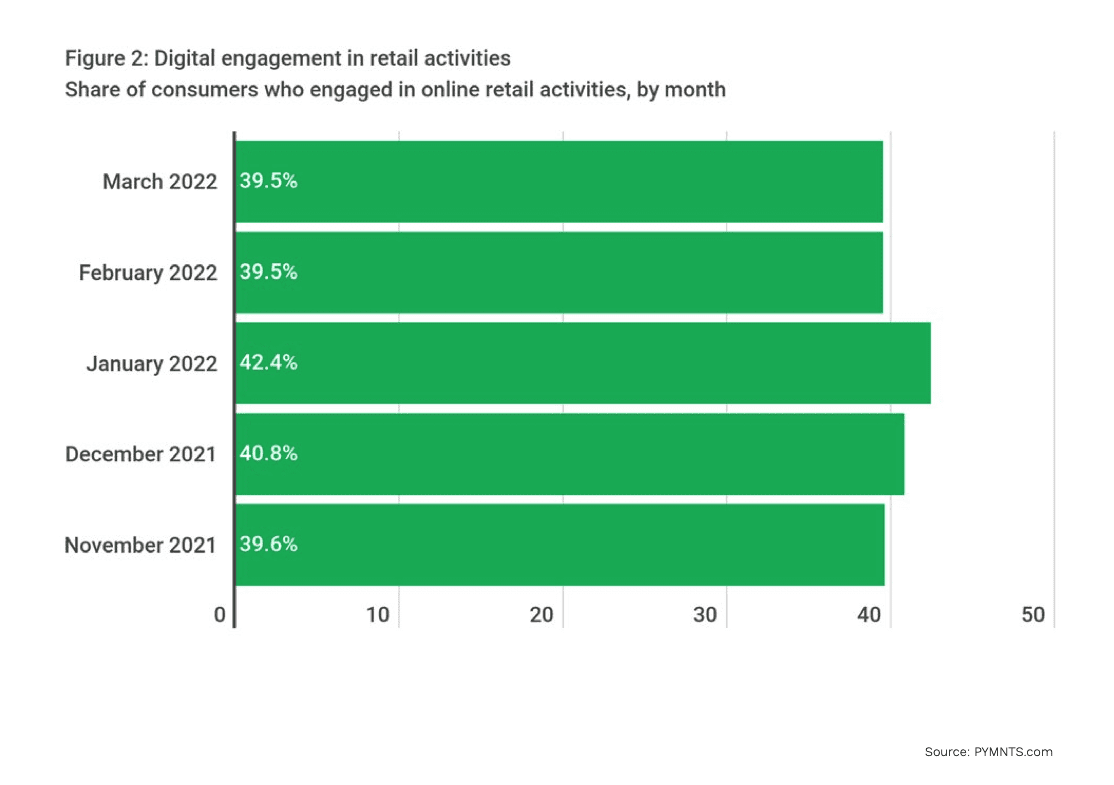
          Figure 2

          • March was the second consecutive month that just 40% of U.S. consumers made online retail purchases — the lowest engagement rate in five months.

          You know what they say about what goes up. After two years of unstoppable growth, the April ConnectedEconomy™ report notes that “eCommerce sales in the U.S. have stagnated in the past few weeks. The amount of consumers making retail purchases online dropped down from a peak of 42% in January. This may seem like a small difference, but it translates to 7 million fewer consumers making eCommerce purchases than just a few months ago.”

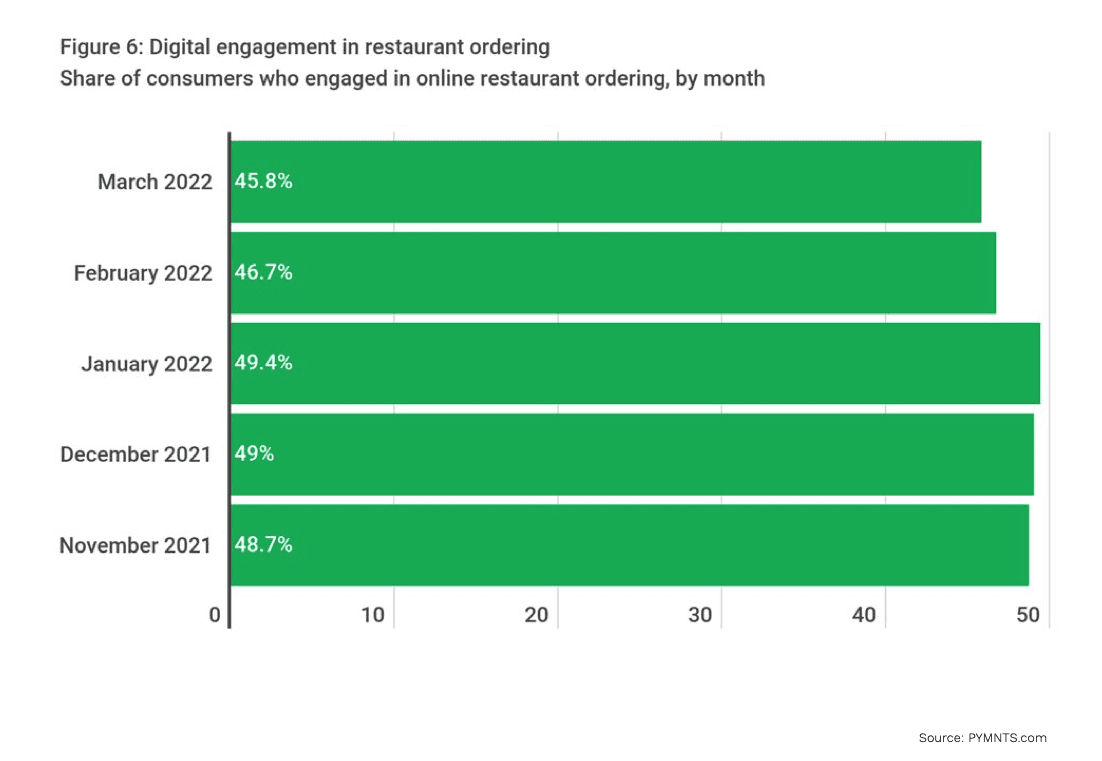
          Figure 6

          • 46% of consumers, placed restaurant orders online in March, down 7% from January

          Restaurant ordering and dining are an economic bellwether, and with inflation at a 40-year high it’s unsurprising that we would see some drop off in online restaurant orders. Per the study, “the share of consumers ordering from restaurants online was down for the second consecutive month in March, with just 46% of consumers ordering food online. This is down from 47% who did so in February and 50% who did so in January.”

          Get the study: The ConnectedEconomy™ Monthly Report: 3 Ways Consumers Are Dealing With Inflation – April 2022

          Walgreens Names 3 SVPs in Charge of Marketing, Merchandising, Products

          May 4, 2022 - 4 years ago

          Walgreens

          Walgreens has named a trio of executives to key leadership positions in the company, the drugstore chain announced Wednesday (May 4).

            Get the Full Story

            Complete the form to unlock this article and enjoy unlimited free access to all PYMNTS content — no additional logins required.

            yesSubscribe to our daily newsletter, PYMNTS Today.

            By completing this form, you agree to receive marketing communications from PYMNTS and to the sharing of your information with our sponsor, if applicable, in accordance with our Privacy Policy and Terms and Conditions.

            New leaders Linh Peters (senior vice president and chief marketing officer) Luke Rauch (senior vice president and chief merchandising officer) and Bala Visalatha (senior vice president and chief product officer) are all set to begin their roles this month.

            “As strong innovators in their own right, each has an excellent track record when it comes to successfully identifying white spaces across different customer touchpoints and tracking evolving consumer trends, which will be instrumental as we transform our business,” Tracey Brown, Walgreens president of retail products and chief customer officer, said in a press release.

            See also: Walgreens’ Q2 Performance Buoyed by Rising Demand for COVID-19 Tests and Boosters

            Peters will be charged with overseeing Walgreen’s marketing activities, including marketing collaboration, brand design, positioning, and marketing plan execution.

            She comes to Walgreens from Calvin Klein, where she was also CMO and has also worked for Starbucks, Target and Ulta Beauty.

            Rauch will be in charge of the leadership, vision, and performance of Walgreens’ merchandising activities, and is a veteran of the company, most recently serving as chief of staff to Roz Brewer, CEO, and vice president of Walgreens Boots Alliance.

            Visalatha is taking on the newly created role of chief product officer, responsible for making sure all product solutions are aligned to the customer strategy. He was most recently vice president of eCommerce at Walmart U.S. and has also worked for Sam’s Club, and American Express.

            Walgreens recently reported higher-than expected earnings for the second quarter of fiscal 2022 as it saw heavy demand for COVID tests and boosters. The chain recorded its highest comparable sales growth in more than 20 years, with a 14.7% increase year over year in Q2, underlined by a 38% rise in digital sales after 78% growth in that area in fiscal 2021.

            Promotions, Free Shipping Remove Online Shopping Friction

            May 4, 2022 - 4 years ago

            U.S. merchants offer some of the most frictionless user experiences in any country.

              Get the Full Story

              Complete the form to unlock this article and enjoy unlimited free access to all PYMNTS content — no additional logins required.

              yesSubscribe to our daily newsletter, PYMNTS Today.

              By completing this form, you agree to receive marketing communications from PYMNTS and to the sharing of your information with our sponsor, if applicable, in accordance with our Privacy Policy and Terms and Conditions.

              Their Global Shopping Index scores are higher than the average of those of six countries, according to “The 2022 Global Digital Shopping Playbook,” a PYMNTS and Cybersource collaboration based on a survey of 3,100 businesses and 13,114 consumers from six countries.

              Get the report: The 2022 Global Digital Shopping Playbook

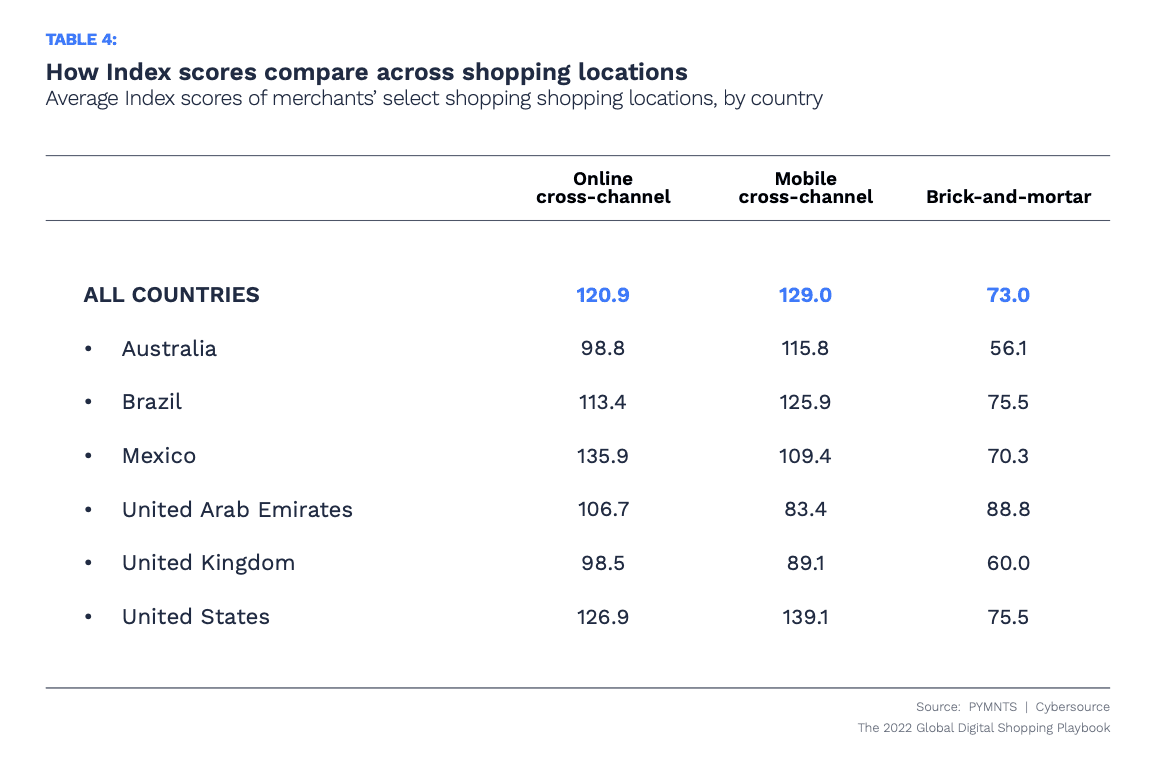
              The Global Shopping Index score is a quantitative measurement of how frictionless or friction-laden merchants’ shopping experiences are. Higher Index scores correspond to more seamless shopping experiences.

              In one shopping location — online cross-channel shopping — U.S. merchants earn a score that’s six points higher than average, topped only by the score of Mexico.

              In mobile cross-channel shopping, U.S. merchants score 10 points higher than average and rank highest among the six countries.

              In the third shopping location — brick-and-mortar — U.S. merchants score three points higher than average, with only the United Arab Emirates scoring higher and Brazil scoring the same.

              Table 4

              The factors that set U.S. merchants apart from the rest are two promotional incentives that inspire shoppers to click “buy.”

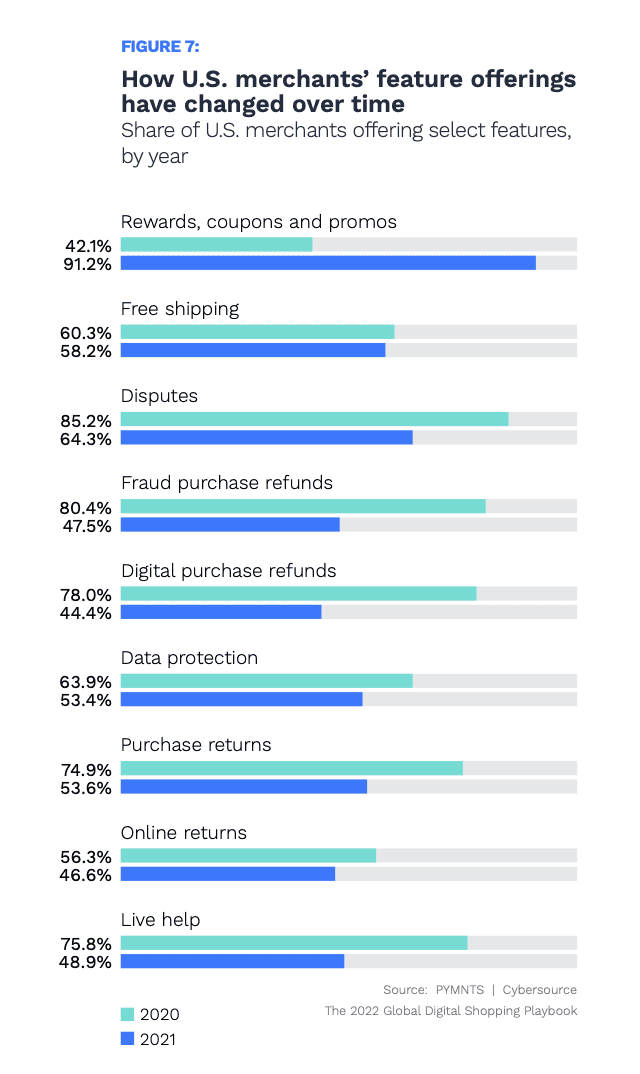
              These include rewards, coupons and promos, which are offered by 91% of U.S. merchants, and free shipping, which is offered by 60% of U.S. merchants.

              Figure 7

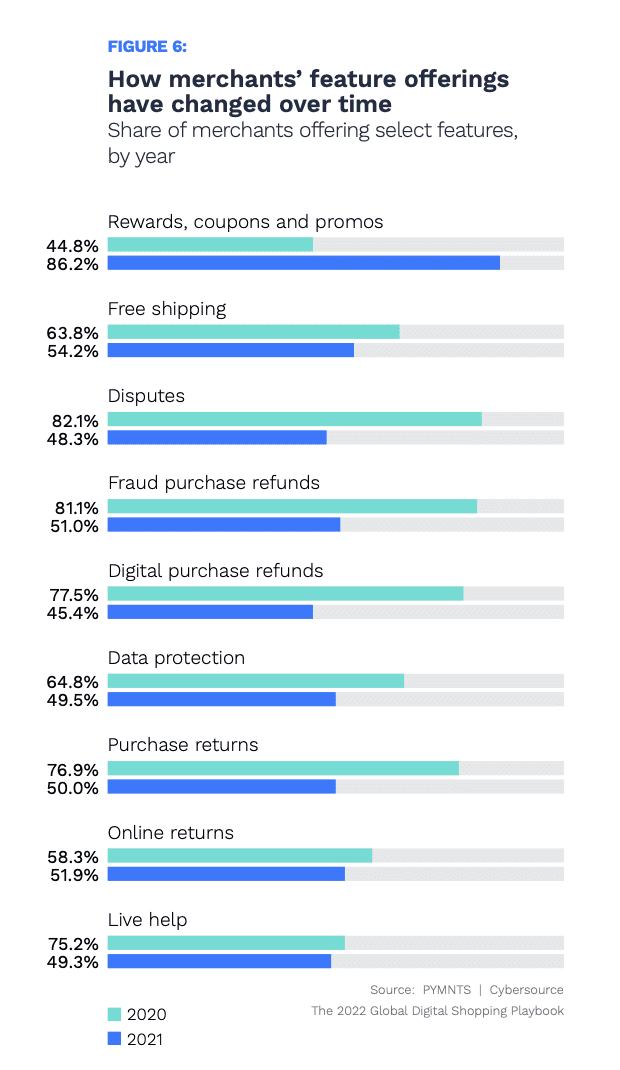
              Among all the merchants of the comparable countries PYMNTS studied, 86% offer promotions and 54% provide free shipping options.

              Figure 6

              U.S. merchants are also far ahead of the rest in providing “protect me” features and practices.

              These include offering capabilities that ensure secure data storage and make it easy for shoppers to resolve disputes and return purchases by mail or at the store location.

              Among U.S. merchants, 64% make it easy for shoppers to resolve disputes, and 54% make it easy for shoppers to return purchases by mail or at a store location.

              Both of those percentages are higher than the shares of merchants on average, which are 48% and 50% respectively.

              Today in Data: Younger Shoppers Embrace BNPL

              May 4, 2022 - 4 years ago

              young shopper

              Today in data, younger consumers — millennials and Gen Z — use buy now, pay later (BNPL) more often than their boomer and Generation X counterparts as this installment payment method grows in popularity.

                Get the Full Story

                Complete the form to unlock this article and enjoy unlimited free access to all PYMNTS content — no additional logins required.

                yesSubscribe to our daily newsletter, PYMNTS Today.

                By completing this form, you agree to receive marketing communications from PYMNTS and to the sharing of your information with our sponsor, if applicable, in accordance with our Privacy Policy and Terms and Conditions.

                Today in Data

                Data

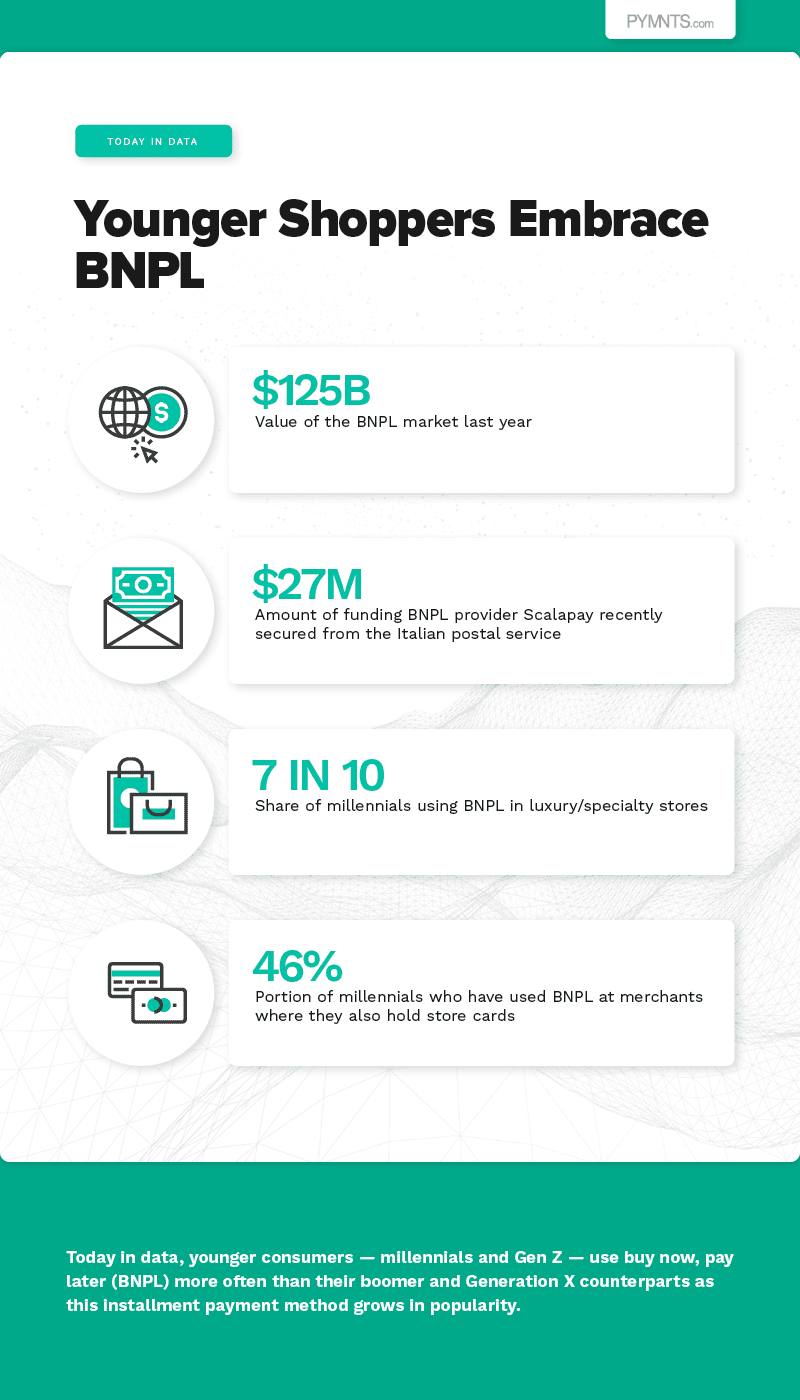
                $125B: Value of the BNPL market last year

                $27M: Amount of funding BNPL provider Scalapay recently secured from the Italian postal service

                7 in 10: Share of millennials using BNPL in luxury/specialty stores

                46%: Portion of millennials who have used BNPL at merchants where they also hold store cards

                CVS Leans on Tech, Robotics to Drive Post-COVID Efficiencies as Store Count Declines

                May 4, 2022 - 4 years ago

                CVS

                With its lucrative COVID vaccine and testing franchise on the decline, the nation’s largest pharmacy retailer said Wednesday (May 4) that it was looking for ways to deploy new tech to help streamline connectivity with customers while also helping to boost sales and profitability.

                  Get the Full Story

                  Complete the form to unlock this article and enjoy unlimited free access to all PYMNTS content — no additional logins required.

                  yesSubscribe to our daily newsletter, PYMNTS Today.

                  By completing this form, you agree to receive marketing communications from PYMNTS and to the sharing of your information with our sponsor, if applicable, in accordance with our Privacy Policy and Terms and Conditions.

                  Although the $125 billion Rhode Island-based healthcare provider now generates about two-thirds of its sales and profits from its healthcare and pharmacy benefit businesses, its chain of 9,900 stores in 49 states is still a highly lucrative and growing operation, albeit one that CVS is currently continuing to shrink.

                  “We have closed approximately 100 stores out of the 300 planned for this year and the 900 we plan to close by the end of 2024,” CVS Health CEO Karen Lynch told analysts on the company’s Q1 earnings call, noting that the company was retaining nearly 70% of customers and employees in the wake of the closures.

                  For the three months ending March 31, CVS said its Retail/ Long Term Care division revenues rose 9% to $25.4 billion, 80% of which came from the pharmacy or “back of store” with just 14% or $5 billion being generated by traditional “front of store” merchandise sales.

                  The Digital Pivot

                  To be sure, CVS has had a very good year and its stock has sharply outperformed both its closest competitor and the broader markets. Specifically, shares of CVS have risen 23% in the past 12 months, compared to a 22% decline for Walgreens Boots Alliance and a flat return for the S&P 500.

                  To maintain that momentum, Lynch said all three prongs of the business were making progress to serve consumers “wherever and whenever they receive health care,” while pointing to new fulfillment option for consumer brands, as well as the growth of free and same day delivery on a growing number of health and wellness products sold online and also available set to become through approximately 6,000 CVS Community Health destinations later this year.

                  In addition, Lynch told analysts the company’s growing tech partnerships were also paying off.

                  “For example, our ‘Minute Clinic’ scheduling is now integrated into Google Search which is driving new and more convenient appointment booking,” Lynch said.

                  In addition, the company’s specialty pharmacy was also using Microsoft text analytics and robotics to automate the 40% of prescriptions that are still paper or fax based, Lynch said, a move that makes it easier and faster for it to fill patients’ prescriptions.

                  “We are increasingly using technology to improve our business process and reduce costs,” added Lynch, who has held the CEO role for 16 months and came to CVS via its acquisition of Aetna in 2018.

                  Lynch said the company and patients were both benefitting from the use of machine learning through an “intelligent medication monitoring and adherence engine” which tracks the most at-risk patients and helps predict the likelihood of they’ll divert from their prescription plans.

                  “This approach then prompts ways in which we can coach and help them maintain their overall health,” she said, adding that machine learning and robotics were also being used to resolve a wide range of prescription drug claims, which previously required the attention of a pharmacist.

                  The use of advanced tech is not only freeing up staff to spend more time with patients, but she said it was also  mproving the consumer experience while reducing overall costs.

                  Adding Primary Care Practices

                  CVS also said that it was still actively looking to add or acquire primary care practices to its portfolio, a move CFO Shawn Guertin described as “capability based” rather than a “jumbo acquisition” without providing further specifics.

                  “We strive to deliver a superior health care experience for our consumers through lowering the cost of care, improving access and building engagement and convenience to our consumers and their communities,” Guertin said, expressing confidence that the company would maintain its momentum for the remainder of the year and beyond.

                  Kohl’s Advisory Firm Urges Shareholders to Keep Current Board of Directors

                  May 4, 2022 - 4 years ago

                  Hudson's Bay, Kohl's, acquisition bid

                  Kohl’s shareholders should vote to retain all 13 of the company’s nominees for director at next week’s annual shareholder meeting May 11, proxy advisory firm Glass Lewis said in a company press release Tuesday (May 3).

                    Get the Full Story

                    Complete the form to unlock this article and enjoy unlimited free access to all PYMNTS content — no additional logins required.

                    yesSubscribe to our daily newsletter, PYMNTS Today.

                    By completing this form, you agree to receive marketing communications from PYMNTS and to the sharing of your information with our sponsor, if applicable, in accordance with our Privacy Policy and Terms and Conditions.

                    The vote will come as Kohl’s considers whether to sell some or all of the department store’s operations to outside bidders or focus on making changes internally to turn the company around.

                    “In sum, we believe shareholders would be best served supporting the current board and its efforts to enhance shareholder value, whether that takes the form of continued oversight of the existing standalone strategy or seeing through the ongoing sale process,” Glass Lewis wrote in its recommendation, per the release. “In our view, the company’s board currently comprises a reasonably well-rounded mix of qualified directors who have complementary experience, qualifications and backgrounds across various relevant industries and disciplines.”

                    Glass Lewis noted the transparency of the board’s review of its future strategy as one reason to keep them in place for another term.

                    “In our view, and contrary to the dissident’s assertions, the company has been reasonably transparent regarding various key aspects of the sale process, and we see no substantive evidence to suggest the board is not actively soliciting/entertaining any and all credible offers,” Glass Lewis wrote, according to the release.

                    Last month, JCPenney owners Simon Property and Brookfield Asset Management were reportedly looking to close an acquisition deal for Kohl’s that values the retail rival at an estimated $8.6 billion.

                    Read more: JCPenney Reportedly Could Buy Rival Kohl’s for $8.6B

                    Simon and Brookfield, two of the biggest mall owners in the U.S., bought JCPenney out of bankruptcy in 2020. Under the proposal, both firms would pick up Kohl’s for $68 a share.

                    If the deal goes through, both JCPenney and Kohl’s would operate as independent brands with the goal of streamlining operating overhead and other expenses.

                    More on Retail