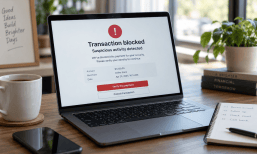
For the past 25 years, card-not-present payments have been built around a defensive premise: Prove the buyer is human, authorized and in control of the transaction. Fraud systems, merchant controls and authentication tools were trained to treat nonhuman behavior as suspicious. That made sense when bots were mostly fraudsters. It becomes more complicated when the “bot” is a legitimate artificial intelligence agent acting on behalf of a consumer or business.
“A lot of the technology that’s been built for online commerce has been built around the concept that, if I see something that feels like a bot and it’s coming from something that’s not a device, I need to stop it,” Robin Gandhi, chief product officer at Lithic, told PYMNTS.
Agentic payments reverse that question, he said.
Commerce infrastructure in the age of agentic AI now must decide when nonhuman behavior is a delegated commerce signal and not just a fraud signal. As a result, the industry does not just need better checkout flows. It needs a new trust grammar and logic flow for validating and settling machine-initiated transactions.
B2B Payments Emerge as Agentic Commerce’s Proving Ground
The consumer use case is easier to imagine. An agent buys sneakers, books a trip or finds a household item. However, the more durable opportunity may sit in B2B, where autonomy maps to behavior businesses already understand, Gandhi said.
“The reality is, the programmable aspect of it is going to sit on the B2B side of things,” Gandhi said, adding that because consumers often enjoy discovery, comparison and selection, they may not want to fully delegate the purchase itself.
Businesses, by contrast, routinely buy supplies, services and inputs that are necessary but uninteresting. That makes them better candidates for rules-based autonomy. For chief financial officers and procurement leaders, that changes the meaning of payment control. The control layer moves upstream from approval after purchase to permission before purchase.
“When we talk about agentic commerce, where it’s truly autonomous, it will likely be the B2B products and services where, when the supply goes down, it’s OK to automatically go ahead and buy it,” Gandhi said.
The first major wave may not be AI agents acting like personal shoppers. It may be agents acting like procurement assistants, replenishment systems and back-office operators, executing transactions within predefined rules.
Virtual Cards Emerge as the Control Layer Agentic Payments Need
That is where virtual cards become especially relevant. While stablecoins and micropayments attract much of the attention around programmable commerce, virtual cards are emerging as a natural control mechanism for delegated spending.
“Virtual cards are an amazing way to keep your underlying funding source safe,” Gandhi said. “They are an unlock for agentic. Agentic needs a way to be able to spend, and virtual cards are a clear way to do it.”
Virtual cards can be single use, limited by amount, merchant, timing and other controls. If an AI agent makes a mistake, gets compromised or hallucinates, the potential loss can be contained. That containment matters because agentic payments shift the risk model from one-time authentication to ongoing delegated authority. The system must answer not only whether the agent is legitimate, but whether the specific transaction fits the permission set.
“The benefit of cards is that it’s not that big of a leap,” Gandhi said. “The merchants are already accepting cards.”
That means most merchants do not need to adopt a new settlement asset or redesign their treasury workflows to receive payment. By contrast, stablecoin-native payments may require merchants to adopt new protocols, accept new assets and decide what to do with those assets after settlement. To bridge that gap, Lithic issues cards backed by stablecoin accounts, allowing a stablecoin funding source behind a familiar card credential and removing that barrier for merchants entirely.
This makes virtual cards less a legacy instrument than a control plane for delegated spend. A merchant accepting an agent-paid card transaction mainly needs confidence that the transaction is safe.
We’d love to be your preferred source for news.
Please add us to your preferred sources list so our news, data and interviews show up in your feed. Thanks!
Agentic Payments Are Testing the Assumptions That Built Online Commerce
The next payments land grab is brewing over trust, not checkout. Agentic payments also challenge the way payments controls are typically applied. In conventional systems, many decisions happen in real time at the moment of authorization. However, that autonomy requires more control to be embedded before the transaction happens, Gandhi said.
The market is already moving toward a familiar solution: tokenization.
Gandhi pointed to Visa’s Intelligent Commerce and Mastercard’s Agent Pay as evidence that networks are likely to extend existing token frameworks rather than start from scratch. That matters because tokens are already legible to merchants, issuers and acquirers. They are known infrastructure.
But the next layer is not simply proving that an agent is authenticated. It is proving what that agent was authorized to do.
Gandhi framed the issue as the ability to embed additional information into the payments credential.
“This is coming from an authenticated agent,” Gandhi said. “No different than like an authenticated human. And ideally you also include intent in there.”
Intent is where the downstream implications get sharper. If an AI agent is buying 100 reams of paper for a business, the issuer, merchant and acquirer may need to know that the transaction fits a preapproved use case, supplier, price range or replenishment trigger. That creates a new data-sharing bargain. Networks may want more transaction context. Merchants may resist sharing line-item or proprietary data unless it improves approval rates, lowers fraud exposure or reduces liability.
That changes the role of issuing infrastructure. Instead of simple accept-or-decline logic, agentic commerce requires dynamic rule engines that can evaluate context, historical behavior and statistical anomalies. Lithic calls this approach Authorization Intelligence. It’s a programmable governance layer that lets issuers embed complex logic, such as blocking a card when spend is three standard deviations above historical patterns, rather than relying on binary decisions.
The larger lesson is that agentic payments are not just about letting software spend money. They are about moving economic authority into software while keeping risk, accountability and customer control intact. Those best positioned to enable that shift have already built the infrastructure to support it.
The winners may be the firms that make autonomy feel boring: authorized, bounded, auditable and easy for merchants to accept.
For all PYMNTS AI coverage, subscribe to the daily AI Newsletter.



 Add as Preferred Source