For much of modern antitrust history, the largest competition cases have been defined by Washington. State attorneys general joined investigations, supported federal lawsuits and occasionally brought cases of their own, but the Department of Justice and Federal Trade Commission largely set the agenda.
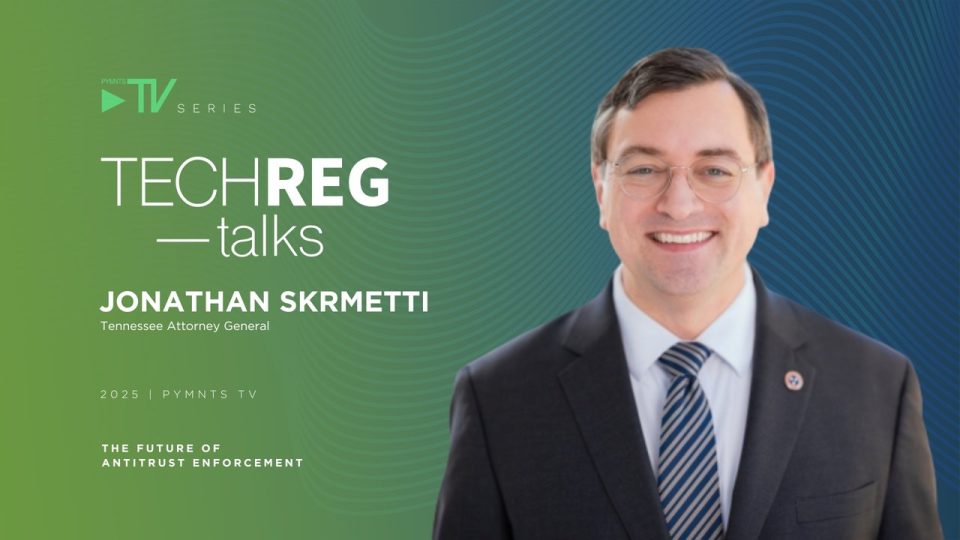
Tennessee Attorney General Jonathan Skrmetti said he believes the balance has changed.
Litigation involving Live Nation and Ticketmaster, Google, Apple and other companies suggests that states are no longer serving merely as partners in national antitrust enforcement. They are becoming independent and prepared to continue pursuing cases when federal priorities change, while also confronting a question that may shape the next decade of competition policy: How can states exercise greater authority without producing a fragmented system that leaves businesses, consumers and courts operating under different rules?
“The states have their own interests,” Skrmetti told Competition Policy International (CPI), a PYMNTS company, in an interview.
His comments came against the backdrop of a broad enforcement docket that spans live entertainment, digital advertising, smartphone platforms, collegiate athletics and rental software. Although these matters involve different industries and legal theories, they reflect a common approach to competition enforcement that begins with how consumers experience the marketplace rather than how lawyers define it.
The interview itself ranged across cases involving Google, Apple, Live Nation, the NCAA and RealPage.
After the Department of Justice settled its portion of the Live Nation/Ticketmaster case, Tennessee and its state partners continued pursuing the matter through trial. Skrmetti said the decision was not a rebuke of federal enforcement. Instead, federalism gives states an independent obligation to protect their own citizens when they conclude that competition has broken down.
“I don’t think the case would’ve reached the same outcome without the states,” Skrmetti said. “One of the beauties of federalism is we don’t have to worry about all our eggs being in one basket.”
Multistate coalitions have become more durable, Skrmetti said. Consumers do not describe their frustrations as monopolization claims or unlawful restraints of trade. They describe buying concert tickets, searching online, paying rent or using digital services that seem to offer fewer choices and less responsive service than they once did. Those experiences often become the first signal that a competition problem deserves closer examination.
“Consumers see the effect of antitrust,” Skrmetti said.
His office does not treat consumer protection and antitrust as entirely separate disciplines. A complaint about deteriorating service or limited consumer choice may begin as a traditional consumer matter, yet it can expose a broader market structure in which competitive pressure has weakened. When that occurs, the lasting solution may lie in restoring competition rather than addressing a single business practice, Skrmetti said.
AI Complicates Remedies, Not Competition Principles
Artificial intelligence presents a different challenge.
Courts weighing remedies in technology cases must now consider markets that could change rapidly as AI develops. Uncertainty deserves careful consideration, particularly when judges are deciding remedies with long-term consequences, Skrmetti said.
He also warned against allowing speculation about future technology to eclipse evidence of present-day competitive harm.
“AI risk is legitimately worth consideration,” Skrmetti said. “The problem is, if you’re speculating about what the future looks like, that means ongoing harms can continue. And if you’re misreading the future and you let a longstanding monopoly continue to abuse consumers, then the consumers continue to suffer.”
We’d love to be your preferred source for news.
Please add us to your preferred sources list so our news, data and interviews show up in your feed. Thanks!
State Coalitions Gain Influence, but There Are Limits
Stronger state enforcement does not equate with more lawsuits or more aggressive government, Skrmetti said. There is a need for restraint.
The Live Nation litigation demonstrated that states can sustain a major antitrust case without relying on the federal government. It’s an important development because it gives consumers another avenue for competition enforcement when federal priorities shift, Skrmetti said. However, competing enforcement agendas do not serve the public interest.
“I think open conflict is bad,” Skrmetti said. “I hope that we get back to a more collaborative model.”
Prolonged uncertainty over what companies are permitted to do could discourage investment, particularly when businesses face conflicting signals from federal and state regulators.
Bipartisan coalitions have become an important feature of modern antitrust litigation, Skrmetti said.
“The best way to hold a big coalition together is to have a good cause,” he said.
While coalition members sometimes disagree over legal theories or remedies, these differences have been relatively limited because many states concluded that previous efforts had failed to restore meaningful competition.
Companies defending major antitrust cases typically possess greater financial resources than the states bringing them, making it easier to retain experts capable of constructing sophisticated economic analyses, Skrmetti said. Although courts need rigorous evidence, competition law should remain understandable to judges and juries rather than becoming a contest between dueling economists. Clearer narratives help preserve confidence in antitrust enforcement without abandoning established legal standards.
At the same time, consumer welfare “is not exclusively rooted in price” and should account for other measurable benefits consumers receive from competitive markets, Skrmetti said.
Watch the full interview with Tennessee Attorney General Jonathan Skrmetti to learn more about:
- Why he said the Live Nation and Ticketmaster litigation established a lasting role for states in national antitrust enforcement.
- How Tennessee distinguishes ordinary consumer complaints from structural competition problems that may warrant antitrust scrutiny.
- Why he said AI should influence judicial remedies without delaying action against proven monopoly conduct.
- How bipartisan coalitions of attorneys general stay together through years of complex litigation.
- Why he said he expects consumer welfare to remain the foundation of U.S. antitrust law while evolving beyond price alone.
For all PYMNTS AI coverage, subscribe to the daily AI Newsletter.


 Add as Preferred Source