As part of his presidential campaign, Donald Trump has promised $1 trillion in infrastructure spending to kick-start an economy that is not living up to its potential.
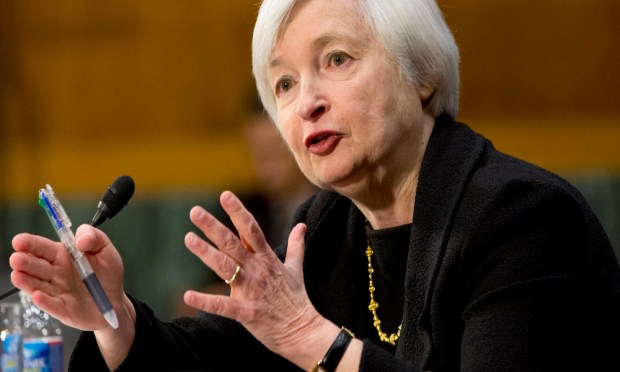
Speaking on Capitol Hill Thursday, Federal Reserve Board Chair Janet Yellen noted that before jumping in on that plan, lawmakers might want to get our their calculators and factor that spending against what it will add to the national debt. While 8 years ago such massive public spending made sense as a tool to fight off a Depression, Yellen warned lawmakers that these days conditions on the ground are quite different.
“The economy is operating relatively close to full employment at this point,” she said, “so in contrast to where the economy was after the financial crisis when a large demand boost was needed to lower unemployment, we’re no longer in that state.”
Yellen further noted that big spending on infrastructure now runs a distinct risk down the road — running up the debt and spending now makes the country less able to use that particularly lever for growth in the face of a future economic downturn.
“There is not a lot of fiscal space should a shock to the economy occur, an adverse shock, that should require fiscal stimulus.”
Trump is on record as not being a big fan of the Fed Chair, but Yellen has said she is not going to quit just because Trump won the election. Yellen’s appointment goes through January 2018.
Yellen also offered vocal support for Dodd-Frank, which president-elect Trump has been vocal about dismantling.
“We lived through a devastating financial crisis, and a high priority for all Americans should be that we want to see put in place safeguards through supervision and regulation that result in a safer and sounder financial system, and I think we have been doing that and our financial system as a consequence is safer and sounder and many of the appropriate reforms are embodied in Dodd-Frank.”
“We wouldn’t want to go back to the mortgage lending standards that led to the financial crisis.”
Notably, the world’s largest bankers also don’t seem overly convinced that the big financial re-reform is coming — though many are expecting “tweaks.”
“I don’t think there’ll be a huge rowback on regulatory policy. Trump has other more pressing issues,” noted Barclays chief executive Jes Staley.
As for the question of interest rates — Yellen indicated that the Fed saw no reason to alter prior guidance due to the outcome of the election. That prior guidance indicates that another increase will come in December.