To take advantage of this contact-free technology, consumers input their credit card into an Amazon One device and place their palm just above the scanner, a one-time signup after which their palm alone will be enough to pay for their purchases. Shoppers are also able to link their palm to their Amazon accounts.
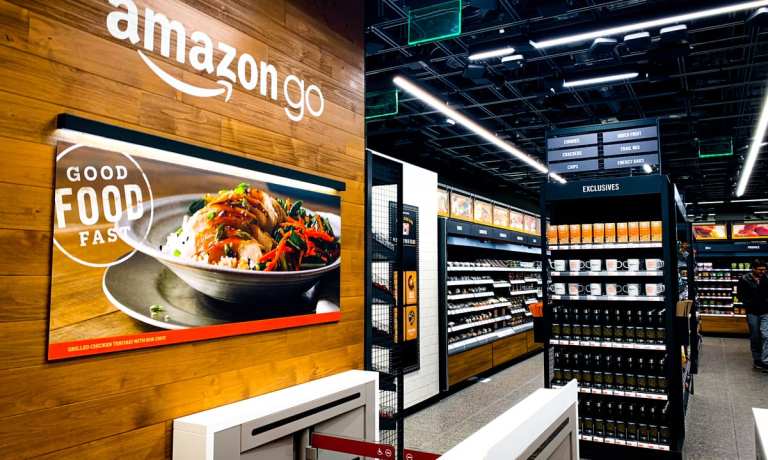
The technology is an extension of Amazon’s Just Walk Out initiative, enabling cashierless store experiences, in which, after shoppers swipe a credit card upon entering the store, shoppers’ purchases are detected and added to a “virtual cart,” auto-charged when the customer leaves the store. The technology, already available at Amazon Go stores, is available for other retailers to add to their own stores, adding another source of brick-and-mortar-generated revenue for Amazon beyond its own physical locations.
This NYC rollout marks the next move in the Amazon One expansion plan announced by the company in a blog post last September announcing the introduction of the technology: “We’ll start in select Amazon Go stores, where Amazon One will be added to the store’s entry gate as a convenient choice for customers to use to enter the store to shop. In most retail environments, Amazon One could become an alternate payment or loyalty card option with a device at the checkout counter next to a traditional point of sale system.”
Down the line, the company expects the technology to go well beyond the grocery store. The post continues, “For entering a location like a stadium or badging into work, Amazon One could be part of an existing entry point to make accessing the location quicker and easier.”
PYMNTS research finds that there is a significant amount of untapped demand for these sorts of contact-free technologies. The Omnichannel Grocery Report, created in partnership with ACI Worldwide, found that 43 percent of consumers are either “very” or “extremely” interested in using contactless credit cards, while only 27 percent of consumers have actually used them. For digital wallets, the interest versus actual use was 30 percent versus 22 percent, and for QR codes, the disparity was even greater — 142 percent more consumers reported being “very” or “extremely” interested in using QR codes than reported having actually used them.
Advertisement: Scroll to Continue
Similarly, PYMNTS’ January QR Code Payments Tracker, created in partnership with Citcon, notes that 80 percent of consumers worldwide are now using some form of contactless payments, including QR codes. Additionally, about 6 in 10 consumers say that they would be encouraged to shop more at a certain store if that store included digital payment option availability.
Read More On Retail: