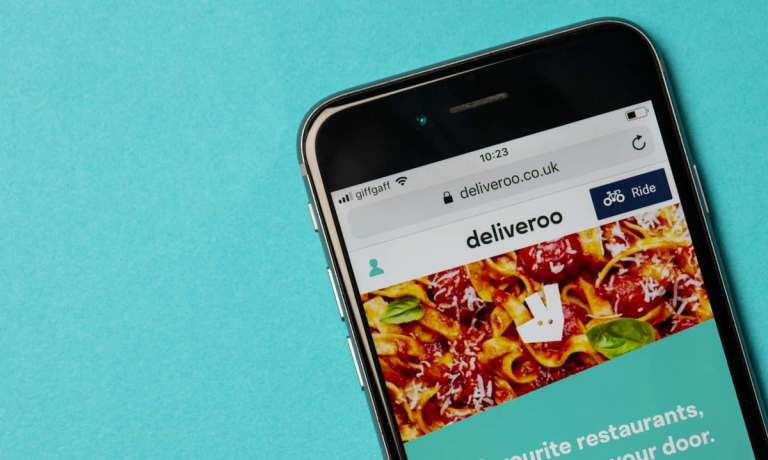
Amid worries from some investors regarding its share ownership structure and workers’ rights, Deliveroo has lowered the targeted pricing for its London Stock Exchange debut, according to a CNBC report.
Deliveroo revealed that it will sell equity for between 3.90 pounds (about $5.39) and 4.10 pounds (about $5.66) per share, with the upper end of the range approximately 11 percent lower than the previously revealed figure. The company’s market cap will be between 7.6 billion pounds (about $10.50 billion) and 7.8 billion pounds (about $10.77 billion) under the updated range.
Deliveroo says it is responding to the market climate. Last week, half of tech public offerings in the United States, the Middle East, Europe and Africa priced in the lower third in their revealed ranges.
“Given volatile global market conditions for IPOs, Deliveroo is choosing to price responsibly within the initial range and at an entry point that maximizes long-term value for our new institutional and retail investors,” a representative for the delivery company said.
Even so, a number of big investors say they intend to steer clear of the delivery company’s public offering in April because of worker’s rights and Deliveroo’s share ownership organization that provides CEO Will Shu with more than half of the voting rights.
For example, Legal and General Investment Management, which is the United Kingdom’s biggest fund manager, said per the report it likely wouldn’t participate.
Advertisement: Scroll to Continue
Even though Deliveroo is 100 percent food-focused currently, a number of its competitors — Uber in particular — have branched into other product areas once they have created solid networks of clients and drivers.
In one case, Uber has started to add prescription delivery to its offerings — along with alcohol, after February’s $1 billion acquisition of Drizly. Adding the alcohol business marked Uber’s third such vertical product expansion in a year after acquiring Postmates and teaming with NimbleRx.
At the peak of the pandemic, demand for delivery of everything jumped to the point where Uber Eats was generating 50 percent more revenue than its initial ride-hailing business for passengers.