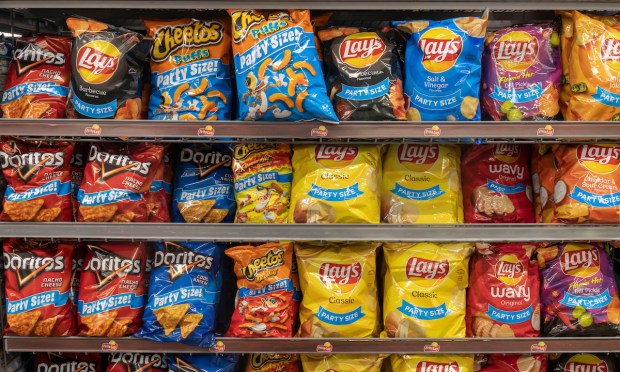
The food and beverage giant announced Tuesday (Feb. 3) that it is rolling out new suggested retail prices in the U.S. that reduce prices by “up to nearly 15%” on products including Lay’s, Doritos, Cheetos and Tostitos. The updated pricing is beginning this week, though the company noted that final shelf prices will vary by retailer and could result in even greater savings depending on the store.
“We’ve spent the past year listening closely to consumers, and they’ve told us they’re feeling the strain,” Rachel Ferdinando, CEO of PepsiCo Foods U.S., said in a statement. “Lowering the suggested retail price reflects our commitment to help reduce the pressure where we can. Because people shouldn’t have to choose between great taste and staying within their budget.”
The change comes in advance of the Super Bowl, one of the largest snack-buying moments of the year. The company emphasized that the price reductions do not reflect changes to product size or quality: In other words, this is not shrinkflation.
The timing reflects broader shifts in how consumers are managing food spending. Recent economic data shows confidence among U.S. consumers has fallen to its lowest level in more than a decade, with grocery prices and everyday costs proving ongoing sources of stress. Even as overall inflation has moderated, food remains one of the most visible pressure points in household budgets, particularly for groceries consumed at home.
“Most Americans probably don’t remember the exact inflation rate last year. But they remember that the footlong they once paid 5 dollars for is now between ten and fourteen bucks,” PYMNTS CEO Karen Webster recently wrote. “They remember when a fast-food meal cost a lot less than a movie ticket. … Those mental price anchors are how consumers track affordability.”
Those pressures are translating into behavior changes. PYMNTS Intelligence research shows that roughly half of U.S. consumers now report struggling to keep up with daily living expenses, with groceries and household essentials ranking as the most common challenge. As a result, shoppers are trading down, delaying discretionary purchases and becoming more price-sensitive even around traditionally resilient categories like snacks and packaged foods.