Scams are rising and shaping consumer loyalty in real time.
When money is lost, speed and convenience no longer define the financial relationship. Accountability does.
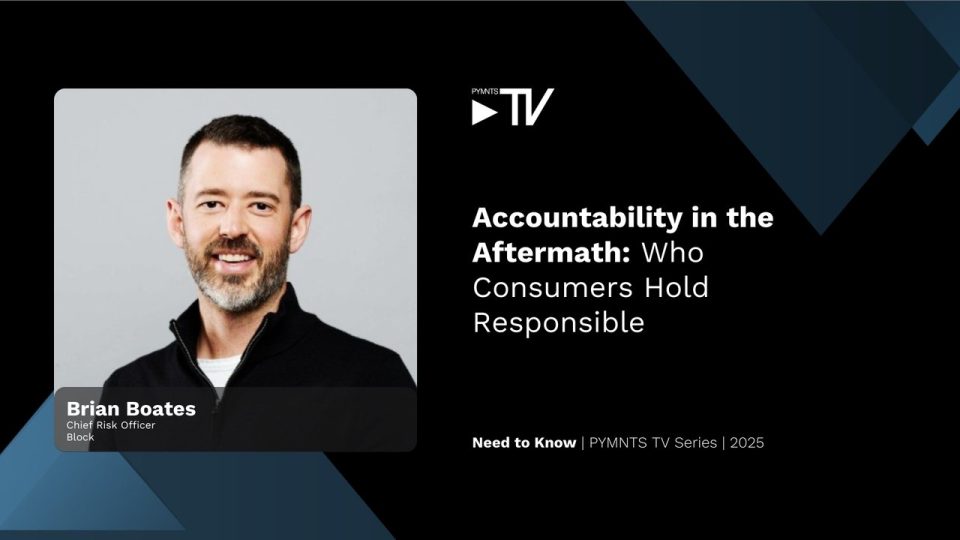
In a conversation between Block Chief Risk Officer Brian Boates and PYMNTS TV, one stat stood out. Nearly 1 in 5 consumers walk away from their bank after a fraud incident. Many more change their provider altogether.
The question Boates focused on is what happens after the scam.
Social Platforms Make Scams Feel Personal
Fraudsters rely on impersonation, as 81% of scams involve someone pretending to be another person or institution. Social media and chat platforms “make it really easy for people to interact with other people that they have never met before in real life and build a relationship, build a rapport,” and for scammers, “kind of play the long game,” Boates said.
Fake romantic relationships, investment schemes and money flip offers are common. The risk increases when scammers apply pressure to send money fast or in unusual forms, such as gift cards or immediate wire transfers.
“Ask yourself, ‘Does this make sense?’” Boates said as a simple rule.
The safest approach is to step away from the communication and verify through official channels, he said.
The Real Damage Is a Loss of Trust
Scams change behavior in lasting ways. After being scammed, 52% of victims stop engaging with emails and 42% keep less money in their accounts, as joint research between Block and PYMNTS Intelligence found.
“It makes you question if the institution you are working with is secure,” Boates said.
Some victims begin second-guessing their own judgment.
Reporting Fast Improves Recovery Odds
Scam payments move quickly, often before customers realize what has happened, Boates said. More than half of scam payments occur within 24 hours of first contact, yet 27% of victims do not report them to their bank because they do not know they can.
“Collect the evidence of the interaction that you had, and then report that to your financial institution,” he said.
That evidence can include screenshots, emails, PDFs and chat logs.
“It is so critical to bring that evidence in because these claims have to be investigated for us to reach the right outcome,” he said.
We’d love to be your preferred source for news.
Please add us to your preferred sources list so our news, data and interviews show up in your feed. Thanks!
He also said shame need not enter the picture.
“Do not be afraid to report to your financial institution,” Boates said. “Do not be embarrassed.”
One way to begin rebuilding confidence is to activate basic security tools that may already exist, he said. Two-factor and multifactor authentication can support safer digital habits going forward.
Taking a Pause Can Break the Scam
Block created a payment scam warning feature designed to disrupt that pressure.
“It gives you a jolt to stop and think about this,” before sending money, Boates said.
The tool provides additional information about the recipient and encourages consumers to take a beat before authorizing money movement.
Reimbursement Is a Trust Strategy
Authorized scam transactions do not always qualify for traditional disputes or chargebacks. These types of scams are “the tricky piece,” which is why Block built a reimbursement program for imposter and deception scams, Boates said. These include fake family member attempts, fake IRS calls, and payments for goods or services that never existed.
“If other platforms where the scam has maybe originated go back and report those customers on those platforms too,” that activity can help prevent others from falling victim, he said.
Reimbursement changes the outcome and the perception of financial providers, Boates said.
“It makes a huge difference in rebuilding that trust,” he said, adding that the difference between customers who receive reimbursement and those who never report is significant.
Scams test financial relationships, but the recovery process can restore confidence and loyalty. By encouraging fast reporting, providing clear reimbursement paths and investing in tools that disrupt scam behavior, financial providers can show that accountability continues after the money is lost.

 Add as Preferred Source