While most restaurant customers may dine weekly or a couple of times a month, a significant share makes restaurant purchases three times a week or more. Restaurants that can win over this high-value demographic have the chance to boost sales considerably.
By the Numbers
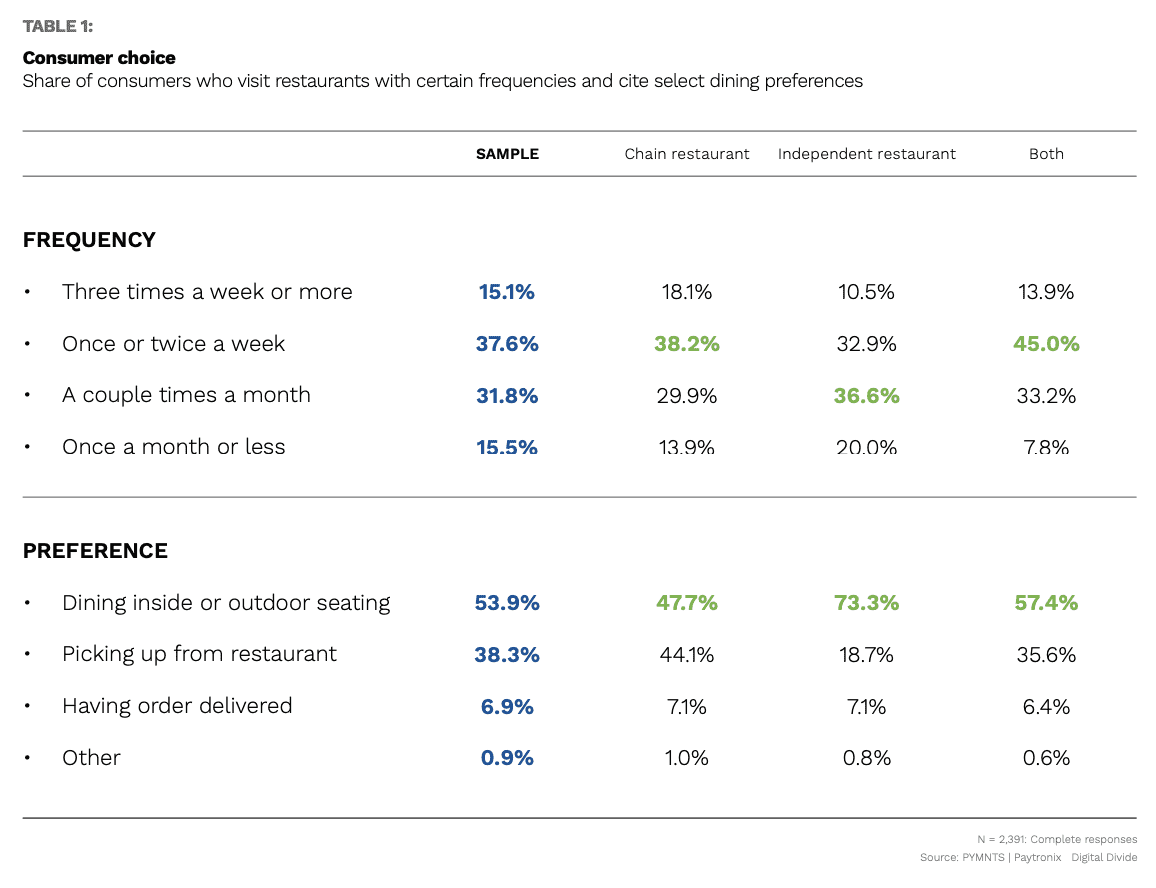
Research from the June edition of PYMNTS’ Digital Divide study, “The Digital Divide: Technology, Customer Service and Innovation in the Restaurant Industry,” which drew from a survey of nearly 2,400 United States adults who regularly purchase food from restaurants, found that 15% of diners order from restaurants three times a week or more, and that share jumps to 18% for chain restaurants.
The Data in Action
Several restaurants have been unveiling subscription offerings both to attract existing regular restaurant customers and to boost frequency of periodic diners. Chinese-inspired casual dining chain P.F. Chang’s, for one, which has more than 300 restaurants across 22 countries, announced last month the launch of an in-rewards-program subscription that offers free delivery, expanded rewards-earning opportunities and “VIP-level service” for $6.99 a month.
Read more: PF Chang’s Bets Free Delivery — Not Food — Key to Subscriber Loyalty
Advertisement: Scroll to Continue
P.F. Chang’s Chief Operating Officer Art Kilmer said in an interview with PYMNTS that this announcement is in line with an industry-wide trend of restaurant subscriptions shifting away from being focused on offering specific items at regular intervals toward offering services.
“An overall trend we are seeing in loyalty programs is that consumers are not limited to just item-based rewards … as the benefit of subscription models,” Kilmer said. “Rather, consumers are seeing more service-based program benefits as well that allow for engagement and interaction with the brand.”