
Anti-money laundering (AML) refers to a set of laws, regulations, and procedures intended to prevent criminals from disguising illegally obtained funds as legitimate income. Though anti-money-laundering laws cover a relatively limited range of transactions and criminal behaviors, their implications are far-reaching.


Machines can serve an important role in mitigating and anticipating the threat of financial crime, but humans have their part to play as well. Get...
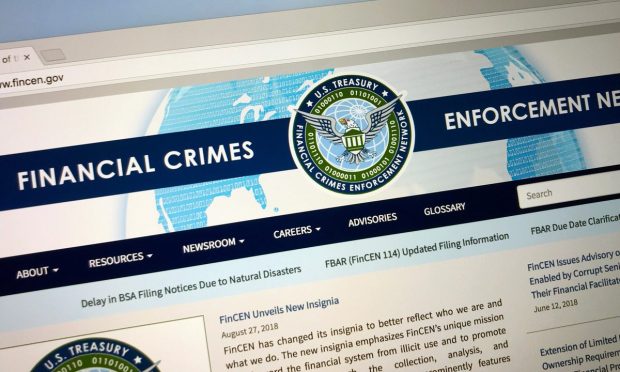
The Financial Crimes Enforcement Network (FinCEN) has imposed more than $600 million in fines for anti-money laundering (AML) violations in just 14 months (from January 2021...

In today’s top Europe, Middle East and Africa news, Dutch payments group Adyen introduced new financial products, while Swedish buy now, pay later (BNPL) firm...

On Monday (March 28), EU lawmakers proposed an anti-money laundering (AML) regime that would require identification and screening for any cryptocurrency or stablecoin transaction, no...

Today, European lawmakers will vote on a proposal for a “regulation on information accompanying transfer of fund and certain crypto assets” (the so called “travel...

The Financial Crimes Enforcement Network (FinCEN) published Monday (March 28) its Suspicious Activity Report (SAR) data for 2021. Get the Full Story Complete the form...

Today in data, digital identity verification techniques can reduce money laundering and increase compliance. Plus, a former Paraguay congresswoman was sentenced in a money laundering...
Cynthia Elizabeth Tarrago Diaz, once a member of Paraguay’s Congress, was sentenced to prison for her role in an international money laundering scheme, the U.S....

Prosecutors in Manhattan have accused a former party producer of using bitcoin to launder millions in for a “rolodex of crooks” around the world. Get...