Why Context Is Important In Commerce

In commerce, as in life, timing is everything. Show the right user the right Facebook offering at the right moment, and many will make a purchase without leaving the site. But getting context right is the tricky part. Trust is key, and it’s not always easy to maintain, since users hold providers to such a high standard. Consumers are changing, demanding immediacy across the board when it comes to digital activities, including shopping and sending and receiving payments. Technology is changing too, and it’s imperative for C-suite players to keep up. Context — and the ability to leverage it — is not easy to create, but it pays big dividends when done right.
    Get the Full Story

    Complete the form to unlock this article and enjoy unlimited free access to all PYMNTS content — no additional logins required.

    yesSubscribe to our daily newsletter, PYMNTS Today.

    By completing this form, you agree to receive marketing communications from PYMNTS and to the sharing of your information with our sponsor, if applicable, in accordance with our Privacy Policy and Terms and Conditions.

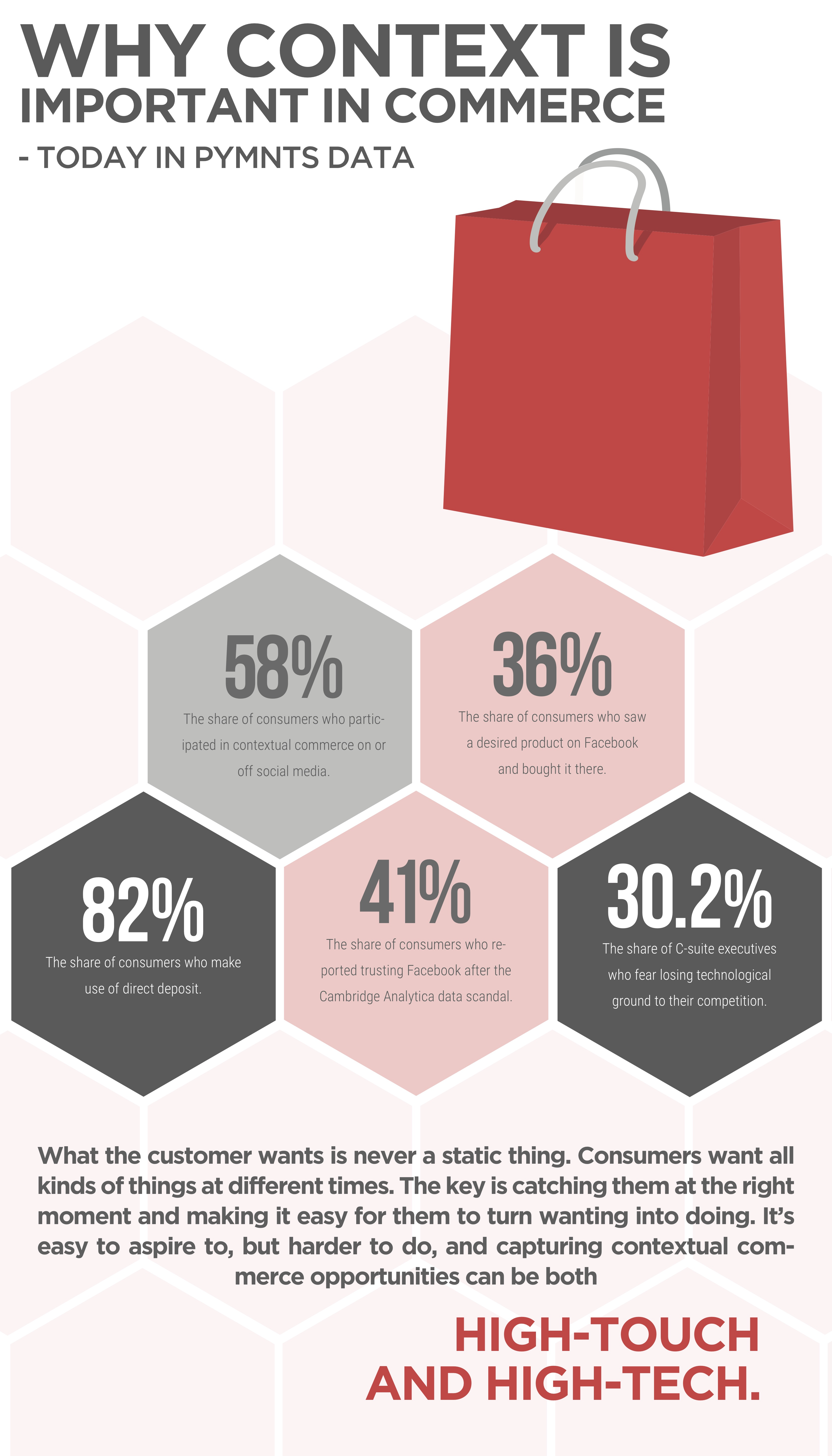
    58 percent: The share of consumers who participated in contextual commerce on or off social media.

    36 percent: The share of consumers who saw a desired product on Facebook and bought it there.

    82 percent: The share of consumers who make use of direct deposit.

    41 percent: The share of consumers who reported trusting Facebook after the Cambridge Analytica data scandal.

    30.2 percent: The share of C-suite executives who fear losing technological ground to their competition.

    Advertisement: Scroll to Continue