As the COVID-19 static clears and the new year brings new developments, video is increasingly becoming a key element of healthcare delivery for patients, providers and insurers alike.
As a result, telehealth now sits at the intersection of patient experience and provider efficiency, making digital and mobile payments integrations vital to its adoption. And a Senate bill introduced on Feb. 7 that seeks to extend telehealth payments by The Centers for Medicare and Medicaid Services (CMS) to providers is seen as more concrete proof that video visits are becoming a valued model at all levels.
See also: Senators Push Bill to Keep Telehealth Medicare Coverage as Private Insurers Lean Into Virtual
Primary among reasons telehealth is gaining such traction are cost advantages that resonate at a time of high inflation, given that healthcare pricing is already a barrier for millions.
In the Telehealth Digital Payments Report, produced in collaboration with American Express, PYMNTS noted that “the average visit for a non-urgent health issue cost $93 less when conducted virtually, while a specialist cost $120 less and urgent care cost up to $141 less per visit. Telehealth visits also reduced the frequency of lab tests, which are often unnecessary, leading to an average of $118 in savings.”
As American Express Director of U.S. partner acquisition Bhavna Sharma stated in the report, telehealth’s prominent new role “opens up the need for healthcare providers to offer a digital — mobile — payments solution in a contactless environment. It will also be imperative that [providers] allow their patients to pay with their preferred payment method to remain competitive amongst their peers and meet patient demand.”
Absent new telehealth options, millions go without needed care, per the report.
Get the report: The Telehealth Digital Payments Report
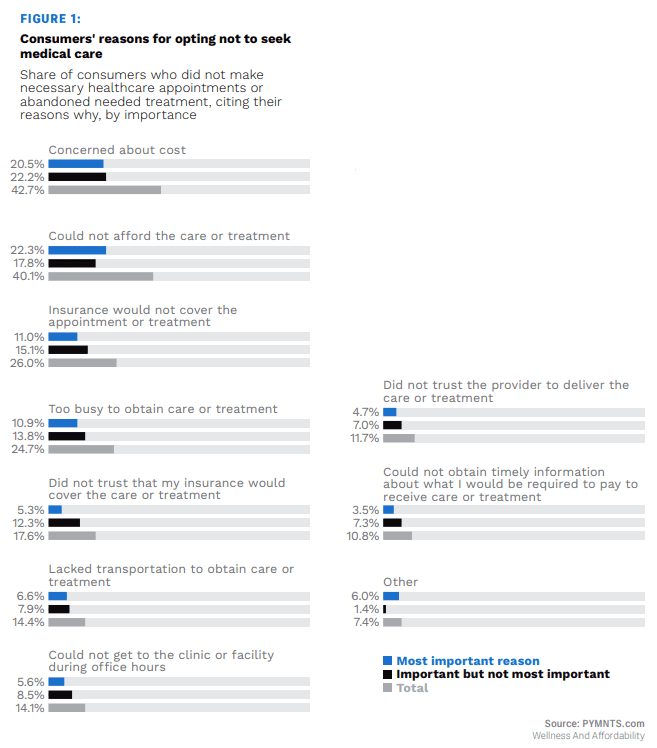
Out-of-pocket costs — from deductibles to co-pays to uncovered portions of treatment invoices — are all adding to consumers’ medical payment burdens, which is forcing tough choices.
PYMNTS research throughout the pandemic confirms that a patient-as-consumer mindset is taking hold where people are judging doctors — and switching them — if issues around cost and payment can’t be easily managed with estimates and healthcare financing options.
We’d love to be your preferred source for news.
Please add us to your preferred sources list so our news, data and interviews show up in your feed. Thanks!
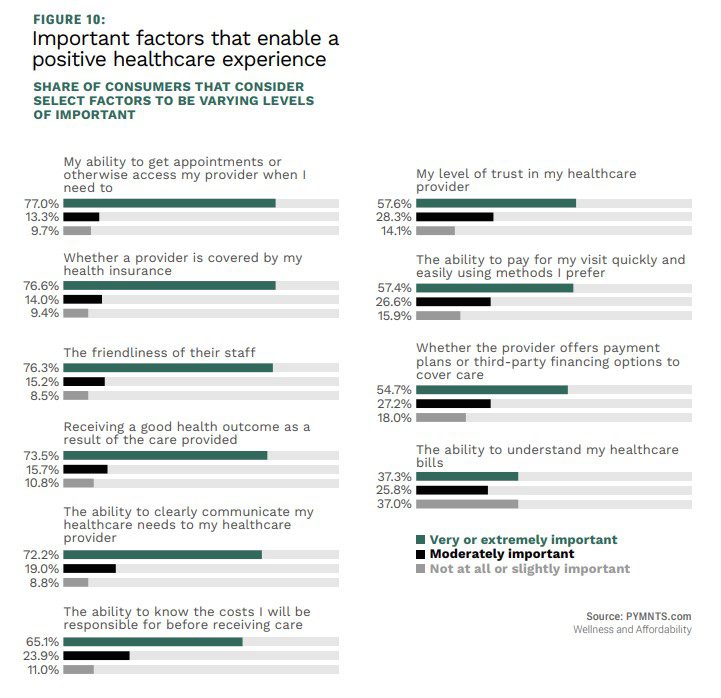
Wellness And Affordability: How Payments Practices Create Positive Patient Experiences, a PYMNTS report with research sponsored by CareCredit, found that “being able to pay easily with a preferred payment method was very or extremely important to having an overall positive healthcare experience for 57% of respondents.”
Moreover, PYMNTS found that installment plans and third-party financing are “very or extremely important to having an overall positive healthcare experience to 55% of consumers.”
Get the study: Wellness And Affordability: How Payments Practices Create Positive Patient Experiences
Rising demand for telehealth and the expectation that paying for it will be a seamless digital process is pervading consumer perceptions of what telemedicine is and should be.
For example, PYMNTS’ study The Connected Consumer In The Digital Economy: Who Wants To Live In A Digital Connected Economy — And Why? found that as consumer bring digital and mobile deeper into their lives, it’s having transformative impact on healthcare experience.
“Research shows that 40% of consumers now use websites or apps to access their personal health information, for example, and 37% use wearable technology,” per the study.
“Telehealth appointments are also common, with 29% and 26% of consumers having had at least one telehealth appointment for either their physical or mental health, respectively, since the pandemic began.”
Some 23% of consumers now use only online-only healthcare services, PYMNTS found.
Get the study: The Connected Consumer In The Digital Economy: Who Wants To Live In A Digital Connected Economy — And Why?



 Add as Preferred Source