By the Numbers
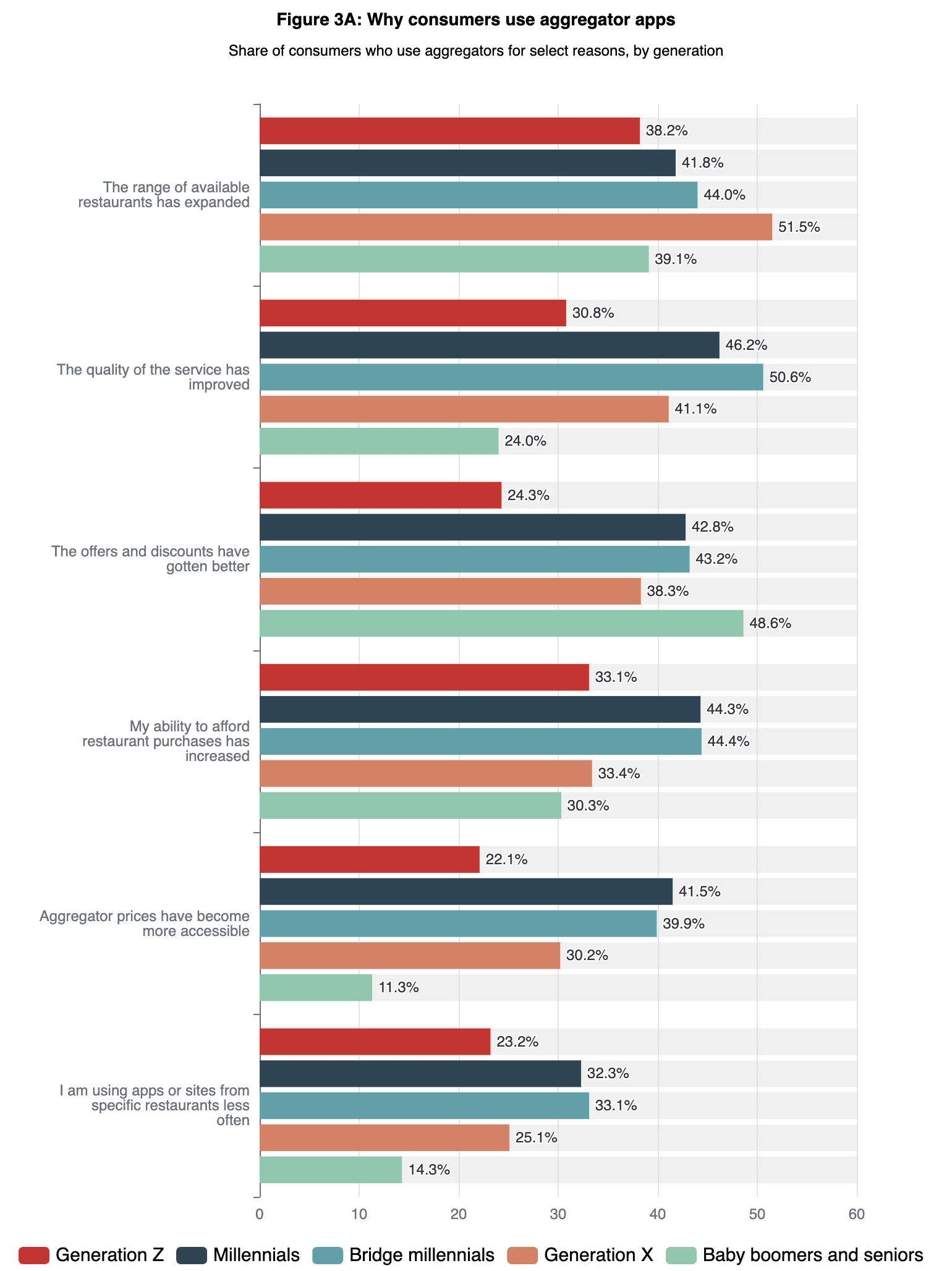
Data from PYMNTS’ new exclusive report “Connected Dining: Third-Party Restaurant Aggregators Keep the Young and Affluent Engaged,” which draws from a survey of nearly 2,300 U.S. consumers conducted in March, finds that price-centric promotions are a key draw for older consumers. Specifically, nearly half (49%) of baby boomers and seniors who use aggregators report doing so because the offers and discounts have improved. This share is significantly higher than the 39% of consumers across generations that say the same.
We’d love to be your preferred source for news.
Please add us to your preferred sources list so our news, data and interviews show up in your feed. Thanks!
The Context
This finding suggests that there are untapped opportunities for aggregators beyond the younger demographics they tend to focus their efforts on. For instance, Madeline Maguire, senior director of B2B marketing at Grubhub, noted in an interview with PYMNTS how the brand is investing in driving adoption with college students to build long-term loyalty.
“Acquiring these diners earlier in life and providing a great customer experience — the better we can do that, the better long-term retention that we see,” Maguire said. “We want to acquire these diners now, so that when they age out of college, Grubhub is still their delivery provider of choice.”
Granted, aggregators are doing what they can to offer discounts and more affordable options across generations. For example, DoorDash CEO Tony Xu told analysts on the company’s most recent earnings call that the company’s subscription offering “has been a big driver” for consumers seeking affordability.
Similarly, Uber CEO Dara Khosrowshahi spoke on the company’s latest call to its Uber One subscription’s ability to drive long-term value from customers by frontloading the discounts.
“In the initial months in which we acquire a member, that member is actually loss-making because the discounts that we offer are greater than the in-period value of that 4.1 times,” Khosrowshahi said. “But over the lifetime of the member, the membership creates a significant moat and a significant growth opportunity for our business.”


 Add as Preferred Source