The smartphone has survived every attempt to replace it. Humane’s AI Pin, a $699 wearable that promised to free users from screens, reportedly sold only about 10,000 units before landing at HP at a steep discount to its prior valuation. Rabbit’s R1 shipped broadly and failed to convince reviewers that it could outperform a standard handset. Both devices were built on the same premise: that phones could not support truly agentic artificial intelligence. It turned out the phone just needed better software.
That argument reached its logical conclusion this week in Barcelona. At Mobile World Congress 2026, the mobile industry’s annual gathering, AI agents are no longer a feature category. They are the central organizing logic of device strategy. The shift represents something larger than any single product announcement: a fundamental reimagining of what the smartphone does.
From Reactive to Orchestrating
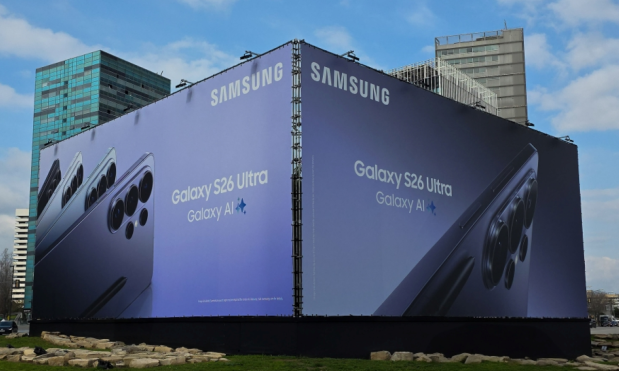
When Samsung CEO TM Roh introduced the Galaxy S26 at its February Unpacked event, he used a phrase that marked a departure from conventional smartphone positioning: the “agentic AI phone.” At MWC, Samsung elaborated that Galaxy AI is evolving from reactive tools into what it calls a “truly agentic companion” operating across the Galaxy ecosystem.
The technical architecture underpinning that claim is a multi-agent stack. According to Decrypt, Google’s Gemini model can open and navigate apps in a background window while the user remains on another screen.
In one demonstration, Gemini scanned a busy family group chat about pizza orders, assembled a DoorDash cart based on the conversation and paused for manual confirmation before checkout. Perplexity operates alongside Gemini as a second system-level agent, accessible via a side-button shortcut and capable of analyzing multiple open browser tabs simultaneously to answer research queries.
The Phone as Authenticated Infrastructure
The structural case for mobile as the agent platform is straightforward. Smartphones already hold digital identity, payment credentials, biometric authentication and communication histories. They are persistent, always-on and deeply integrated into financial and social systems. Replacing them with a purpose-built AI device would require rebuilding that authentication stack from scratch.
We’d love to be your preferred source for news.
Please add us to your preferred sources list so our news, data and interviews show up in your feed. Thanks!
Deutsche Telekom underscored this dynamic at MWC with the launch of its Magenta Security Mobile.ID platform, which turns smartphones into a universal digital key via Bluetooth and NFC, replacing physical keys, smart cards, and ID documents with device users already carry.
At the same time, Telekom introduced its Magenta AI Call Assistant, embedding live translation, call summaries and task execution directly into phone calls without requiring a separate app. Conversations can trigger reservations or form completion mid-call. The phone functions as both the communications channel and the execution layer.
A Race for the Orchestration Layer
The competitive implications are visible across the MWC show floor. Honor introduced both a humanoid robot and what it calls a “robot phone,” equipped with a 200-megapixel camera on an articulating arm designed to support agentic interactions.
The company has pledged $10 billion over five years to build AI devices and is repositioning itself as an AI-first hardware maker. It is one of many manufacturers recalibrating product roadmaps around embedded intelligence rather than hardware differentiation alone.
The tension extends beyond device makers. Google’s Gemini runs across both Samsung and Pixel hardware, giving Google leverage at the orchestration layer independent of handset market share. Apple previewed a more capable Siri in 2024 but has yet to deliver the full scope of functionality it outlined. Network-level players such as Telekom are embedding AI services that do not require hardware upgrades at all.
The agentic phone remains early. Gemini’s app-navigation capabilities are launching in limited preview for select applications in the United States and South Korea. No agent completes a payment without explicit human confirmation. But the architecture is no longer theoretical.
The shift from reactive app tapping to proactive task orchestration is underway. After years of incremental hardware upgrades, the smartphone’s next evolution may not be defined by thinner screens or faster chips, but by who controls the layer that decides what gets done and how.
For all PYMNTS AI coverage, subscribe to the daily AI Newsletter.


 Add as Preferred Source