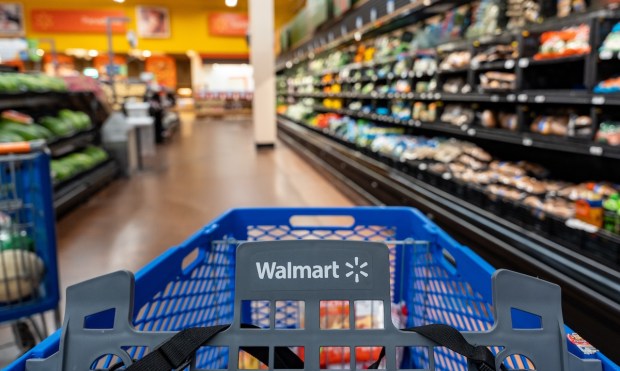
It’s called grocery. Food and beverages now account for roughly 60% of Walmart’s retail business. Findings in the September 2026 edition of the Share of Wallet: Amazon vs. Walmart report from PYMNTS Intelligence estimate that Walmart controls roughly 21% of U.S. food and beverage spending, compared with about 3% for Amazon. More strikingly, Walmart’s advantage has expanded since 2019 even as Amazon has nearly doubled its share of retail overall.
Grocery isn’t simply another category. It represents a recurring consumer retail behavior that brings households back into Walmart’s ecosystem every week, sometimes multiple times a week. And as retail competition shifts from winning individual transactions toward maximizing lifetime customer value, that frequency could become Walmart’s most valuable strategic asset.
Walmart’s Grocery Business May Be Its Answer to Amazon Prime
Walmart doesn’t need to manufacture reasons for millions of households to return. People already need milk, eggs, cereal and dinner. The strategic opportunity is converting those unavoidable interactions into something economically larger.
It’s a strategic model that mirrors Amazon’s push with its Prime membership. Prime’s power was never simply subscription revenue. Amazon used shipping benefits to increase purchasing frequency, then layered additional services onto a relationship consumers were already incentivized to maintain. More engagement created more transactions, more data and more opportunities to monetize customers across Amazon’s ecosystem.
A Walmart grocery customer can also become a Walmart+ subscriber, pharmacy customer, marketplace shopper, advertising audience or financial services user. Pickup and delivery move that relationship onto digital rails, giving Walmart more opportunities to connect transactions that historically existed as separate store visits.
Amazon demonstrated how transaction data and purchase intent can become an advertising business with economics radically different from merchandise retail. Walmart’s grocery scale potentially gives it another unusually rich data set: frequent, household-level signals about what consumers buy, how often they buy it and when those patterns change.
We’d love to be your preferred source for news.
Please add us to your preferred sources list so our news, data and interviews show up in your feed. Thanks!
In that model, grocery’s value includes the incremental economics Walmart can generate because the eggs brought the customer into the ecosystem in the first place.
Get the full report: Amazon Takes Five Categories as Walmart Tightens Its Grocery Grip
Amazon’s advantage is extraordinary digital purchase frequency across discretionary categories. Walmart’s advantage is extraordinary physical and increasingly digital frequency around necessities.
Each company is trying to invade the other’s territory. Amazon has spent years attacking grocery, while Walmart has invested heavily in marketplace, membership, fulfillment and advertising capabilities that look increasingly Amazon-like.
If Walmart can use habitual grocery spending to lower customer acquisition costs for higher-margin businesses, grocery stops looking like the low-margin anchor weighing down its economics. It starts looking like the distribution layer supporting them. That could become even more important as artificial intelligence lowers the friction involved in switching among retailers for discretionary purchases. An AI agent can compare televisions, sneakers or patio furniture across dozens of sellers in seconds. Habitual household purchasing may prove harder to dislodge.
The future retail moat may therefore be less about convincing consumers where to shop than controlling the recurring behaviors they barely think about.
Amazon built Prime to create a habit. Walmart’s advantage is that grocery already is one.
At PYMNTS Intelligence, we work with businesses to uncover insights that fuel intelligent, data-driven discussions on changing customer expectations, a more connected economy and the strategic shifts necessary to achieve outcomes. With rigorous research methodologies and unwavering commitment to objective quality, we offer trusted data to grow your business. As our partner, you’ll have access to our diverse team of PhDs, researchers, data analysts, number crunchers, subject matter veterans and editorial experts.


 Add as Preferred Source