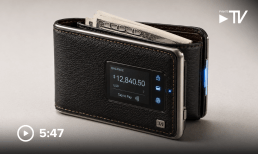
China’s central bank is issuing 10 million yuan ($1.5 million) worth of digital currency to 50,000 people chosen by lottery in the country’s first trial run of a cashless payments system, according to numerous reports on Monday (Oct. 12).
Nearly 2 million people applied to the Shenzhen drawing. The winners were chosen at random and announced on Sunday. They will receive a digital red packet that can be downloaded using the official Renminbi app that only the winners will be able to access. The money can be used Oct. 12-18 at more than 3,000 designated shops in the Luohu shopping district in Shenzhen.
We’d love to be your preferred source for news.
Please add us to your preferred sources list so our news, data and interviews show up in your feed. Thanks!
Unlike bitcoin, the digital yuan is not a cryptocurrency because it is being issued and controlled by China’s central bank, the People’s Bank of China (PBOC). It is considered to be a digital version of the nation’s currency. It won’t replace Alipay or WeChat Pay and is expected to work with them as well as other banks.
The Renminbi app is not yet available for public download. Public access was cut off in August after a soft launch got massive attention.
The lottery for the digital yuan — officially known as the Digital Currency Electronic Payment (DCEP) — was funded by the Luohu district, according to a government statement. In August, PBOC first announced it would begin testing the digital currency.
Last week, the Bank for International Settlements and seven central banks — including the European Central Bank, the Swiss National Bank and Bank of Japan — started hammering out a framework for digital currency.
Facebook’s plan last year for the stable coin libra caused central banks to step up plans for an electronic currency. A May BIS survey of 66 central banks indicated that 80 percent are working on CBDCs.



 Add as Preferred Source