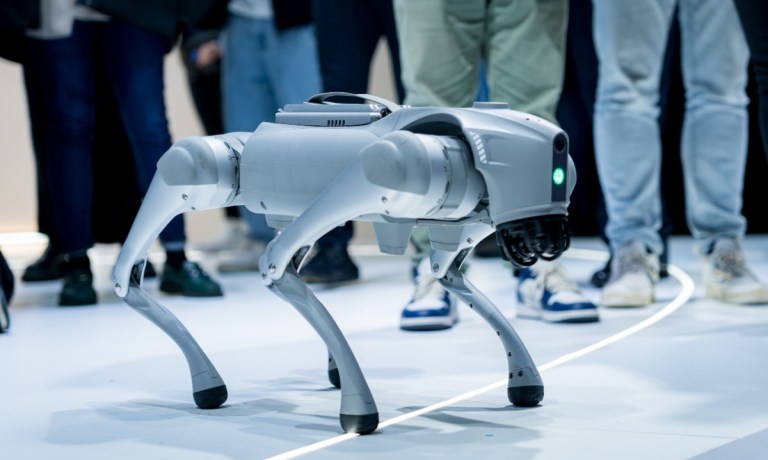
The AI model, known as “Skild Brain,” lets robots — from humanoids to table-top arms — think, function and respond more like humans, the company said on its blog Tuesday (July 29).
“One of the biggest challenges in building a robotics foundation model is the lack of any large-scale robotics data,” the company wrote. “And to make matters worse, collecting real-world data using hardware is slow and prohibitively expensive.”
That’s led many researchers and competitors to skirt the problem by starting with an existing vision-and-language model (VLM) and add in less than 1% of real-world robot data to create a “robotics foundation model,” which Skild argues is not a true robotics foundation model.
“Does it have information about actions? No. LLMs have a lot of semantic information,” the company said, referring to AI large language models.
“However, like a Potemkin village, they lack the true substance of grounded actionable information. And that is why most ‘robotics foundation models’ showcase semantic generalization in pick-and-place style tasks but lack true physical common sense.”
Advertisement: Scroll to Continue
The company said its team members, in their previous work, have tried to explore alternatives such as using internet videos and large-scale simulation, only to learn that “scale does not mean million or billion examples, achieving scale requires collecting trillions of examples.”
However, there’s no way only real-world data can provide this scale in the near future. Skild says it tackles this challenge via “large-scale simulation and internet video data to pretrain our omni-bodied brain.”
“We post-train this foundation model using targeted real-world data to deliver working solutions to our customers,” the company added.
In other robotics news, PYMNTS wrote earlier this month about the use of AI-powered robots in the restaurant sector, with eateries using the technology for things like serving food to diners, cooking meals, delivering food and even mixing cocktails.
“Robots are taking more active roles in both customer-facing and back-kitchen tasks, as restaurants face a perfect storm of challenges that include rising labor and food costs, persistent workforce shortages, and growing consumer demand for efficient service,” that report said.
“The smart restaurant robot industry is expected to exceed $10 billion by 2030, driven by deployment across applications such as delivery, order-taking and table service, according to Archive Market Research.”
Restaurants are also employing AI for administrative tasks. According to a survey last month for PYMNTS’ SMB Growth Series, nearly three-quarters of restaurants said they found AI to be “very or extremely effective” in carrying out business tasks.
The top three reasons cited for using AI were reduce costs, automate tasks and adopt standards and accreditation, according to the PYMNTS report. However, only a third are using AI.