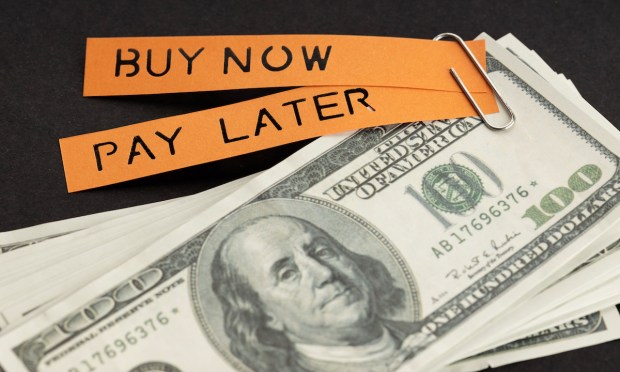
After-purchase installment plans are moving more firmly into the center of everyday payments, reshaping how banks, FinTechs and retailers compete for the same transactions.
What began as a merchant checkout feature is increasingly changing how consumers use debit cards, banking apps and digital wallets, and as a result the lines are blurring between traditional financial institutions and buy now pay later providers. Debit cards now support installment conversions. Banking apps host fixed-term repayment plans. And BNPL firms are pursuing bank charters and debit integrations.
That shift became more visible this month with two announcements that point in the same direction.
As reported by PYMNTS, Fiserv said it is partnering with Affirm to bring BNPL capabilities directly to debit card programs offered by its bank and credit union clients. Under the arrangement, consumers will be able to use Affirm wherever their debit cards are accepted and apply for pay-later options before or after the purchase, while Affirm and Fiserv handle real-time underwriting, loan origination and funding.
Days earlier, Walmart-backed OnePay announced a partnership with Klarna that allows OnePay Cash users to convert eligible debit purchases into fixed-term payment plans after checkout. The feature, called Swipe to Finance, lives inside the OnePay app and enables customers to retroactively split completed transactions into installments.
When Banks Start Acting Like BNPL
PYMNTS Intelligence data shows that card issuers have not stood still as BNPL expanded. Many now offer Pay in 3 or Pay in 4 plans that split purchases into equal installments over defined periods, often with no interest. These plans are frequently triggered post-purchase, allowing cardholders to convert completed transactions into structured monthly payments, mirroring BNPL’s core proposition.
Credit card installments are gaining traction across demographics. PYMNTS Intelligence estimates that 47.8 million U.S. adults used general-purpose credit cards for installment payments through May, while private label store cards reached more than 30 million users over the same period. Younger consumers stand out, with 14% of both Generation Z and millennials reporting use of store card or credit card installments in recent months.
At the same time, BNPL providers are moving closer to banks. Affirm’s partnership with Fiserv embeds pay-over-time directly into debit ecosystems. Klarna’s OnePay integration brings post-purchase installments into a Walmart-backed financial app used by more than 3 million monthly active users.
The result is a hybrid landscape where consumers encounter similar installment experiences whether they start with a debit card, a credit card or a BNPL app.
Why Post-Purchase Matters
Post-purchase BNPL differs from traditional checkout financing in one important respect: it lets consumers decide how to pay after the transaction is complete. Instead of choosing installments at the register, shoppers can convert eligible debit or card purchases into fixed-term plans days or weeks later, which gives the nod to consumers being able to take stock on what makes financial sense to them after some post-purchase deliberation.
Mechanically, these programs rely on real-time underwriting after settlement, followed by loan origination and scheduled repayments drawn from linked accounts. In practice, they transform ordinary card transactions into predictable payment streams without forcing consumers to commit at checkout.
That flexibility arrives at a moment when financial shocks remain common.
More than half of U.S. consumers experienced at least one large unexpected expense in the past year, according to PYMNTS Intelligence data that debuted this month. For two-thirds of those who faced a shock, the cost exceeded $1,000. Fewer than half of consumers feel confident they could absorb a $1,000 surprise expense without falling behind on other bills.
How households manage those shocks varies sharply by financial circumstance. Across the population, liquid funds and personal loans are the primary tools used to cover major emergencies, but nearly one in four consumers rely on revolving credit. A meaningful minority turns to alternative or supplemental financing. Paycheck-to-paycheck households, especially those struggling to pay bills, are far more likely to depend on revolving credit or last-resort measures, reflecting limited cash buffers and constrained access to affordable credit at the moment of need.
Post-purchase installments offer an additional path of financial triage. By breaking larger expenses into fixed, predictable chunks, they can help households smooth timing mismatches between income and obligations.
Debit-based installment plans also introduce a clear distinction between paying with existing funds versus borrowing. Debit conversions draw against current balances, then layer installment financing on top. Credit card installments, by contrast, sit inside revolving credit lines. Both approaches deliver structure, but they differ in how directly they tap into bank accounts and credit availability.
The convergence of banks and BNPL reflects less a turf war than a shared response to consumer demand for clarity, control and predictable repayment. Post-purchase plans bring those attributes directly into everyday and also emergency spending, marking another step in the steady blurring of financial roles.