

Fraud losses reported by older adults increased fivefold between 2020 and 2025, leaping from $600 million to $3 billion, the Federal Trade Commission (FTC) said Monday (Oct. 19). The FTC shared this data in a press release outlining findings from its report to Congress, “Protecting...

Artificial intelligence is changing both sides of payments fraud. Fraudsters can use it to make impersonation attempts more convincing, while finance teams can use it to score transactions, verify documents and identify anomalies. PYMNTS Intelligence’s “Prevention First: Building a Smarter Defense Against Payments Fraud,” produced...

A traveler who has booked a real hotel can receive a fraudulent request containing the correct arrival date and reservation number. Criminals can use those details to demand payment information, warning that the room will otherwise be canceled. The European Commission’s Booking.com investigation, announced Wednesday...

European regulators are investigating whether Booking.com has done enough to prevent scams on its platform. The European Commission (EC) announced Wednesday (Oct. 21) that it had opened a formal inquiry into whether the travel platform had violated the Digital Services Act (DSA) by not having...

Google is bringing to the United States and Canada a Financial Services Verification program that already protects 2 billion internet users in 42 countries from financial scam ads, the company said in a Tuesday (Oct. 20) blog post emailed to PYMNTS. The program will be...
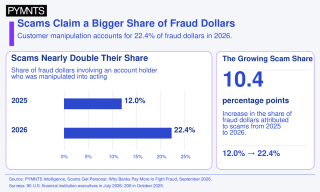
Banks have an opportunity to strengthen fraud prevention by looking more closely at payments that arrive with a valid login or a customer’s approval. That’s the central implication of the third key finding in “Scams Get Personal: Why Banks Pay More to Fight Fraud,” a...

For card issuers, artificial intelligence is moving closer to the transaction itself. Eighty-nine percent of issuers plan to adopt or expand at least one AI fraud capability, according to the PYMNTS Intelligence report “Investing Forward, Building the Edge,” done with Visa DPS. Half identify fraud...

Brooklyn’s district attorney’s office says it has disrupted a multinational cryptocurrency fraud operation targeting Russians in the U.S. The investigation by the office’s Virtual Currency Unit (VCU) and the FBI culminated in the seizure of 241 web domains and 112 servers, which revealed the millions...

Fraud teams have spent years weighing whether artificial intelligence (AI) can improve on manual controls. For companies that have deployed the technology, the results are becoming strikingly apparent. Seventy-seven percent of firms using AI-powered fraud defenses say they get better results than they did with...