

Gift card exchange Raise cut its chargeback rate by 45%, from 0.53% to 0.29%, and reduced the share of orders needing manual review from as much as 18% to 0.25%, fraud platform Sardine said in a customer case study. Gift card marketplaces carry two costs...

Fraud attacks can now be assembled with commercially packaged software, distributed across accounts and devices, and altered faster than banks can rewrite a conventional fraud rule. “We’re seeing fraudsters leverage commoditized SaaS toolkits sold on dark web marketplaces to orchestrate scams, card testing attacks and...
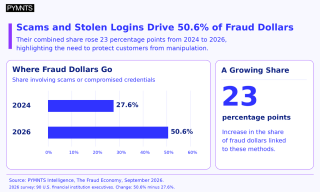
Banks have an opportunity to strengthen fraud protection by helping customers recognize when someone is persuading them to send money to a criminal. That’s a central finding of “Scams Get Personal: Why Banks Pay More to Fight Fraud,” the September 2026 edition of PYMNTS Intelligence’s “The...

Regional and community banks and credit unions surveyed by PYMNTS Intelligence now report behavioral analytics and artificial intelligence adoption approaching the levels seen with large banks, although their financial results remain uneven. The research underlying September’s “Scams Get Personal: Why Banks Pay More to Fight...

Watch more: Need to Know With ClawSecure’s JD Salbego Warning: This story will go fairly deep into the details of agentic artificial intelligence (AI) and agentic security. And another warning: You need to go there. Here’s why. An employee doesn’t have to approve a fraudulent...
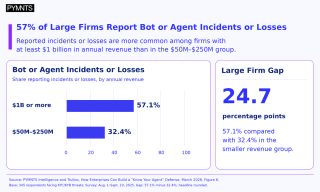
An identity check that stops a fraudster protects a business. One that blocks a legitimate customer costs it a sale. As automated agents handle more activity, enterprises have to establish who an agent represents and what it’s authorized to do, while keeping ordinary transactions moving....

Fraud losses reported by older adults increased fivefold between 2020 and 2025, leaping from $600 million to $3 billion, the Federal Trade Commission (FTC) said Monday (Oct. 19). The FTC shared this data in a press release outlining findings from its report to Congress, “Protecting...

Security flaws discovered with the help of artificial intelligence have triggered an urgent, OpenAI-led effort to protect websites worldwide, PYMNTS reported. The scramble exposes how quickly AI can uncover weaknesses in the software that supports online banking, payments and commerce. The vulnerabilities affect PHP, a...

Cloudflare reported millions of attempts to exploit newly disclosed vulnerabilities in PHP, or Hypertext Preprocessor, as companies and governments raced to secure websites and online services built on the widely used programming language. Cloudflare Chief Executive Matthew Prince described the rapid escalation in a post...