The rise of the hybrid workforce means that consumers are no longer bound to the physical office or the 9-to-5 workday. This often means that consumers find themselves working outside the office and outside traditional hours, according to the February edition of PYMNTS’ The ConnectedEconomy™ Monthly Report, which is based on a sample of roughly 2,500 U.S. consumers.
Get the report: The ConnectedEconomy Monthly Report: Working In The “Whenever, Wherever” Office
In fact, the report found, 58% of all consumers say that they used their connected devices — laptops, smartphones, tablets, voice assistants and others — to check in on work at least once a month when they were not in the physical office or outside of normal working hours.
Among these consumers, 21% said they did this daily, 24% said they did this not daily but weekly and 14% said they did this not weekly but monthly.
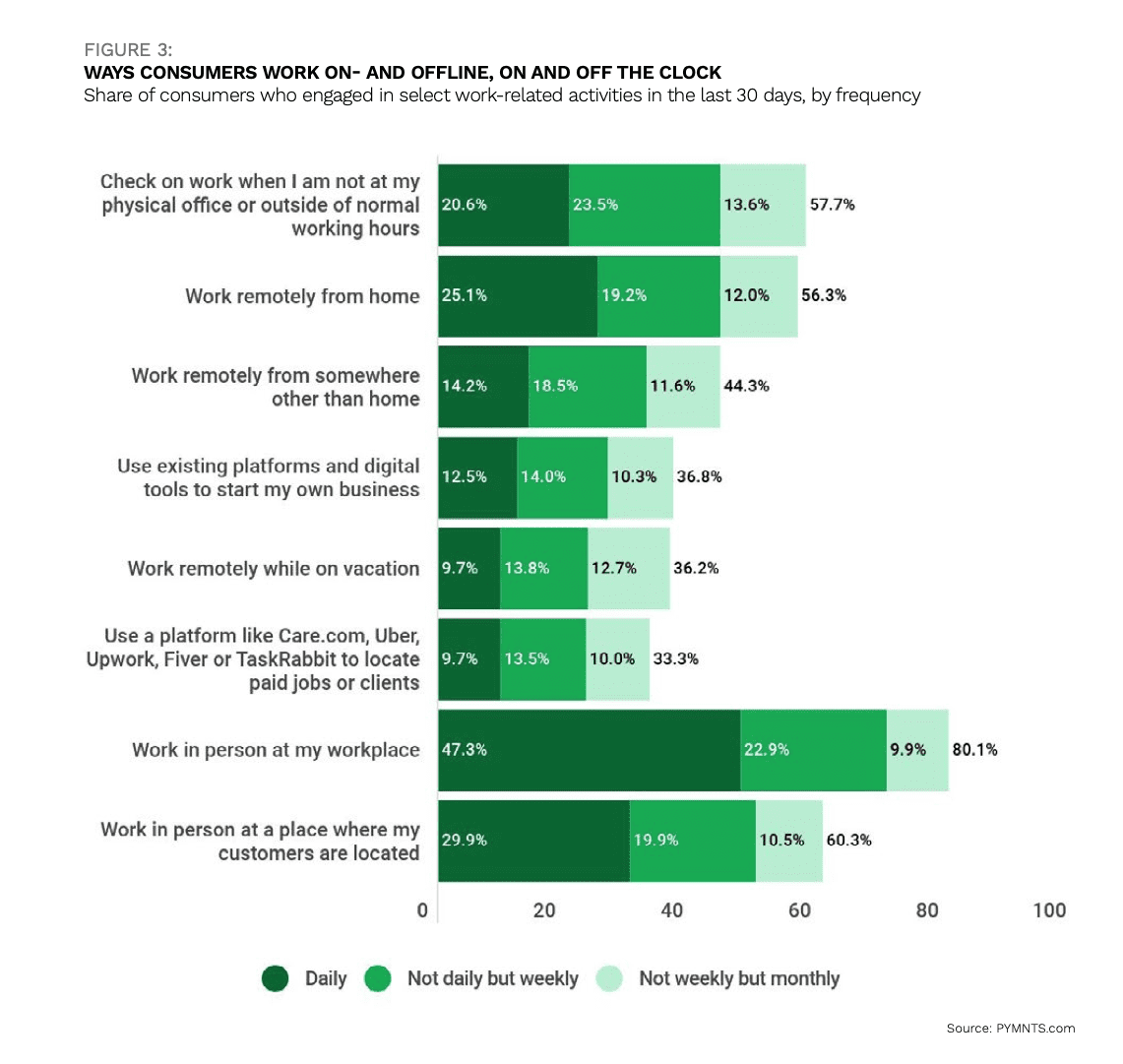
Connected devices are playing a central role in the hybrid workforce, enabling working professionals to log onto work, check in with the office after hours and connect with new clients and job opportunities.
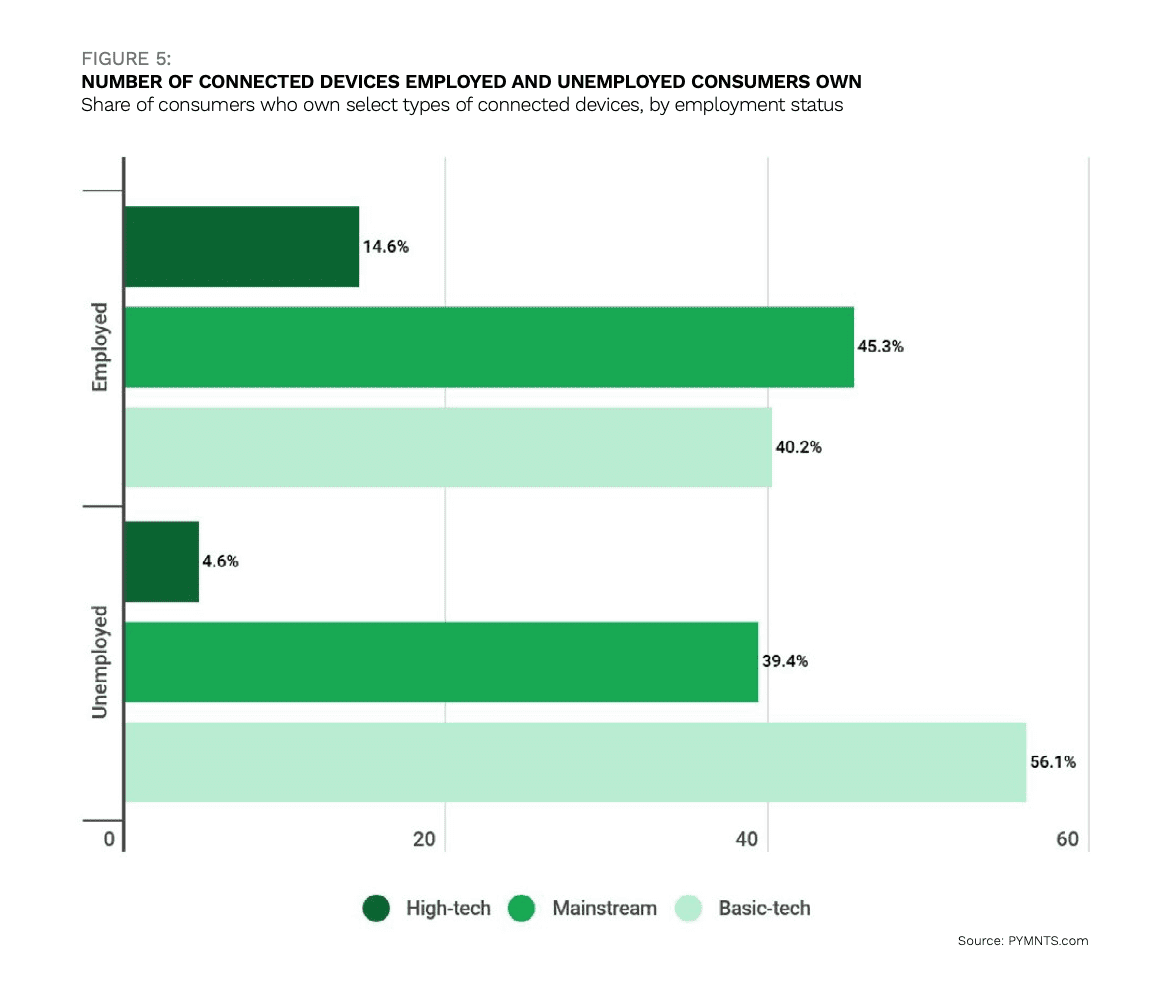
Fifteen percent of employed consumers own on average 11.8 connected devices, making them what PYMNTS calls “high-tech” consumers.
Advertisement: Scroll to Continue
Another 45% of employed consumers own on average 6.5 devices and are classified as “mainstream” consumers.
The remaining 40% of employed consumers own on average just 2.8 devices, making them “basic-tech” consumers. They predominantly use laptop and desktop computers and smartphones.
The more hours consumers work per week, the more aspects of their digital lives they want to integrate into a “super app.” Among the consumers who are interested in using a super app — a central command hub to manage their entire lives online — 21% work more than 60 hours per week.