Effects of the pandemic continue to be felt, and one area of marked change is in the use of the digitally connected economy, which is not as evenly distributed yet as one might think, and that can have a good deal to do with income brackets.
This was examined in “The ConnectedEconomy™ Monthly Report: Digitally Divided – Work, Health and the Income Gap,” based on a survey of over 2,700 U.S. consumers. It showed how the income gap in America is impacting consumers’ ability to engage in the connected economy.
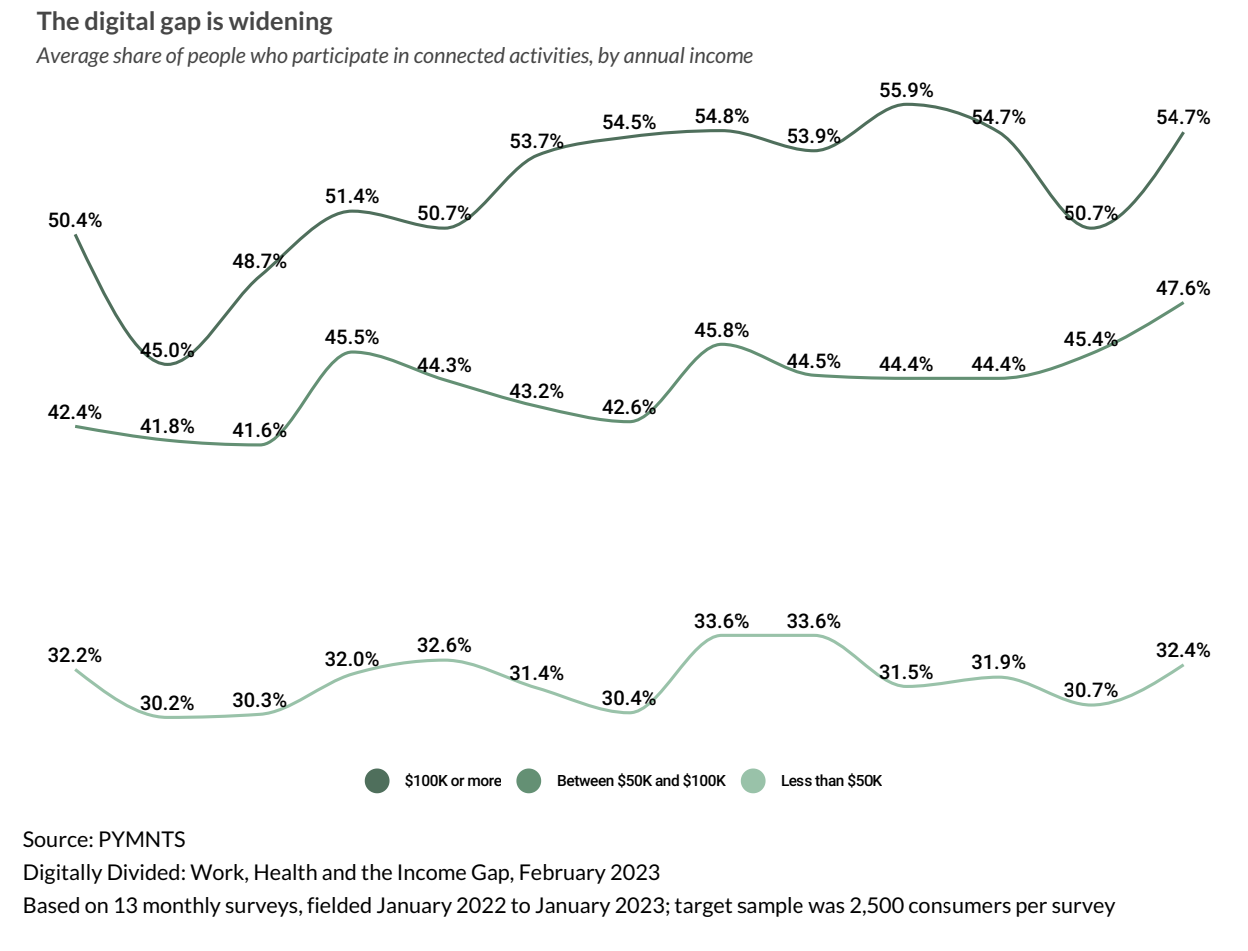 Survey results showed that high-income consumers’ participation in the ConnectedEconomy™ rose 9% year over year, but low-income consumers’ participation remained virtually unchanged. This “income gap” exists across all areas of consumers’ lives.
High-income consumers are consistently more likely than low-income consumers to use digital tools for everything from traveling to banking, keeping in touch with their families, accessing healthcare and beyond.
“Average participation in the ConnectedEconomy™ among those making $100,000 and more (high-income consumers) stands at 54.7%, close to twice the size of the share participating among those annually earning less than $50,000 (low-income consumers),” the study stated.
“High-income consumers are using digital more, partly because they are still working from home, while low-income consumers are increasingly returning to jobs requiring them to work onsite,” the study added. “High-income consumers are now 78% more likely than low-income consumers to have jobs they can perform from home.”
PYMNTS research found that 71% of high-income consumers — a projected 45 million individuals — now do at least some of their work from home, up 10% year over year. Just 40% of low-income consumers worked from home as of the first quarter of 2023, down 15% year over year. It is not entirely clear why this is, although many of these consumers may hold jobs that require them to work on-site.