But the work itself can be unpredictable, which means the cash flow is unpredictable too.
A bit more than two years ago, PYMNTS Intelligence and LendingClub spotlighted that inflation’s surge to mid and then high single-digit percentage points had spurred 23% of consumers to take on a side job. Drill down a bit, and the data showed that an even greater percentage individuals living paycheck to paycheck had sought a side hustle, at 30% of people in that economic strata with trouble meeting monthly expenses. And 26% of paycheck to paycheck consumers without that struggle took on side work.
Fast forward to today, and the side hustle’s a part of everyday workaday life for an even greater share of consumers, at about 40%, PYMNTS Intelligence reported last month. More than two-thirds of us, at 68%, live paycheck to paycheck. Inflation may have cooled a bit, but it is still pushing prices higher, and is still above the 2% benchmark that the central bank tends to target in its policy decisions. Rate cuts keep getting pushed out, so there’s no real short-term relief on the debt burden that’s now at an all time high, as measured in total credit card debt outstanding.
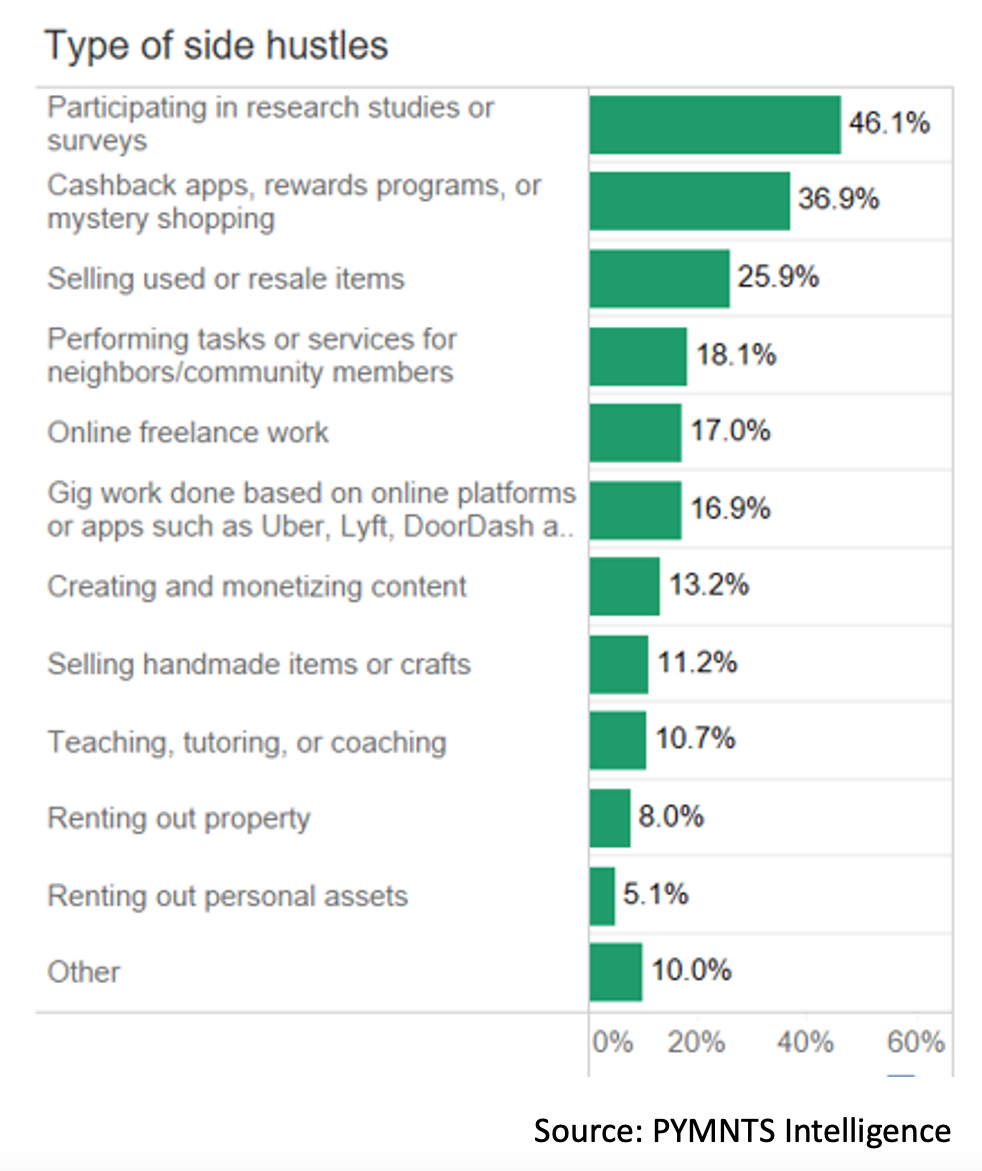
Necessity is the mother of invention, and the data show that a broad range of activities fit the bill to, well, pay the bills. PYMNTS Intelligence’s latest query of more than 2,240 consumers helps to illustrate the most common side hustles. Research studies and surveys and mystery shopping are among the top choices, followed by selling items previously owned … and we note that the growing spate of platforms and digital channels through which this type of work can be done, and buyers can be matched with sellers, can help get these hustles up and running.
Skewing Younger
The side hustle is an adjunct to 9-to-5 work, and the work tend to have some flexibility to be performed during the off hours or on the weekends. PYMNTS Intelligence has found consumers who live paycheck to paycheck with difficulty are the most likely to earn money from side hustles. Half of these individuals have at least one side endeavor.
Generation Z consumers are also disproportionately likely to earn income from side hustles. The majority of this demographic do so, at 55%, followed by millennials, at 49% and bridge millennials at 46.4%. The percentages have held relatively steady since 2023, per the PYMNTS Intelligence data — for the latter two groups. But there’s been a notable leap in side hustling among Gen Z, where the tally was less than 44% two years ago.
The read across is that younger consumers, starting out in their careers, are finding it harder to meet the demands of paying the bills month after month. Side hustles make up 57% of Gen Z’s total income, PYMNTS has learned.
The share of monthly income earned through these channels is significant across all income levels, at 31% of consumers earning more than $100,000 annually, and represents a staggering 75.8% of income for those earning below the $50,000 threshold (across those bookends of income, roughly 40% of individuals reported that they’d been earning money from side hustles).
As for the necessity of the supplemental income, the most often cited impetus to take on additional work is to cover basic living expenses — not for the majority of people but for a significant percentage of them. Twenty-two percent of individuals surveyed by PYMNTS said this was the most important reason to seek income through side jobs and activities. That figure rises to 34% among consumers who live paycheck to paycheck with difficulties paying bills. All told, 39.5% of side hustlers said they’d been using the work to build savings and emergency funds, 38% said it was to cover basic expenses.
There’s also the lure of planning for a one-off purchases: 31.4% of consumers overall said they’d taken on the side work to garner the funds for a specific good or service; 13% said this was the most important reason.
Side hustles have their lure as a way to cover expenses and build savings, but there’s an ebb and flow in place too. Forty-two percent of side hustlers said that the income from side work was unpredictable, a figure that rises to 45% of consumers making less than $50,000 and 44.5% of individuals living paycheck to paycheck with issues paying the bills — arguable the most vulnerable denizens of our studies.
But the trend is firmly in place: More than 44% of our respondents said they’d planned to take on more side hustles in the near future.