Cryptocurrency’s path into everyday commerce may look familiar via a card in a wallet, a purchase at the register and digital assets moving behind the scenes.
That is the central opportunity in “From Asset to Everyday Money: Making Digital Currencies Spendable,” the July edition of the Payments Innovation Tracker® Series from PYMNTS Intelligence and Paymentology. Consumers show growing interest in using cryptocurrencies and stablecoins for purchases, but acceptance, trust and uneven payment experiences still limit their choices.
The report pointed to a practical way forward. Linked cards, instant conversion and modern issuer-processing systems can connect digital assets to the payment tools consumers and merchants already use.
We’d love to be your preferred source for news.
Please add us to your preferred sources list so our news, data and interviews show up in your feed. Thanks!
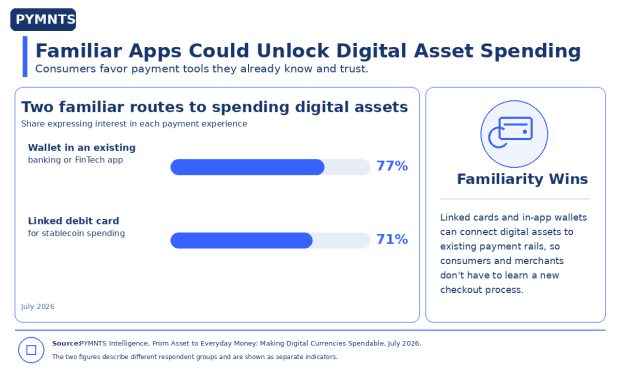
Familiar apps could provide the front door. According to the report, 77% of consumers said they would open a crypto or stablecoin wallet through an existing banking or FinTech app. That figure suggests banks and FinTechs don’t need to persuade customers to enter an unfamiliar financial world. They can add digital asset capabilities to relationships that already carry trust. For providers, the opportunity lies in making access feel like an extension of mobile banking rather than a separate crypto exercise.
Linked cards can widen acceptance without asking merchants to change checkout. The report found that 71% of stablecoin holders said they would use a linked debit card to spend those assets. Such programs convert digital assets at the point of sale, then send the transaction over established card networks. The card works like a bridge between two financial systems. Consumers use a familiar payment method, while merchants receive money through the processes they already support.
Infrastructure turns consumer interest into usable products. Issuers and FinTechs need systems that can authorize transactions, convert currencies and issue cards in real time without exposing users to the machinery underneath. The report cited Rain, a digital asset card platform that reached more than $3 billion in annualized spending after gaining direct Visa network membership. Its growth shows how established networks and new digital assets can work together at commercial scale.
Other findings reinforced the opening. Monthly crypto card spending grew about 15-fold from early 2023 to late 2025, reaching an annualized rate of roughly $18 billion. Demand still exceeds use in several categories. The report found that 42% of stablecoin holders want to make major purchases with digital assets, but only 28% currently do. Cross-border business payments offer another near-term use case because stablecoins can lower costs, speed settlement and provide access to dollar-linked value.
The report presented a positive path for adoption that includes making digital assets easier to use, placing them inside trusted services and letting familiar payment rails do more of the work.
At PYMNTS Intelligence, we work with businesses to uncover insights that fuel intelligent, data-driven discussions on changing customer expectations, a more connected economy and the strategic shifts necessary to achieve outcomes. With rigorous research methodologies and unwavering commitment to objective quality, we offer trusted data to grow your business. As our partner, you’ll have access to our diverse team of PhDs, researchers, data analysts, number crunchers, subject matter veterans and editorial experts.


 Add as Preferred Source