The 2026 World Cup will generate billions of dollars in ticket sales, travel bookings and merchandise purchases, but for merchants, it may also become the largest real-world examination of fraud controls and cross-border payment infrastructure they will face all year.
As fans move across three host countries and transact through dozens of payment methods and currencies, payment teams will confront a difficult reality: legitimate customer behavior often looks remarkably similar to fraud.
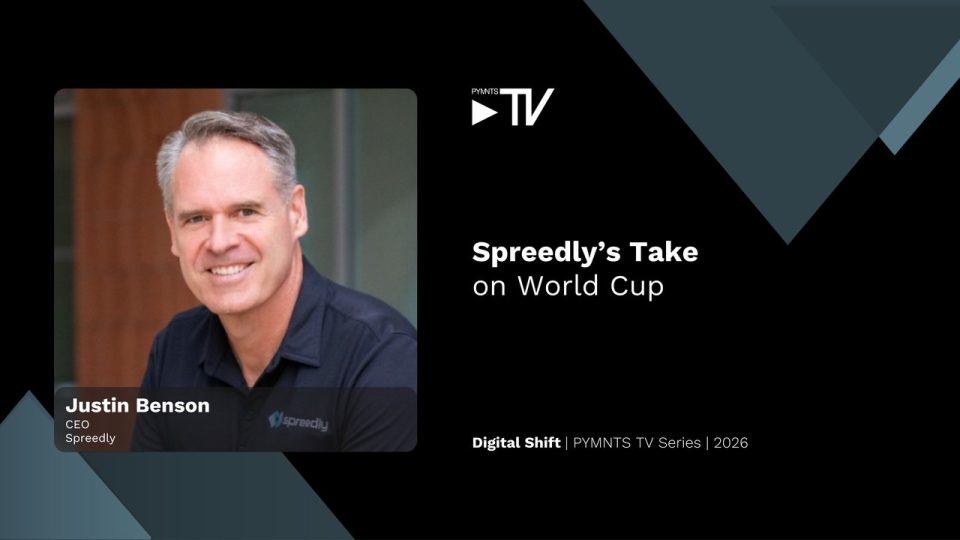
“The World Cup is the ultimate test for cross-border payments,” Justin Benson, CEO of Spreedly, told PYMNTS. “It’s really going to highlight any cracks that you might have in your approval process.”
Large sporting events have always attracted fraudsters. Digital commerce has expanded both the scale and speed of those attacks.
Fans routinely make emotional purchases, often under time pressure. They buy tickets at odd hours, reserve expensive travel packages and complete transactions from unfamiliar locations. Those are precisely the types of signals that frequently trigger fraud systems.
Benson pointed to a reported rise in World Cup-related ticket scams as evidence that criminals are already targeting tournament demand. The challenge for merchants is determining which transactions are genuine and which are not.
A customer purchasing international airfare at 2 a.m. using an unfamiliar payment method could be a fraudster. It could also be a lifelong soccer fan scrambling to secure a seat before tickets disappear.
That ambiguity forces merchants to balance risk management against conversion.
“That’s the key and that’s the trick,” Benson said, cautioning against a binary approach where “my fraud controls are dialed up, or my fraud controls are zero.” Instead, merchants need what he termed “a blended spectrum mix of capabilities.”
Cross-Border Payments Face Their Biggest Stage
The World Cup is also a rare demonstration of how fragmented global payments remain.
Consumers expect a purchase made in Toronto, Dallas or Mexico City to work the same way. The underlying infrastructure remains far more complicated.
Banks, acquirers, payment methods, fraud systems and currency conversions all influence whether a transaction succeeds.
Benson said merchants should focus on making international transactions appear local whenever possible.
We’d love to be your preferred source for news.
Please add us to your preferred sources list so our news, data and interviews show up in your feed. Thanks!
“You want to look as domestic as possible to a bank,” he said. “And then you want to also feel like the experience is a local experience to the user.”
That means local acquiring relationships, region-specific payment methods and payment routing strategies designed to improve approvals.
Merchants that have invested in those capabilities may see stronger authorization performance throughout the tournament. Those that have not may discover weaknesses that rarely surface during normal transaction volumes.
Infrastructure Problems Have Changed
A decade ago, payment executives preparing for an event of this magnitude worried about whether systems could remain online.
Today the concerns are different.
“We don’t have those conversations anymore,” Benson said, referring to capacity planning. The greater challenge is whether merchants can sustain approvals while navigating unusual transaction behavior and elevated fraud risk.
Merchants increasingly need the ability to adjust routing, fraud screening and acquiring relationships as conditions change.
Benson argued that payment orchestration provides that flexibility by allowing businesses to adapt payment and fraud strategies quickly rather than relying on fixed configurations.
The same logic applies to fraud technology itself.
“I would definitely not want to be single threaded into a single fraud provider,” Benson said. Fraud patterns evolve quickly, and merchants need options when one provider’s models fall behind emerging threats.
Watch the full interview with Justin Benson to learn more about:
- Why the World Cup may expose hidden weaknesses in merchants’ cross-border approval strategies.
- How fraud teams can balance conversion and risk when legitimate customer behavior begins to resemble fraud.
- Why payment and fraud orchestration are becoming critical tools for merchants operating across multiple markets, currencies and payment methods.


 Add as Preferred Source