As prices continue to skyrocket, consumers are abandoning their go-to grocers in search of savings.
What the Data Say
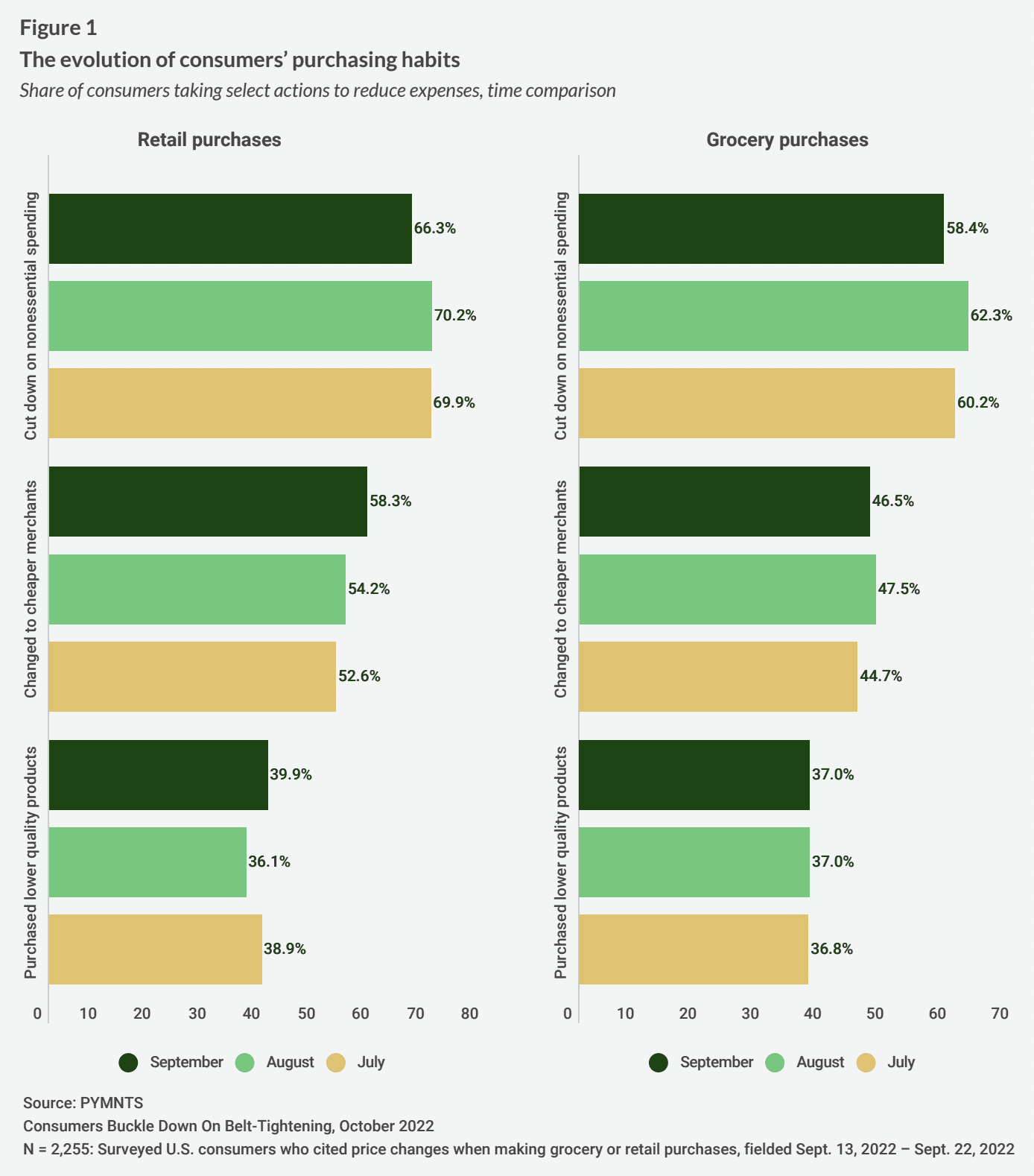
Research from the October edition of PYMNTS’ Consumer Inflation Sentiment study, “Consumer Inflation Sentiment: Consumers Buckle Down On Belt-Tightening,” which draws from a survey of more than 2,600 U.S. consumers in September, finds that 47% of consumers are switching to cheaper merchants.
Get the study: Consumer Inflation Sentiment: Consumers Buckle Down On Belt-Tightening
The news comes as, according to data from the United States Bureau of Labor Statistics (BLS), grocery prices have risen 12.4% year over year, well above the inflation rate for all items, 7.7%.
We’d love to be your preferred source for news.
Please add us to your preferred sources list so our news, data and interviews show up in your feed. Thanks!
The Data in Action
Indeed, discount retailers are seeing the benefits of this trade-down.
Canadian discount retailer Dollarama, which has more than 1,400 locations across the country, has been benefitting from consumers’ search for less expensive groceries amid rising prices and ongoing economic challenges, as CEO Neil Rossy told analysts on a call Wednesday (Dec. 7) discussing the retailer’s third quarter financial results.
“We continue to see sustained demand for a vast selection of affordable products from coast to coast, notably in the consumable product categories, which has fueled an acceleration in same-store sales,” Rossy said. “Our value promise in a high inflation environment is even more relevant as consumers juggle the pressure on their wallets and adjust their spending strategies.”
In fact, retailers known for their lower prices are even making gains with high-income consumers. Walmart, the world’s largest grocer, shared with analysts on a call last month discussing its Q3 financial results that its efforts to attract higher-value food customers are paying off.
“We’ve continued to gain grocery market share from households across income demographics, with nearly three-quarters of the share gain coming from those exceeding $100,000 in annual income,” CFO John Rainey said.



 Add as Preferred Source