The input, released Wednesday (Sept. 3), spans the 12 Federal Reserve Districts.
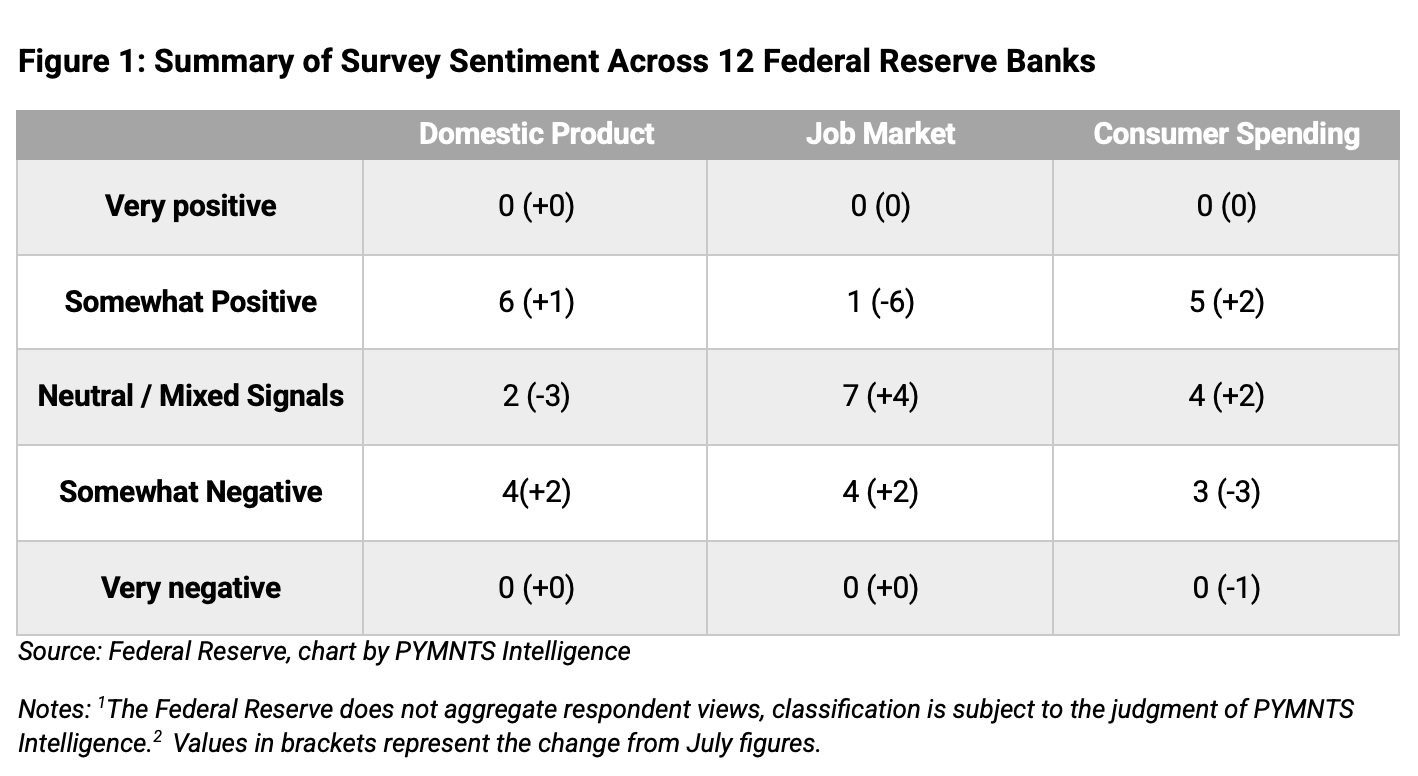
Bank and branch directors, businesses, community organizations, economists, market experts and other sources indicated a somewhat pessimist outlook relative to economic activity and the job market, whereas reports from branch officers are more benign relative to consumer spending.
Economic activity increased rose across six districts (one more than in the prior publication), although the number of districts reporting declining activity also grew from two to four.
Job activity skewed to the downside: neutrality or mixed pictures in seven cases, four more than had been seen in July’s data. Four districts painted overall negative pictures regarding the job market, two more than in the last report.
As for consumer spending, seven districts reported neutral, mixed or negative signals. By way of example, the report noted that in Boston, “tariff-related uncertainty dimmed the outlook for consumer spending.”
Only one district reported overall simultaneous improvement in domestic product, labor markets and consumer spending: The Chicago Fed.
We’d love to be your preferred source for news.
Please add us to your preferred sources list so our news, data and interviews show up in your feed. Thanks!
Reports about hiring continued to be “generally cautious,” which many contacts attributed to ongoing economic and policy uncertainty. A growing number of districts cited labor shortages in the skilled trades.
Eyeing AI Investments
Employers in a few districts ramped up investments in automation and artificial intelligence (AI) aimed at reducing the need for additional hiring.
The pressured jobs portrait was corroborated by other data on Wednesday, as the Jobs Opening and Labor Turnover Survey data showed that that openings declined again to 7.2 million, nearly 200,000 fewer than in June, more than 500,000 fewer than in May, and down over 300,000 from the same period last year. This months’ Beige Book reported that, looking ahead, many contacts expected to postpone major hiring and layoff decisions until uncertainty diminished.
As noted in the report, “Sentiment … remained pessimistic among commercial real estate contacts and became more guarded among retail and tourism contacts.”

The spending trends come as the Fed’s districts indicated that wages have been failing to keep up with rising prices for many households. Effects on bottom lines may be even more lackluster, as the Fed’s report outlines retail and hospitality sectors commonly offered deals and promotions to retain price-sensitive consumers. Nearly all districts also noted tariff-related price increases.
Yet, reports often mentioned at least some hesitancy in raising prices, citing customer price sensitivity, lack of pricing power and fear of losing business.
Consumer sentiment data from late August, released by The University of Michigan, supports this view. The August reading represented a dip that was pervasive across income and age groups. Sentiment now stands 14% below its own standing a year prior.



 Add as Preferred Source