We explore this in The Digital Platform Promise: How Patients Want to Streamline Healthcare Payments, a PYMNTS and Lynx collaboration based on a survey of over 2,500 U.S. consumers and measuring their desire for more seamless online healthcare payments.
We’d love to be your preferred source for news.
Please add us to your preferred sources list so our news, data and interviews show up in your feed. Thanks!
While portals, apps, and provider websites do their best, it’s all started to feel a bit “legacy” three years into the pandemic digital shift, when we have unified platforms to get this job done. What are these payment pain points in the consumer-patient experiences? The study tells us.
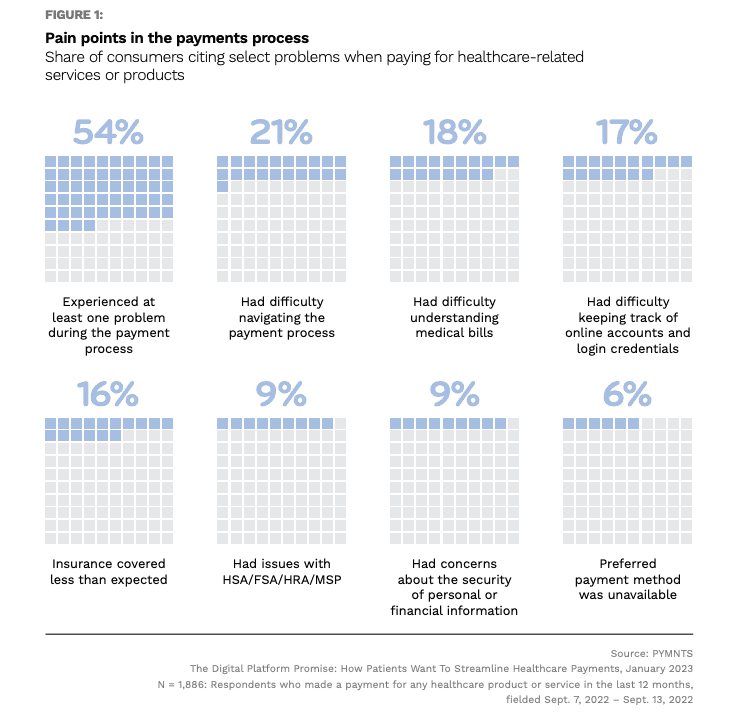
Specifically, over half of the consumers surveyed “faced difficulties when making healthcare payments, with 54% experiencing at least one pain point in the past 12 months. Twenty-one percent found the payment process difficult, 18% found medical bills confusing and 8.8% and 6.2% raised concerns about the security of their information and lack of preferred payment methods, respectively.”
Moreover, the study states that “paying for healthcare products and services is often a friction-filled task for consumers,” as 54% of consumers surveyed said they “experienced at least one pain point during the payment process in the past 12 months.”
Digging into those stats, 21% of consumers found the actual process of paying difficult. In comparison, 18% said that medical bills were confusing “in ways that hampered efficient payment, with 13% unable to decipher the costs for specific services and 9% finding inconsistencies between the costs outlined on medical bill statements and those detailed within the online patient portal.”
Given these findings, it’s unsurprising that consumer interest in a single, comprehensive digital platform appeals to 70% of consumers who say they like using a unified digital platform to manage their healthcare needs and activities (43% indicated high levels of interest).
Get the Study: The Digital Platform Promise: How Patients Want to Streamline Healthcare Payments



 Add as Preferred Source