Three out of four healthcare payouts still go out by check.
Only 5% to 12% move in real-time, according to the PYMNTS Intelligence report “The Power of Now: Moving Money at the Speed of Life.” That gap, between where the industry is and where patients expect it to be, is the defining fault line in healthcare disbursements today. It’s a problem Visa Direct has firmly put on its agenda.
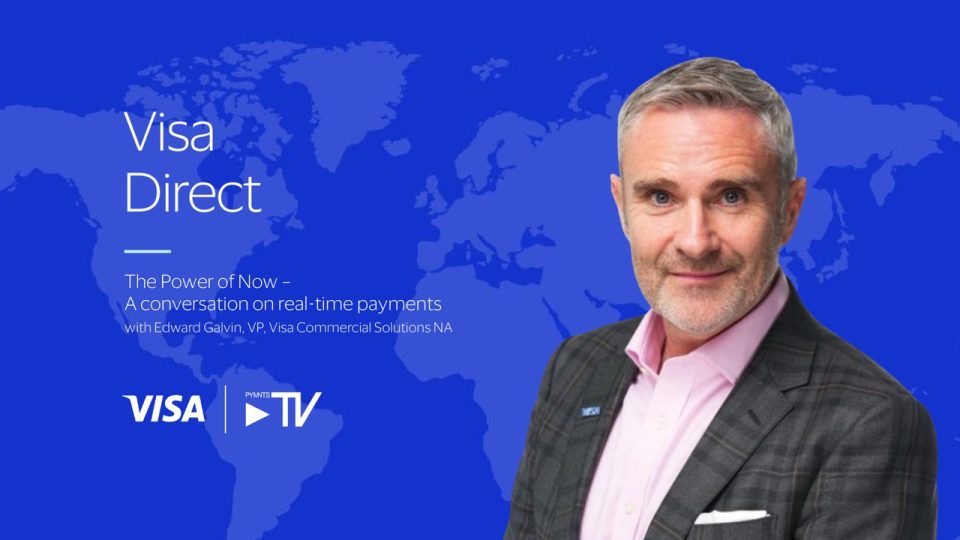
“Payouts impact so many people,” Edward Galvin, vice president, Visa Commercial Solutions NA, told PYMNTS CEO Karen Webster, describing a sector he characterized as “a very complicated space right now.”
It’s tangled in regulation, fragmented technology and an ecosystem that often works against itself.
Webster asked why, in an era of instant everything, do three-quarters of healthcare payouts still rely on paper?
The answer is deceptively simple.
“People are familiar with checks,” Galvin said. “The providers are familiar with checks. And it’s easy to get the checks out there versus correcting where the inefficiencies are on the system.”
Inertia, in other words, is the enemy of progress.
That reliance carries costs that rarely show up on a balance sheet. Checks introduce delays, increase fraud exposure, and leave providers and patients with no clear view of where their money actually is. The inertia persists because no single entity owns the problem. Everyone feels the friction, but no one is fully accountable for fixing it.
Compliance Complexity Is Slowing the Clock
Healthcare payments do not just move slowly; they move carefully. HIPAA and related data privacy requirements constrain how quickly new payment infrastructure can be introduced, even when modern alternatives offer stronger controls.
The irony is that the legacy system it is protecting is riddled with its own vulnerabilities.
“One of the key fraud areas is just in directing funds to the wrong account,” Galvin said, adding that checks carry no native validation layer. Card-based disbursements do and can route money with the kind of precision that reduces fraud and closes the accountability gap.
“Members may have a bank account and a debit card tied to it, and with Visa Direct, that debit card information can be used to deliver funds in real time into the bank account,” he said.
But modernization in healthcare is not a solo act, Galvin said. The entire ecosystem must move together, which is exactly what makes it hard.
The Consumer’s Patience Is Already Gone
Patients are not waiting for the industry to catch up. Webster said that “consumers expect real time,” especially when a reimbursement check sitting in transit is directly affecting someone’s ability to pay rent or cover an out-of-pocket expense. “It’s still processing” is no longer an acceptable answer.
Healthcare is, at its core, a high-stakes financial transaction, and patients are starting to treat it that way.
We’d love to be your preferred source for news.
Please add us to your preferred sources list so our news, data and interviews show up in your feed. Thanks!
The Data Gap Is Stark
Research from PYMNTS Intelligence, conducted with the support of Visa Direct, found that while real-time payouts have accelerated in industries from insurance to gig economy to retail, healthcare is trailing the field.
Today, approximately 12% of healthcare payouts are delivered in real time. That figure is expected to reach about 33% within three years. Better, but still not good enough.
Chief financial officers navigating this transition “want to be able to quantify and understand how you can get rid of the friction,” Galvin said. That means KPIs tied to speed, fraud reduction, data accuracy and end-to-end customer experience.
The challenge does not shrink with transaction size. Whether it is a large provider reimbursement or a routine flexible spending account (FSA) disbursement, the friction, risk and opacity are consistent. Scale does not solve it.
Where Pilots Are Gaining Traction
Progress is happening, even if it is uneven. Galvin pointed to FSAs and health savings accounts (HSAs) as the clearest near-term opportunities, high-volume, lower-dollar use cases that are ideal testing grounds for real-time models.
These pilots are revealing the true cost of doing nothing. Faster payments do not just move money more efficiently; they reduce inbound customer service load, build trust and shrink the tail risk that comes from funds in limbo.
“There’s a massive cost that’s not recognized and not seen today,” Galvin said, referring to the cumulative impact of delays, errors and customer service burdens.
The Ecosystem Is Starting to Align
Change is incremental, but it is no longer theoretical. Galvin said he sees a convergence happening, one where CFO pressure, patient expectations and technology capability are finally pointing in the same direction.
“It’s really the various players in the ecosystem coming together to support getting there,” he said.
Healthcare has been the last holdout in the real-time payments revolution. The check, it turns out, may have a limited shelf life after all.


 Add as Preferred Source