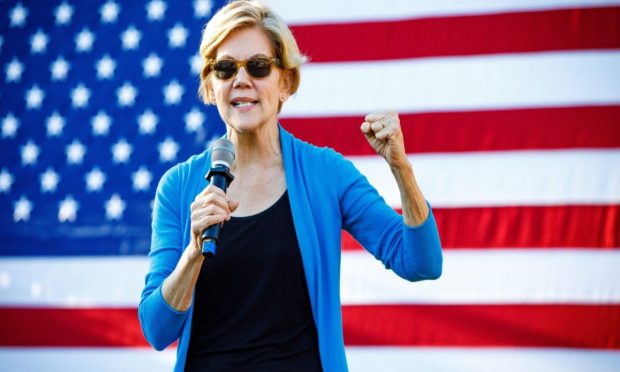
The banking agencies write the capital rules. As chair, Warren would have a say in which bills get hearing and could press regulators to explain, among other things how their proposals would affect the capital banks hold against losses.
Warren’s selection is pending. Elsewhere, the House Financial Services chair is contested. Rep. Maxine Waters of California, the ranking Democrat and a former chair, faces a challenge from Rep. Sean Casten of Illinois, as reported last month by Politico.
Examining Banks and the CFPB Funding Question
It’s not too far fetched to think the ultimate fate of the CFPB will be high on Warren’s agenda. The senator, of course, first proposed a federal agency dedicated to protecting consumers in financial markets in 2007. After Congress created the CFPB in the 2010 Dodd-Frank Act, President Barack Obama appointed Warren as an adviser to help set it up.
At present, Mark Paoletta remains acting CFPB director, a role assumed in August. Senate Banking advanced Brian Johnson’s nomination in September, and the current Senate can still take it up. At Johnson’s July hearing, Warren pressed him on how he would run the agency. Earlier that month, she questioned then-acting Director Russell Vought about dropped enforcement actions, following a February statement in which she argued that reduced enforcement had cost consumers financial relief.
A federal judge in Oregon ruled in September to set aside the CFPB’s decision to forgo Federal Reserve funding for fiscal 2026. The judge held that the Fed must transfer the amount the CFPB director determines is reasonably necessary to run the bureau and declined to issue an injunction for that fiscal year. A separate bill advanced by the House Financial Services Committee would move the CFPB to annual appropriations. As introduced, it would also raise the asset threshold for direct CFPB supervision from more than $10 billion to more than $30 billion, leaving consumer compliance exams for institutions between those thresholds generally to their prudential regulators.
Where Banks and FinTechs Might Wait
The CFPB is reconsidering its open banking rule, including whether banks should be allowed to charge for access to customer-authorized data. Banks sit on both sides of that decision. They hold account information that FinTechs use to build services, and they buy services from FinTechs that connect customers to accounts held elsewhere. The price of that access can affect the cost of offering account-linking or cash flow tools.
In a pre-election survey of 100 FinTechs, PYMNTS Intelligence and Velera found that 70% prioritized data security and 60% prioritized compliance, compared with 50% that prioritized artificial intelligence automation. A separate PYMNTS Intelligence study classified 36% of credit unions as quick followers, which roll out products once they see evidence they work, versus 5.2% that aim to launch first. Neither survey measured a response to the election. The specific reason for caution on open banking is commercial. A bank or credit union can test a product while leaving a broader rollout contingent on what it will cost to obtain the data.
The House passed the Main Street Capital Access Act in July and sent it to Senate Banking. Warren argues that the bill would benefit large banks as well as the community lenders it was pitched to help. Congress already enacted a separate set of community banking provisions in July through the bipartisan 21st Century ROAD to Housing Act.
The bipartisan STOP Payments Fraud Act was reported by the House committee in September. It would direct the Fed and CFPB to set rules for when a receiving bank can hold an incoming wire based on specific indicators of fraud. The bill caps initial holds at 10 days and extended holds at 45 days. If it or the pending CFPB and bank merger bills expire at the end of this Congress, lawmakers would have to reintroduce them in the next one.