That’s the undercurrent of PYMNTS Intelligence’s latest “How the World Does Digital” report, which finds that wallets are driving a shift in form factor without changing what actually funds those payments.
Consumers aren’t abandoning cards. They’re abandoning the swipe.
We’d love to be your preferred source for news.
Please add us to your preferred sources list so our news, data and interviews show up in your feed. Thanks!
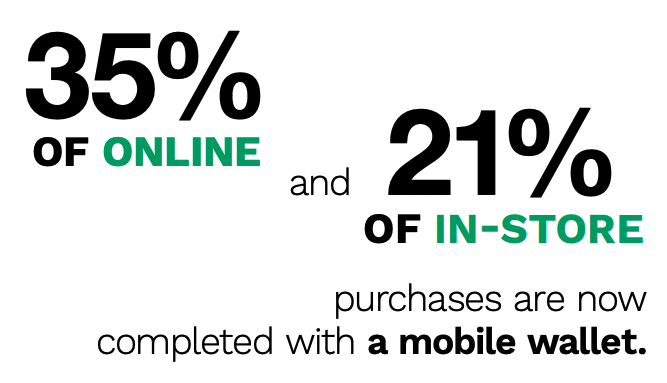 The report, based on 216,679 consumers across 11 countries representing half of global GDP, shows how mobile-first experiences are becoming the new default for everyday transactions. Mobile wallets now power 35% of online and 21% of in-store purchases, representing gains of 5.2 and 10.9 percentage points since 2022.
Rather than signaling a pivot to new funding sources, the change reflects a repositioning of payment access around convenience, security and speed.
At the heart of this evolution is a simple proposition. People trust their cards but prefer to tap, scan or authenticate through phones instead of plastic.
The report calls this a “form-factor shift,” not a method shift, and suggests that financial institutions, merchants and wallet providers must meet consumers where convenience now lives, which is on mobile screens.
- Local wallets drive mobile payment adoption.
While PayPal remains a major digital wallet player, local solutions are steadily gaining ground. In Japan, 44% of online transactions now flow through native wallets. In Brazil, local app Pix accounts for 14% of online payments. Tailored, local, mobile-first experiences can reshape the competitive landscape.
- Generation Z sets mobile-first payments pace.
In-store mobile wallet use among Gen Z has surged 23% since 2022, the largest generational jump. Yet adoption is also climbing among millennials, Generation X and baby boomers, making mobile wallets “age-agnostic,” according to the report.
- Mobile is now table stakes.
Across markets like Singapore, the Netherlands and Japan, wallets are integrated with instant payment systems, creating near-frictionless commerce. In contrast, the United States lags at 19% in-store wallet use, not for lack of technology but because leading merchants such as Amazon and Walmart favor proprietary systems. Still, mobile is a table stakes requirement to remain competitive, even in card-heavy economies.
The report’s deeper insight is that digital trust and habit, not infrastructure, now define the payments map. Where consumers perceive value in speed, security or rewards, wallet adoption accelerates. Where cards remain good enough, growth stalls.
PYMNTS also identifies four behavioral segments shaping the wallet market, including Skeptics, Dabblers, Persuadables and Committed. Together, they reveal that technology alone doesn’t move the needle; motivation does. The most committed users are digitally fluent, app-driven and expect mobile to be the default way to pay.
The upshot is that the future of payments isn’t about replacing the card. It’s about replacing the act of pulling it out. Mobile wallets are changing the choreography of checkout, one tap at a time.


 Add as Preferred Source