A warehouse that wants to use a robot usually must buy one. The purchase ties up capital before the machine moves a box, and the cost stays the same whether the robot runs all night or sits idle.
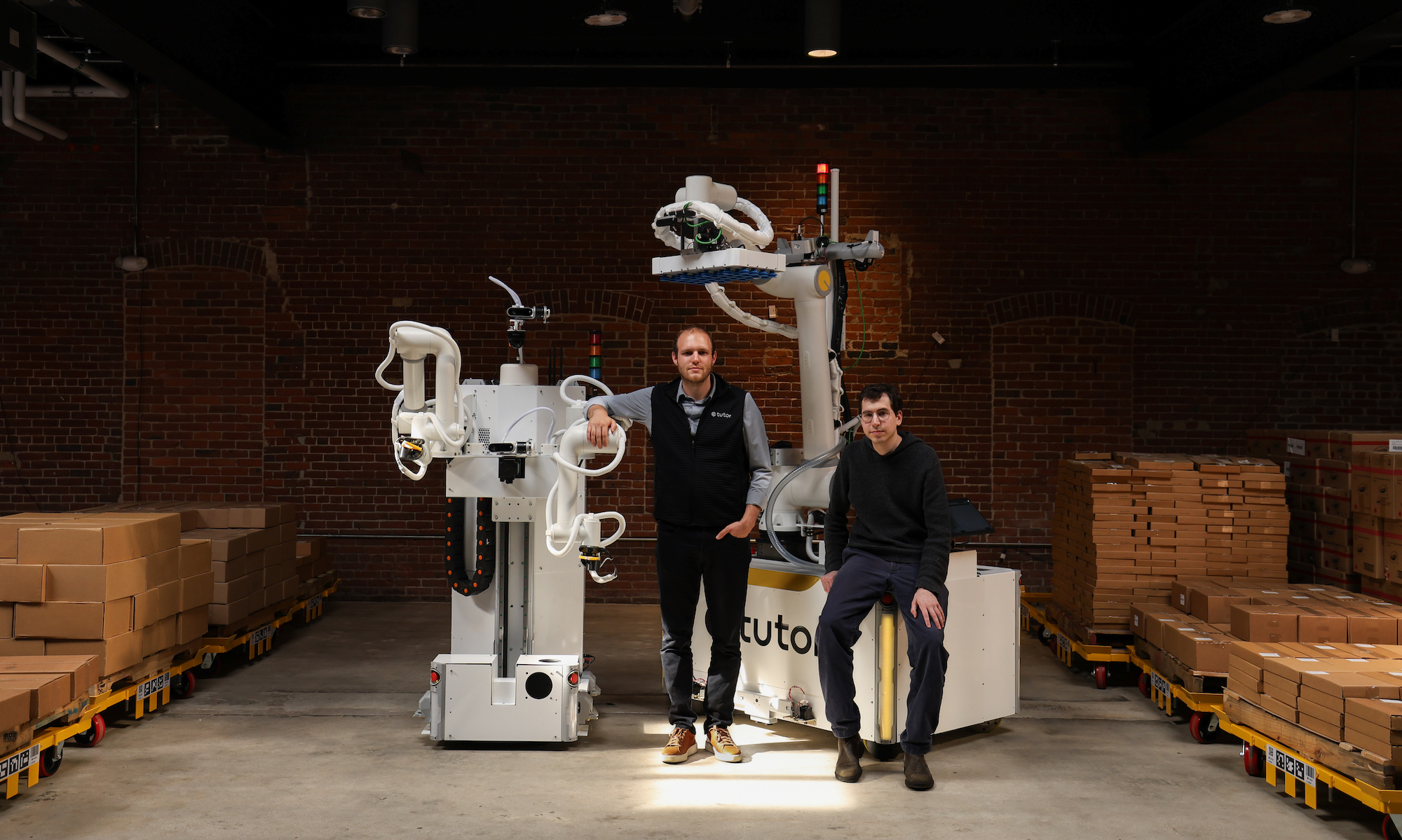
Tutor Intelligence, a startup that builds warehouse robots, is selling the work instead. The company’s robot, Cassie, stacks and unloads pallets for $14 to $18 per robot-hour, according to its pricing page. Support, maintenance and every model update come with that rate. Customers commit to 80 hours a month and pay a flat $10,000 implementation fee and an $8,000 refundable deposit. Terms run month to month, and Tutor doesn’t bill for idle time beyond the minimum.
Picking work is priced by the item, according to the pricing page. Tutor simulates a customer’s volume and quotes a rate 10% to 50% below what that customer now pays per pick.
The model frees up “hundreds of thousands of dollars of capital,” Tutor Intelligence said in a Q&A section of the pricing page.
The rate comes with a trade-off. Tutor’s robots are not fully autonomous, and remote human operators help direct their work, Inc. reported Nov. 3.
Tutor Intelligence Co-Founder and CEO Josh Gruenstein said in a Nov. 2 post on social platform X that the company calls these operators tutors and trains its models on the work they direct.
Andreessen Horowitz led Tutor’s $75 million Series B round, which lifts the company’s total funding to $117 million, according to a Nov. 2 press release. The money will pay for model training and for building and deploying more of the robots the company rents.
Tutor’s robots now work in almost four times as many facilities as a year ago, and the company expects more than 1,000 robots under contract by the end of 2027, the release said.
“We can hardly build robots fast enough,” Gruenstein said in the release.
Maximo Bills Solar Builders for Each Finished Task
Maximo Robotics, an Arlington, Virginia, company that makes solar construction robots, doesn’t charge for time. Contractors pay for each task its robots complete, which links Maximo’s revenue to how fast solar panels go in, the company said in an Oct. 29 press release. Its robots have finished more than 300,000 tasks, including placing heavy solar modules on utility-scale projects.
Crews working alongside Maximo’s newest system, Max 4.0, installed panels at 2.5 times their manual rate per person per shift hour, according to the release. The robots work for six large contractors at sites in seven states, including California, Illinois, Kansas, Louisiana, New York, Texas and Washington. Demand for 2027 covers another 3 million tasks, or 1.5 gigawatts of solar installation.
Solar is a setting “where customers can measure the results in demanding field conditions,” Maximo CEO Chris Shelton said in the release.
Software Vendors Made the Same Shift With AI Agents
Software companies made the switch first. Vendors such as Salesforce and ServiceNow grew for about 20 years by selling per-user subscriptions. Now that AI agents do the work, vendors are testing prices tied to output, and a company may pay per refund resolved or per invoice reconciled, PYMNTS reported in February.
OpenAI has started letting some large customers pay only when its AI does its job, PYMNTS reported in August.
The PYMNTS Intelligence report “No Roadmap, No Problem: How Enterprises Are Reinventing the AI Workforce” found in November 2025 that 34% of chief financial officers named increased output as their top reason for adopting AI. The report was based on a September 2025 survey of 60 CFOs at companies in the United States with at least $1 billion in revenue.
For all PYMNTS AI coverage, subscribe to the daily AI newsletter.