When the going gets tough, the tough get creative. And ever since Amazon stole the top retailer in the world by market cap crown, the going has been tough for Walmart.
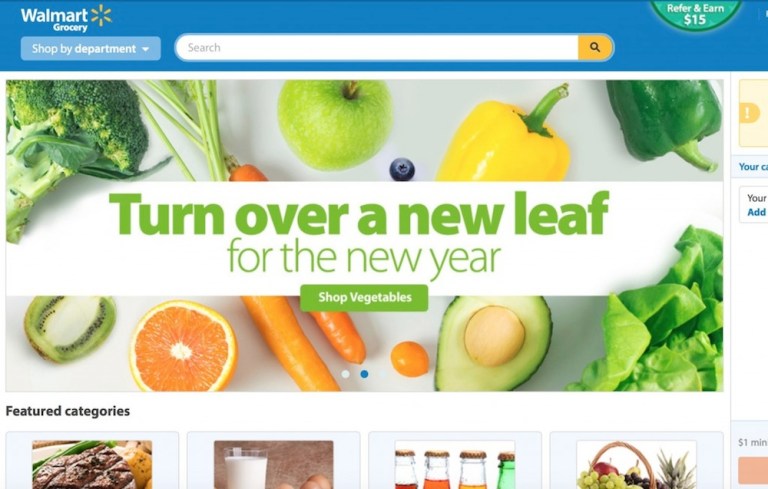
And so, Walmart has gotten creative, and it looks like it is about to get even more so as it pilots a program with ridesharing services Uber and Lyft to bring its own brand of online grocery delivery to the masses.
Walmart enthusiasts in Denver and Phoenix will have a chance, within the next two or so weeks, to have their groceries brought to them, same day, by a ridesharing driver. A similar program started testing in March between Sam’s Club and startup Deliv to test drive the program in Miami.
To get groceries on demand via Walmart, customers will pay a $7 to $10 delivery charge. The largest grocer in the U.S. by volume has also leveled up its online options to offer grocery delivery within two days for a $49 annual fee and pushed online order/at store pickup as an option for grocery services as well. Walmart announced yesterday (June 2) that curbside pickup will be expanding to 14 new markets by the end of June.
It’s big business for Walmart and common sense to go after. As of today, online grocery shopping is a $10.9 billion industry in this country, and that figure is only expected to grow. According to market research firm IBISWorld, online grocery could grow by as much as 9.6 percent annually through 2019.
However, it is a fragmented and competitive space, where a host of tiny, barely known startups are racing against delivery specialists like Postmates, grocery aficionados like Instacart, online Jedi masters like Amazon and now the world’s biggest merchant by sales.
Advertisement: Scroll to Continue
And if Walmart’s $2.7 billion investment in rapidly jumping its firm into the 21st century is any indication, the competition is only getting stiffer from here.