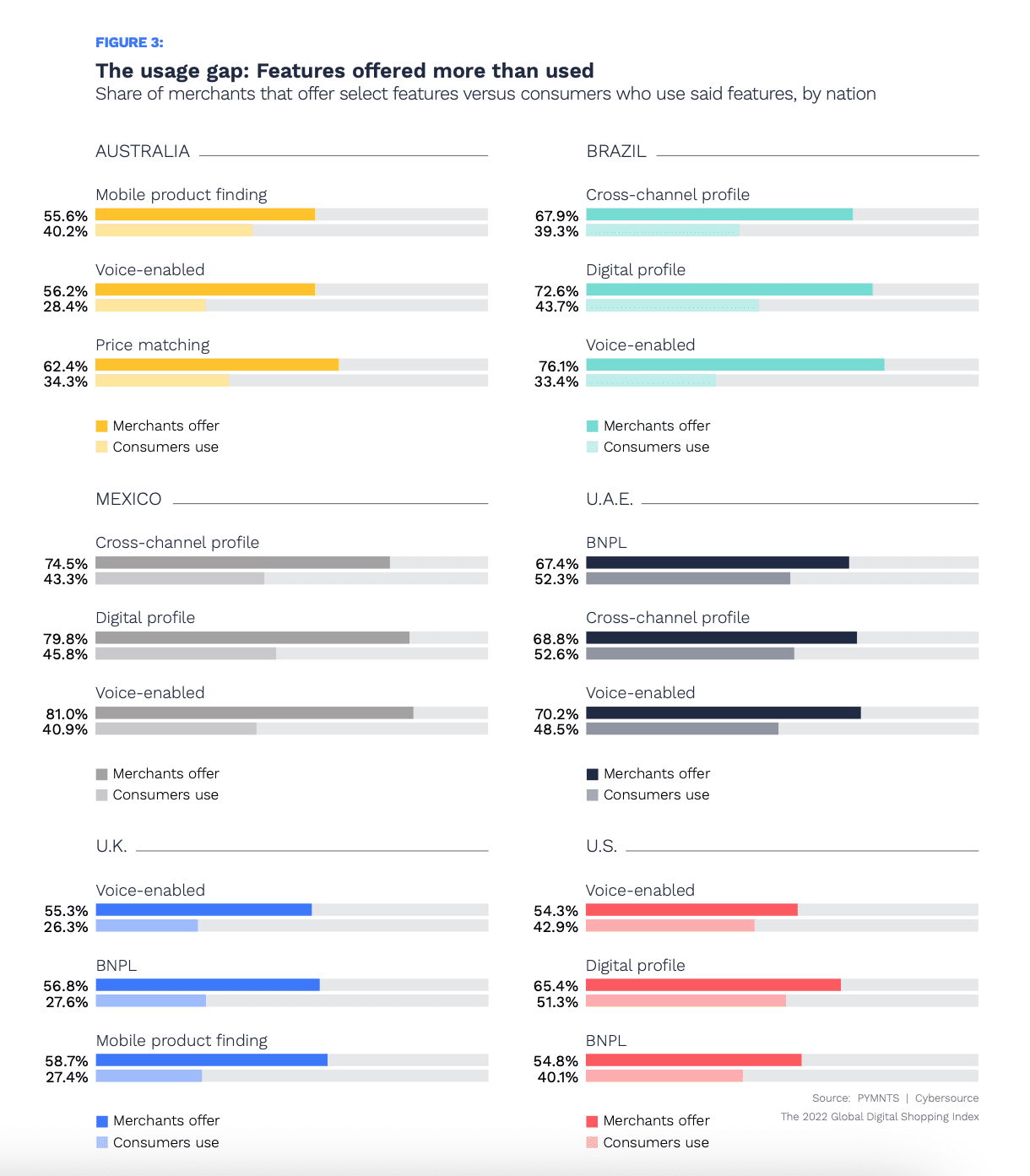
The number of merchants offering three cross-channel-capable features increased between 2020 and 2021, according to The 2022 Global Digital Shopping Index, a PYMNTS and Cybersource collaboration based on a survey of 13,114 consumers and 3,100 merchants across six countries.
Get the report: The 2022 Global Digital Shopping Index
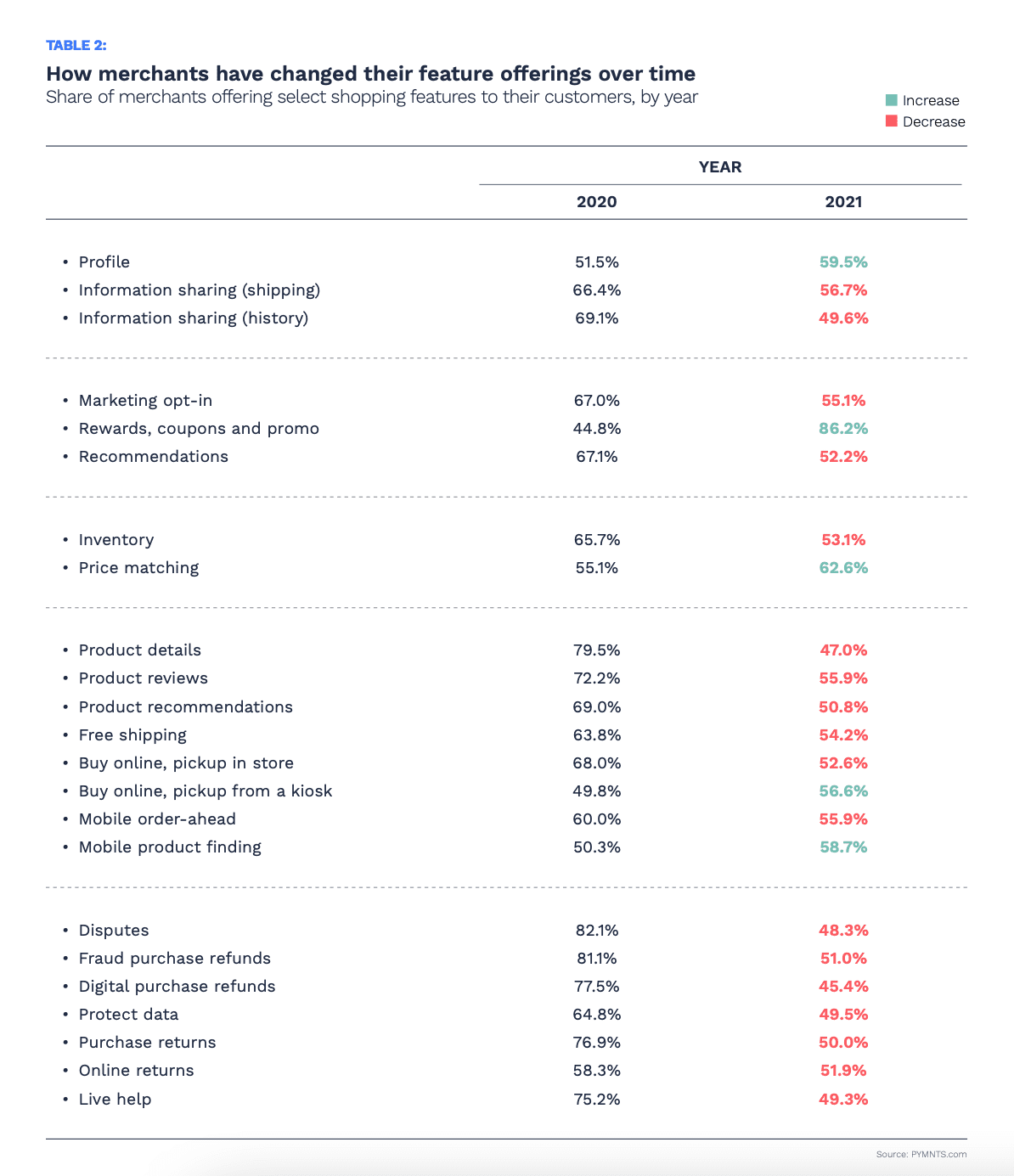
Among merchants in the four nations PYMNTS has studied since 2020, three cross-channel-capable features increased in availability.
One is digital profiles that store consumers’ personal information and can be accessed and used via mobile, via laptop and in-store. This feature was offered by 60% of merchants in 2021, up from 52% in 2020.
Another feature that’s more widely available is mobile product finding, which gives brick-and-motor shoppers smartphone-enabled capabilities they can use while shopping in stores. This feature was offered by 59% of merchants in 2021, up from 50% in 2020.
The third cross-channel-capable feature that grew in popularity is allowing shoppers to buy products online and pick them up on-site via in-store kiosks. This feature was offered by 57% of merchants in 2021, up from 50% in 2020.
Advertisement: Scroll to Continue
In addition to enhancing cross-channel functionality, many merchants are also making a conscious effort to add new shopping channels, especially voice-assisted shopping options.
They appear to be ahead of the curve, however, as merchants are far more likely to offer voice-enabled purchases than their customers are to use them. In fact, 65% of the merchants in the six nations included in the survey provided some type of voice-enabled shopping option, while only 39% of local shoppers used them.
Brazil has the greatest “usage gap” of all, with 76% of its merchants offering voice-enabled shopping options but only 33% of its consumers using them. The narrowest usage gap is in the U.S., where 54% of merchants offer this feature and 43% of shoppers use it.