The retail calendar has always had its tentpoles. Black Friday. Cyber Monday. The holiday rush that begins in earnest when the leaves turn.
But this year, the playbook is evolving in real time, shaped by inflation, geopolitical tensions, supply chain fragility and the outsized expectations of digital-native consumers. At the heart of it all are the two giants that have long defined modern retail: Amazon and Walmart.
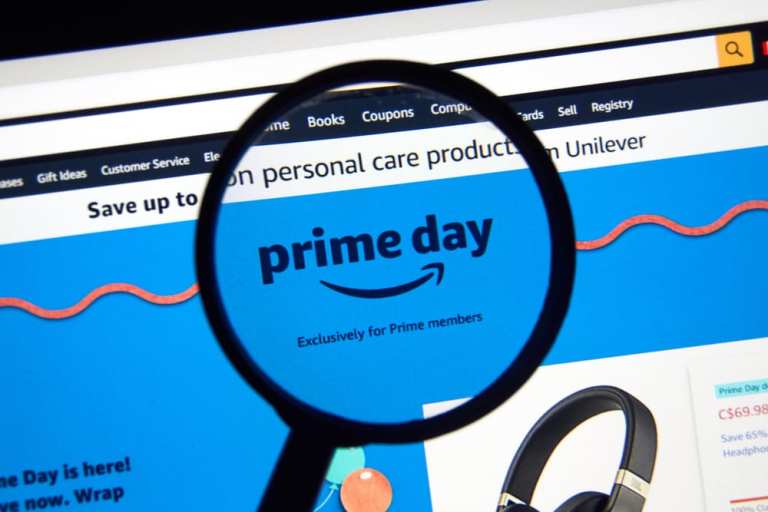
Amazon is preparing to roll out its second Prime Day of the year in October, a strategy it has used since 2020 as a way to spark mid-fall demand and, not coincidentally, test consumer confidence ahead of the holidays.
Walmart, meanwhile, is quietly but aggressively deploying agentic artificial intelligence (AI) across its operations, seeking to reinvent not just how it sells, but how it plans, ships and interacts with customers. The sprint from September through December, then, is less a routine high season than a stress test of the future of commerce.
Both companies are navigating an environment in which delivery speed is under pressure, inventory planning is fraught with costs and customer expectations for transparency are unrelenting.
Read more: Amazon and Walmart Lean Into Platform Plays to Navigate Uncertainty
Advertisement: Scroll to Continue
The Pressure Cooker of Inventory Planning
Retailers are used to volatility, but 2025 has brought a cocktail of challenges that makes inventory planning unusually complex. Inflation has compressed discretionary spending, tariffs have reintroduced cost unpredictability and the supply chains built for just-in-time logistics remain vulnerable to shocks.
Amazon’s October Prime Day acts as both a lever and a litmus test. By pulling forward demand, the company can measure how much consumers are willing to spend and which categories resonate before committing to deeper holiday inventory bets. The sale may be less about margin than about insight.
“Layer in the uncertainty of today’s economy, and you can see why retailers are inventing more mini-holidays. They don’t need month-long events, just enough runway to get people to justify that new TV, replace a dying fridge, or ‘invest’ in gadgets they didn’t know they needed until the discount showed up,” Frank Kenney, director of strategy at Cleo, said in an interview with PYMNTS.
If consumers flock to deals, it signals pent-up demand and validates discounting as a lever for holiday momentum. If turnout is tepid, it suggests households are retrenching, saving their budgets for essential purchases.
See also: Amazon Extends Gains While Walmart Holds Steady in Q2 Spending
Strategic Divergence, Shared Risks
Walmart, by contrast, is leaning into technology to tame uncertainty. The retailer has been investing heavily in AI-driven forecasting tools, which simulate multiple demand scenarios and optimize procurement around cost and availability. Its bet is that better modeling can reduce overstocking and discounting while still meeting customer expectations.
What makes the Amazon-Walmart rivalry so fascinating is not that they are pursuing the same goals, but that they are doing so through opposite philosophies. Amazon is a demand shaper, using events like Prime Day to pull forward spending and then flexing its logistics machine to deliver. Walmart is a supply stabilizer, using AI to make its sprawling infrastructure smarter, faster, and more resilient.
“Peak demand is not just limited to the holiday shopping season anymore. All it takes is for one TikTok video or influencer post to go viral, causing an unexpected overflow of orders that impacts manufacturing operations. If production facilities can’t keep up with demand, they risk production hiccups, shipping delays and inventory mishaps,” Vista Huggins, Senior Manager at Plex, by Rockwell Automation, told PYMNTS in an interview.
Against the ongoing competitive backdrop, real innovation in retail no longer looks like splashy sales events or ambitious store remodels. Instead, it emerges in quiet, systemic improvements that remove friction from everyday shopping. Whether it’s reducing the clicks required to check out, ensuring groceries arrive reliably, or integrating digital and physical touchpoints without confusion, the company that consistently makes life easier is the one that builds durable loyalty.
In the Amazon vs. Walmart saga, the scoreboard will continue to tally revenue, profit margins and market share. But for shoppers, these metrics are irrelevant. What matters is whether the process of buying groceries, clothes or a new phone case fits smoothly into their busy lives.
In the end, after all, that may be the only kind of innovation that shoppers actually care about.