Today In Data: The New And Improved (Digital) Version

While innovation and advances are often expected to appear in explosive, disruptive form – as often as they seem to appear out of nowhere full formed – more really good ideas actually evolve over time. The first few generations of all-in-one smart credit cards crashed and burned, but the U.S. Curve seems have found a workable formula. Drivers’ licenses work fine, but Australians are test-driving digital ones to see if they work better. Building access to digital identity worldwide has gone from a handful of projects to an increasingly active market, where a plethora of players are competing all over the world to use data and digitization to build a verifiable identity for consumers, wherever they happen to be.
    Get the Full Story

    Complete the form to unlock this article and enjoy unlimited free access to all PYMNTS content — no additional logins required.

    yesSubscribe to our daily newsletter, PYMNTS Today.

    By completing this form, you agree to receive marketing communications from PYMNTS and to the sharing of your information with our sponsor, if applicable, in accordance with our Privacy Policy and Terms and Conditions.

    Data

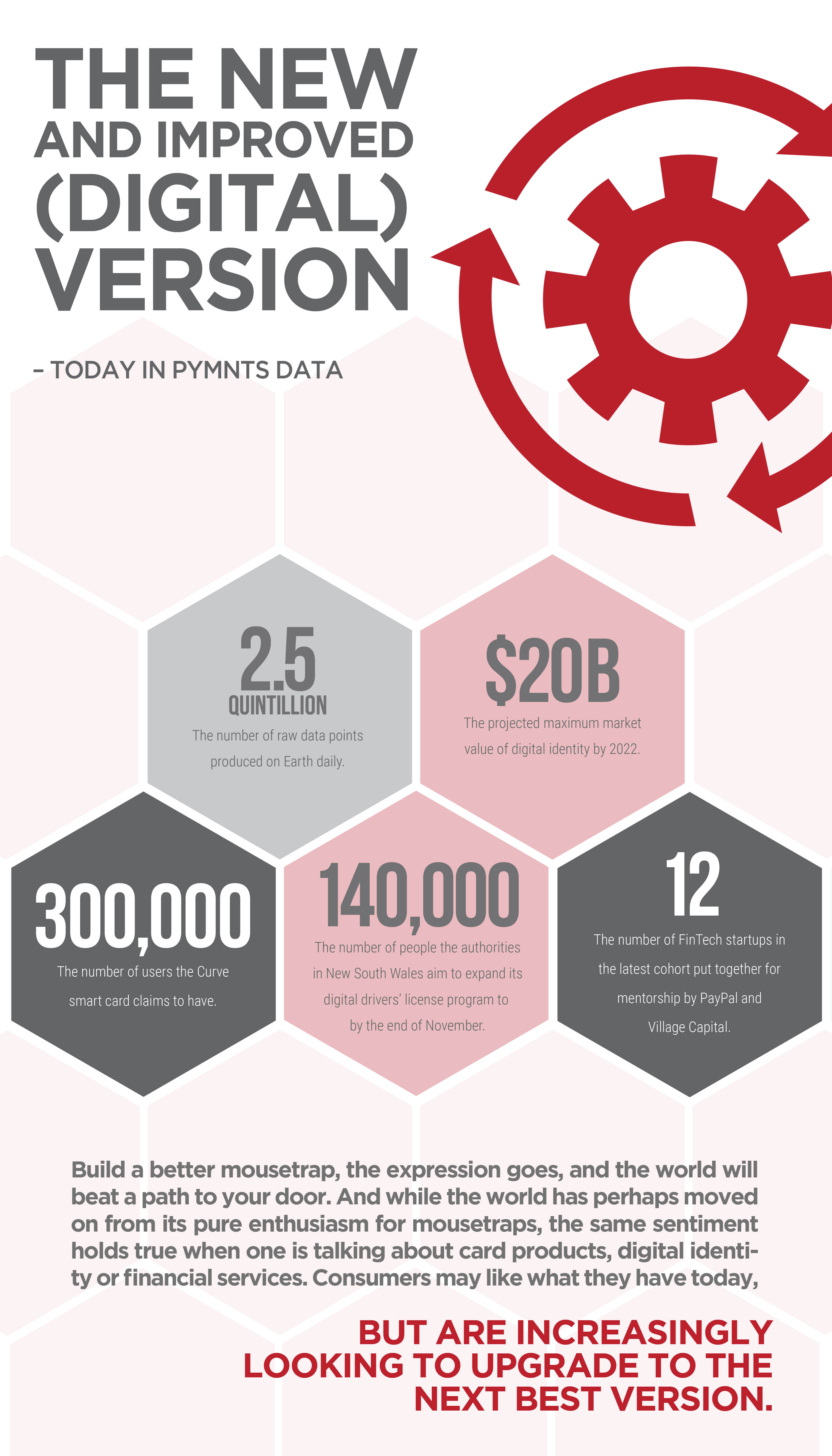
    2.5 quintillion: The number of raw data points produced on Earth daily.

    $20 billion: The projected maximum market value of digital identity by 2022.

    300,000: The number of users the Curve smart card claims to have.

    140,000: The number of people the authorities in New South Wales aim to expand its digital drivers’ license program to by the end of November.

    Advertisement: Scroll to Continue

    12: The number of FinTech startups in the latest cohort put together for mentorship by PayPal and Village Capital.