While there is no shortage of praise for the various improvements that digitization promises to bring to consumers, institutions and businesses, there is often a gap between expectation and execution. Old processes and legacy systems have a way of sticking around, black swan events like the Coronavirus can quickly reshape the field and old biases can keep new innovators out of the market – and on top of all that is the ubiquitous threat of fraud and the ongoing battle for digital security. But while progress might not be as fast as desired, it is happening – and that expectation-execution gap is closing a little more each day.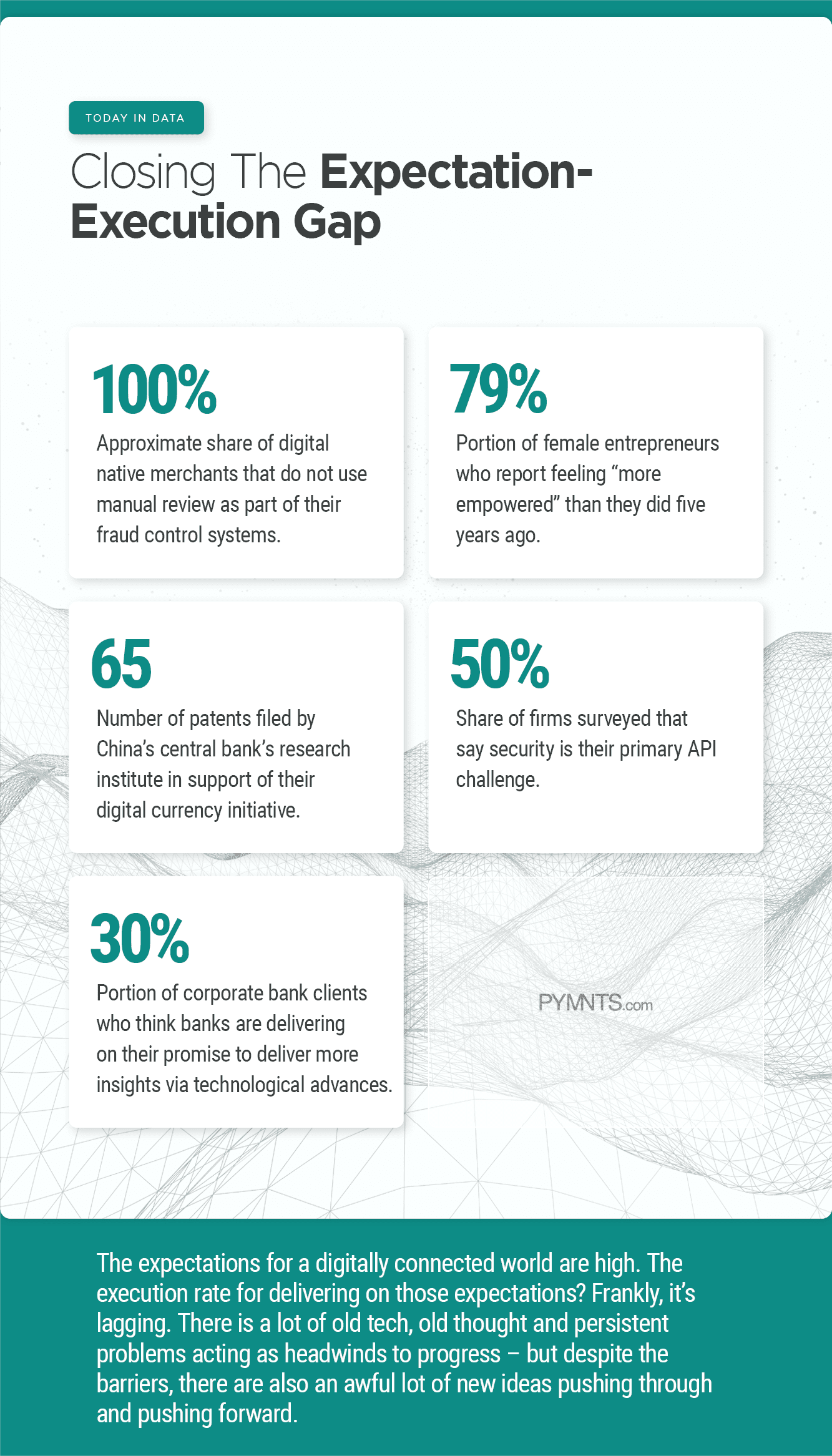
Data:
We’d love to be your preferred source for news.
Please add us to your preferred sources list so our news, data and interviews show up in your feed. Thanks!
100 percent: Approximate share of digital native merchants that do not use manual review as part of their fraud control systems.
79 percent: Portion of female entrepreneurs who report feeling “more empowered” than they did five years ago.
65: Number of patents filed by China’s central bank’s research institute in support of their digital currency initiative.
50 percent: Share of firms surveyed that say security is their primary API challenge.
Advertisement: Scroll to Continue
30 percent: Portion of corporate bank clients who think banks are delivering on their promise to deliver more insights via technological advances.



 Add as Preferred Source