By the Numbers
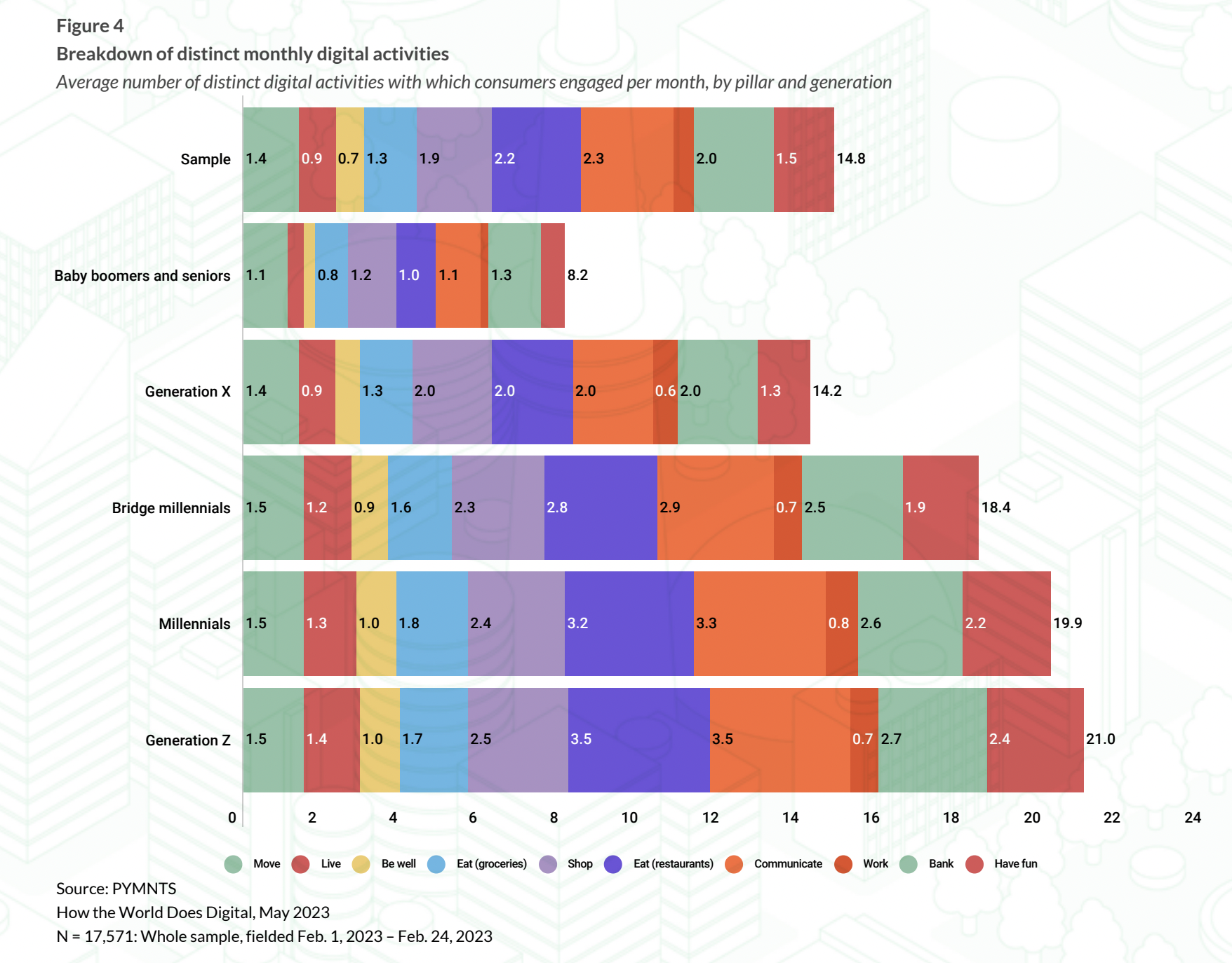
The PYMNTS Intelligence study “How the World Does Digital: Daily Digital Engagement Hits New Heights” drew from a survey of more than 17,500 consumers in 11 markets that account for 50% of the world’s gross domestic product (GDP) to understand how they engage digitally across the 10 broader pillars of the ConnectedEconomy™.
The results reveal that, when it comes to online grocery, adoption among millennials exceeded that of all other generations. Specifically, millennials reported engaging in 1.8 distinct digital activities related to the grocery pillar, on average, per month, while across generations, the average is only 1.3.
We’d love to be your preferred source for news.
Please add us to your preferred sources list so our news, data and interviews show up in your feed. Thanks!
The Data in Context
Overall, online grocery is on the rise.
Amazon, for its part, recently announced that it is expanding its grocery delivery/pickup program to include shoppers who aren’t Prime subscribers. The eCommerce giant is making the option available to all customers in any U.S. city or town where its Amazon Fresh grocery stores are available for Prime members, according to a Thursday (Nov. 9) press release.
“This marks another step in Amazon’s journey to build a best-in-class grocery shopping experience offering incredible selection, value and convenience,” Claire Peters, vice president, Amazon Fresh, said in a statement.
Additionally, restaurant aggregators that have not historically focused on grocery have been stepping up their efforts in the category in recent months.
For instance, DoorDash, the United States’ leading restaurant aggregator, stated on its earnings call earlier this month, when asked about how its grocery business is faring in the aftermath of Instacart going public, that its built-in consumer base and labor infrastructure gives DoorDash a leg up.
“We have a strategic advantage because we have a network of consumers; we have a network of dashers already built out, and that’s allowing us to improve unit economics at a much faster pace,” the aggregator’s Chief Financial Officer Ravi Inukonda said.


 Add as Preferred Source