The PYMNTS.com Travel Apps page offers a monthly ranking of smartphone Travel Apps, assessing them based on publicly available information and exclusive app usage data, helping users identify the top performers in the market. The ranking aims to provide precise insights into app performance, aiding stakeholders in making informed decisions. And for October, Couchsurfing has a 2 point increase in the rankings.
We’d love to be your preferred source for news.
Please add us to your preferred sources list so our news, data and interviews show up in your feed. Thanks!
Couchsurfing is actually a bit of a misnomer. It’s a mobile-and-web platform that connects travelers with locals: users can either host visitors or request short-term stays, or simply meet up in new cities through “hangout” features. It focuses on authentic, budget-friendly travel experiences and cultural exchange rather than standard paid lodging.
Its usage may have spiked notably in October for several reasons: consumer travel sentiment is picking up heading into Q4 (with 59.4% of U.S. travelers saying they’ll prioritize leisure travel over the next three months). At the same time, travel-apps are shifting from mere download growth toward value and engagement – and platforms that tap into “authentic” and peer-to-peer travel experiences (like Couchsurfing) may benefit from the resurgence of alternative travel models. Together, these suggest that Couchsurfing’s spike could stem from rising autumn travel, budget-conscious consumers and the pull of more experiential trips.
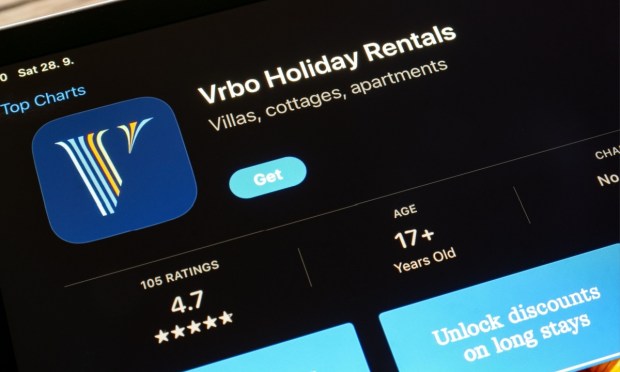
A more predictable name took second place. Vrbo also scored a two point jump in the rankings as the platform rolls out a series of promotions designed to boost visibility and bookings during the shoulder season. In late summer, the company introduced a revamped Promotion Suite that lets hosts layer discounts — from early-booking to mobile-only and last-minute deals — each accompanied by merchandising perks that raise a listing’s placement in search. The tools arrived just as travelers became more price-sensitive, making discounted inventory more attractive heading into fall.
Momentum carried into October, when Vrbo’s distribution partners broadened access to the full promotional toolkit, allowing large property managers to activate high-impact offers across thousands of listings at once. That expansion effectively pushed more discounted stays into consumer channels, giving Vrbo a lift at a time when alternative accommodations face tougher competition. Together, the new promotion options and wider rollout likely helped drive higher engagement and contributed to the platform’s recent rise in usage rankings.
GetYourGuide also had a two point jump. It has been pushing out a steady stream of upgrades that strengthen both the customer experience and the tools used by tour and activity operators — improvements that may help explain its recent rise in the rankings. This fall, the company introduced an AI-powered review suite that summarizes customer feedback, suggests improvements and helps operators craft responses more efficiently. It also rolled out redesigned product-detail pages and new logistics features, including a pickup planner, aimed at reducing friction for partners and improving the accuracy of information travelers rely on when choosing experiences.
On the consumer side, GetYourGuide refreshed its mobile search and activity cards to make discovery more intuitive, while expanding into new categories such as West End shows and multi-day tours. These moves broaden the platform’s appeal at a time when travelers are seeking more curated and higher-quality experiences. Taken together, the technical upgrades and category expansions likely improved engagement on both sides of the marketplace, providing a lift in usage that aligns with the platform’s latest gains in the app rankings.


 Add as Preferred Source