It’s an issue particularly relevant to mid-market companies. For nearly a year, PYMNTS Intelligence has tracked the uncertainty confronting middle-market firms as tariffs, policy reversals and trade tensions disrupted forecasting, pricing and investment decisions.
Policy debates evolved into an operational constraint, shaping how companies evaluated supply chains, working capital and consumer demand.
Across multiple Certainty Project studies, executives described an environment in which policy volatility, rather than underlying demand alone, became a dominant variable in planning. Goods-focused firms, in particular, reported rising concern about input costs, sourcing stability and delivery timelines. Services firms expressed comparatively lower exposure, although they too acknowledged secondary effects flowing through customers and partners.
In the immediate aftermath of April’s Liberation Day, when the President Donald Trump administration lobbed its first tariffs across the world stage, and in the PYMNTS Intelligence May report, “Tariffs and Business Uncertainty: The Current State of Play,” the shift was captured as middle-market payments leaders confronted a new landscape.
More than half of the heads of payments at goods firms believed tariffs would negatively affect their companies, according to the report. Nearly 90% of respondents anticipated delivery delays, shortages or higher raw material costs.
By the summer of last year, 75% of chief financial officers raised prices, yet 60% still reported declining profit margins. Overall, firms feeling greater tariff pressure have been twice as likely to pull back on growth investments as their peers that were less adversely affected.
From Policy Debate to Constitutional Boundary
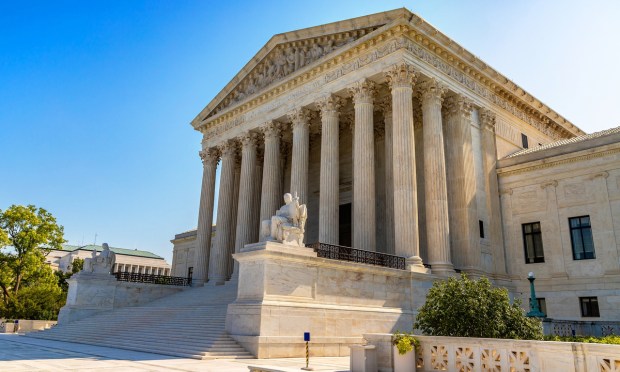
A decisive legal inflection point came Friday (Feb. 20) with the U.S. Supreme Court’s ruling in Learning Resources, Inc. v. Trump. The court held that the International Emergency Economic Powers Act (IEEPA) does not authorize a president to impose tariffs.
The decision rested on constitutional structure. As the court explained, Article I assigns Congress the authority to “lay and collect taxes, duties, imposts and excises,” a power that encompasses tariffs. While the IEEPA grants a president broad tools to regulate foreign commerce during emergencies, the court concluded that the statutory language permitting the executive to “regulate … importation” could not reasonably be read to include taxation powers of unlimited scope.
In practical terms, the ruling draws a bright line between regulating trade and levying taxes on trade. The court’s reasoning underscored that Congress historically delegates tariff authority explicitly. For firms, the legal conclusion gives way to layered implication. The ruling invalidates tariffs imposed under the IEEPA, but it does not permanently foreclose tariffs themselves.
The most immediate complication involves tariffs already collected. Estimates suggest that refunds could exceed $175 billion, a figure reflecting duties paid by importers under the now-invalidated regime.
The court did not explicitly resolve how refunds should be administered. That ambiguity featured prominently in Justice Brett Kavanaugh’s dissent, which warned that “the interim effects of the court’s decision could be substantial.” He further observed that the United States “may be required to refund billions of dollars to importers who paid the IEEPA tariffs, even though some importers may have already passed on costs to consumers or others.”
Most strikingly, Kavanaugh characterized the refund process as likely to be a “mess,” echoing concerns about administrative complexity, cost allocation and timing.
For middle-market firms, refunds present potential relief and renewed uncertainty. Importers that absorbed tariff costs may recover capital. Companies that have passed through costs may face a more complicated accounting. The timeline for disbursement remains undefined.
Whether refunds ultimately benefit retailers, manufacturers or consumers may depend on contractual structures, pricing adjustments and litigation outcomes rather than a uniform policy mechanism.
Repricing Risk Across the Middle Market
We’d love to be your preferred source for news.
Please add us to your preferred sources list so our news, data and interviews show up in your feed. Thanks!
Beyond the refunds, there may be some structural changes afoot. PYMNTS Intelligence research showed that tariffs functioned as a catalyst for defensive corporate behavior. The December study, “Tariffs Turn Up the Heat as Product Leaders Confront Peak Uncertainty,” documented how firms redirected focus from long-term innovation toward immediate operational fixes.
More than half of product leaders reported pivots toward cost controls, supplier renegotiations and workflow adjustments.
The Supreme Court ruling alters this calculus. Supply chains reconfigured under tariff pressure do not automatically revert. Pricing models calibrated for higher landed costs may require reassessment. Capital investments deferred amid uncertainty may not immediately resume.
For banks, payment providers and FinTech platforms serving middle-market clients, the ruling cements some changes, too.
Supply chain finance and trade credit products that incorporated tariff-driven cost assumptions may require revision, but the uncertainty of the past year (which may linger) will push companies to continue to lean on these providers. Credit risk models anchored to elevated input costs and delayed receivables cycles will be reexamined in light of shifting trade economics, but the digitization that’s been a hallmark of the industry is here to stay.
Cross-border payment volumes, particularly along corridors affected by tariff friction, could experience renewed momentum if trade flows stabilize. B2B transactions and remittance activity often mirror underlying commercial confidence.
What Comes Next
The ruling does not abolish tariffs as an instrument of policy. It invalidates tariffs imposed under a specific statutory interpretation. Congress retains the authority to legislate new tariffs. The administration may pursue alternative statutory pathways.
First comes the refund reality check. SCOTUSblog’s breakdown of the decision notes that the court answered the narrow question — whether IEEPA authorizes tariffs — but did not set out a refund mechanism, order restitution, or explain the administrative steps for recovering duties already paid. The analysis also highlights a telling detail: The only explicit discussion of refunds appears in Kavanaugh’s dissent, which warns that the process could be a “mess” and raises the unresolved question of whether companies that already passed tariff costs along can recover those payments at all.
Then comes the policy pivot, which matters for because it can keep landed costs volatile. In the days since the ruling, the administration has signaled it will look to other tariff authorities and investigations to keep trade pressure on, even as the IEEPA route is closed.
Finally comes the paperwork and timing — and this is where finance teams get pulled in. Any unwind is likely to run through the customs process, which is deadline-driven. U.S. Customs and Border Protection notes that importers (or their brokers/attorneys) generally have 180 days after “liquidation” — the point when CBP finalizes the duty bill — to challenge decisions through a protest. For retailers that import at scale, and for banks monitoring working-capital swings, that puts a premium on clean entry records, tight coordination with brokers and suppliers, and realistic cash forecasting that assumes delays.
Companies now confront a transitional phase defined by legal clarity on one dimension and policy ambiguity on another. What appears certain is that middle-market firms, having spent months adapting to tariff-induced disruption, are unlikely to be lulled into complacency. Planning models may incorporate greater flexibility. Liquidity buffers may remain elevated.
In that sense, the Supreme Court’s ruling resolves a constitutional question while leaving intact the broader challenge that PYMNTS Intelligence has repeatedly documented: navigating a business environment in which changes come fast and furious.


 Add as Preferred Source