A pair of representatives last week unveiled legislation targeting one piece of the increasingly industrialized fraud economy.
Reps. Jefferson Shreve of Indiana and Rob Menendez of New Jersey introduced the Stop SIM Box Scams Act, which would ban manufacturing, importing, selling, leasing, advertising, owning or operating SIM boxes. It would also direct the Federal Communications Commission to coordinate with federal law enforcement to block imports and pursue the scam syndicates using them.
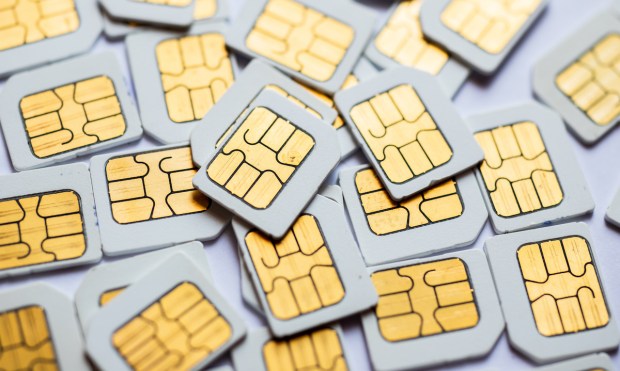
SIM boxes are devices that hold hundreds of SIM cards. Scammers use them to cycle through phone numbers to disguise their location when targeting potential victims. They are often employed in so-called pig-butchering scams in which criminals gradually develop relationships with victims over the phone to persuade them to send money to the scammer. Industrial-scale SIM farms located overseas use the devices to appear to be calling from a local number.
“That ‘local’ Indiana number on your phone may be a scammer calling from halfway around the world,” Shreve said in a Thursday (Oct. 1) press release announcing the bill. “I wrote this bill to stop scammers from using these machines to pose as our neighbors.”
“Scammers shouldn’t be able to use our area codes to rip off our communities,” Menendez said in the release. “Our legislation bans the deceptive devices that allow scammers to masquerade as our neighbors, cutting off a key tool for fraudsters and protecting working families.”
SIM boxes are one piece of a large and growing international fraud economy credited with stealing hundreds of billions of dollars from businesses and individuals every year. In an interview with PYMNTS CEO Karen Webster, Operation Shamrock Founder and President Erin West described large, industrialized compounds that operate like corporations and are often based in East Asia.
“What we know about what’s happening inside those compounds is the ‘corporateness’ of this,” West said. “The organized crime syndicate is running the compound, but inside there are dozens and dozens of ‘companies,’” each specializing in a particular territory or particular type of scam.
“What we’re facing is a theft from the United States of a generation’s worth of wealth,” she said. “We’re talking about hundreds of billions of dollars.”
We’d love to be your preferred source for news.
Please add us to your preferred sources list so our news, data and interviews show up in your feed. Thanks!
According to West, who spent 26 years as a federal prosecutor before launching Operation Shamrock, including three years prosecuting nothing but pig-butchering scams, law enforcement is not well positioned or resourced to tackle the sprawling transnational supply chain, much of it otherwise legitimate, used by industrialized scammers.
A scam operation needs phone numbers, social media accounts, messaging apps, bank accounts, cryptocurrency rails and a way to move stolen money across borders, West said. Each of those pieces is a service someone legitimately provides.
The STOP SIM Box Scams Act is targeted at one piece of that supply chain. The FCC already requires mobile providers to block texts associated with specified suspicious originating numbers, including invalid, unallocated or unused numbers and numbers on a reasonable do-not-originate list. While those rules address traffic moving through networks, the proposed hardware ban would add another enforcement target.
The bill has garnered support from industries whose services are often drawn illegitimately into supporting fraud.
“Illegal calls and texts are the weapons of choice for criminals defrauding Americans in record numbers,” Erik Rust, senior vice president and head of government affairs for the Bank Policy Institute, said in a Thursday press release. “That is why we have long called for banning SIM boxes, which enable high-volume illegal calling while allowing criminals to mask the call’s origin. The Stop SIM Box Scams Act would take this important step, and Congress should protect consumers by passing it as soon as possible.”
The bill has also drawn support from the telecommunications industry.
“CTIA applauds Reps. Shreve and Menendez for their bipartisan work to introduce the Stop SIM Box Scams Act,” Kelly Cole, senior vice president of government affairs at CTIA, said in a Thursday press release. “CTIA and its members are dedicated to fighting SIM box-enabled fraud, and this bill would further enhance those efforts by giving the FCC greater enforcement tools and enhancing collaboration between government and the wireless industry to reduce scam and spam calls and texts. We urge Congress to swiftly advance this legislation.”
West of Operation Shamrock said the organization’s mission “is to educate about, mobilize against and disrupt transnational organized crime.”
That means going after dependencies, like the banks, technology companies and telecom providers that scam operators can’t run without.


 Add as Preferred Source